Best Bactericide for Indoor Plants: Top Plant Disease Remedies
In short, choose products that target bacterial and fungal diseases in indoor plants with easy application and proven effectiveness. This guide highlights five reliable options, each suited to different buyer needs—from quick-acting sprays for houseplants to systemic solutions for deeper protection. Ideal buyers include beginners seeking ready-to-use solutions, hobbyists needing long-lasting protection, and those managing multiple indoor plants with frequent disease pressure.
| Product | Best For | Why Selected |
|---|---|---|
| Monterey Houseplant Disease Control RTU | Beginner houseplant owners | Ready-to-use, broad-spectrum organic biofungicide/bactericide; simple spray application. |
| ARBER Organic Fungicide | Greenhouses, balconies, and mixed plant settings | Certified-organic actives; protective barrier on foliage and roots; versatile dilution-ready concentrate. |
| Earth’s Ally 3-in-1 Plant Spray | All-purpose indoor/outdoor care | Insecticide, miticide, and fungicide in one spray with essential oil blend; broad disease control. |
| Captain Jack’s Neem Max Ready-to-Use Spray | Insect-prone indoor environments | Neem-based multi-action product: insecticide, fungicide, miticide, and nematicide; organic gardening approved. |
| Dr. Killigan’s Doom & Bloom | Direct pest control on contact | Mechanical mode of action; kills pests on contact; effective against common houseplant pests. |
Monterey Houseplant Disease Control RTU

- Brand: Monterey
- Type: Organic disease control; broad-spectrum biofungicide/bactericide
- Form: Ready-to-use spray; no mixing required
- Uses: Indoor and outdoor for houseplants, tropicals, flowers, roses, and potted ornamentals
Best for: Homeowners with mixed indoor plants who want a convenient, ready-to-use option that addresses bacterial and fungal diseases without mixing. This product is chosen for its straightforward application and indoor suitability. Limitation: As a ready-to-use spray, it may require frequent reapplication during ongoing disease pressure.
ARBER Organic Fungicide

- Brand: ARBER
- Type: Organic fungicide concentrate
- Key benefits: Treats powdery mildew, leaf spot, root rot, lawn diseases; plant-derived actives
- Best for: Gardeners seeking an organic option with a protective barrier on leaves and roots; suitable for greens, ornamentals, and lawns
Why selected: It blends certified-organic actives for a protective, gentle approach that works across indoor and outdoor settings. Caution: Dilution accuracy matters for effective protection, especially in greenhouses or during peak growth.
Miracle-Gro Plant Care Gnat Control Plus
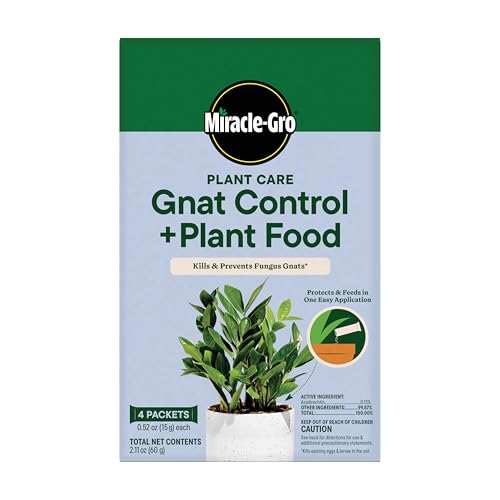
- Brand: Miracle-Gro
- Type: Fungus gnat control with plant nutrients
- Key benefits: Kills existing eggs/larvae in soil; controls nematodes, thrips, mites, and other pests
- Best for: Indoor potted plants and hydroponic setups needing both pest control and nourishment
Selected for: Its dual role as a pest control and plant nutrient source makes it suitable for ongoing maintenance of indoor plant health. Limitation: Focuses on gnats and related pests; broader disease control may require additional products.
Kate’s Home & Garden Plant Spray with Sticky Traps

- Brand: Kate’s Home & Garden
- Type: Gnat spray with 12 sticky traps
- Key benefits: Kills fungus gnats, spider mites, and fruit flies; traps enhance pest control
- Best for: Indoor spaces with persistent gnats, especially where plant health benefits from a visual trapping strategy
Selected for: The combination of spray and sticky traps provides a comprehensive approach to pest suppression. Caution: Traps should be present to ensure optimal effectiveness; missing traps may reduce performance.
Bonide Systemic Houseplant Insect Control

- Brand: Bonide
- Type: Systemic granules for indoor/outdoor use
- Key benefits: Absorbed by roots; provides up to 8 weeks of protection against listed insects
- Best for: Containerized plants that require longer protection against insects
Selected for: Long-lasting protection is a key advantage for busy plant owners. Caution: Systemic formulations can affect non-target organisms if misused; follow label directions to minimize risk.
Bonide Captain Jack’s Neem Max Ready-to-Use

- Brand: Bonide
- Type: Neem-based multi-action spray
- Key benefits: Insecticide, fungicide, miticide, and nematicide; approved for organic gardening
- Best for: Indoor plants facing multiple pest pressures and disease risk
Selected for: Neem Max provides broad-spectrum control in one bottle, helpful for mixed indoor pest problems. Limitation: Neem-based products may require more frequent application during heavy infestations and can have a distinct odor.
Dr. Killigan’s Doom & Bloom

- Brand: Dr. Killigan’s
- Type: Contact insecticide spray
- Key benefits: Kills aphids, spider mites, thrips on contact; adjustable trigger sprayer
- Best for: Immediate knockdown of visible pests on indoor foliage
Selected for: Quick-action pest suppression complements disease-focused products. Caution: Primarily contact kill; good results come with thorough coverage and repeat treatments as needed.
Buying Guide
What should you consider when choosing a bactericide or disease-control product for indoor plants?
- Target pests and diseases: If you face bacterial issues, look for products labeled as bactericides or broad-spectrum disease control with bactericidal claims. For fungal problems, fungicides may suffice, but many products offer both benefits.
- Indoor safety: Prefer ready-to-use sprays or organic options for homes with kids and pets. Check label warnings and application methods to ensure safe indoor use.
- Application frequency: Some products provide longer protection (weeks) while others require frequent reapplication. Balance convenience with the severity of disease pressure in your space.
- Plant compatibility: Consider plant type—some concentrates and systemic products are better for ornamentals, vegetables, or greenhouse settings. Follow dilution guidelines and test on a small plant first if unsure.
- Broad-spectrum vs targeted: Broad-spectrum products simplify management but may affect beneficial microbes. Targeted products reduce non-target impact but may require precise timing and multiple products.
FAQ
- What is a bactericide for indoor plants?
A product that reduces bacterial diseases on houseplants, often part of a broader disease-control strategy that may also address fungi. - Can I use organic fungicides indoors?
Yes, many organic fungicides are designed for indoor use, but always follow label directions and ensure good ventilation. - Is a spray enough, or do I need soil treatments too?
It depends on the disease source. Some products provide soil protection, while others are leaf-focused; for root rot, soil-applied or systemic options may help. - How often should I apply these products?
Application frequency varies by product and condition; typically every 1–2 weeks during active disease pressure, or as directed on the label. - Are these products safe for pets and humans?
Choose products labeled as safe for indoor use and follow all safety precautions on the label. Many organic options are gentler but still require caution. - Should I mix products?
Do not mix unless explicitly allowed by the manufacturer. Compatibility can vary and may reduce effectiveness or increase residue risks.