Best Bird Feeder Rain Shield Picks for Weatherproof Feeding
These rain shields protect seeds, nectar, and birds from rain, snow, and sun, making outdoor feeding more reliable. The top picks below are ideal for different setups—from compact hummingbird stations to larger garden feeders. Choose based on size, material, and installation ease to fit your feeding layout and climate needs.
| Product | Best For | Size | Material |
|---|---|---|---|
| Eyrosa 11.5″ Metal Bird Feeder Rain Guard (Green) | Discrete garden blending | 11.5″ | Metal |
| iBorn 13″ Baffles for Bird Feeders (Transparent) | Delicate, weatherproof protection | 13″ | Polycarbonate |
| iBorn 19.5″ Oversized Bird Feeder Cover (Transparent) | Large feeders, added squirrel guard | 19.5″ | Polycarbonate |
| Gtongoko 12″ One-Piece Cover (Transparent) | Budget-friendly, simple setup | 12″ | Polycarbonate |
| Eyrosa 11.5″ Red Dome Rain Guard | Bright visibility for hummingbirds and orioles | 11.5″ | Metal |
Eyrosa 11.5″ Metal Bird Feeder Rain Guard (Green)

Best for gardeners seeking a discreet, weatherproof shield that blends with foliage. The 11.5″ dome protects seeds and visiting birds from rain and snow while maintaining a natural look in the yard. Heavy-duty metal construction resists rust for long-term outdoor use. This shield is especially suitable for standard garden feeders where a subtle, nature-friendly appearance matters.
Who it’s best for: Gardeners who want a durable, low-profile rain guard that won’t stand out in the landscape. Why selected: Combines weather protection with a forest-green finish that blends into natural surroundings. Caution: Metal may become warm in direct sun; ensure your feeder area has some shade.
iBorn Baffles for Bird Feeders, 13” (Transparent)
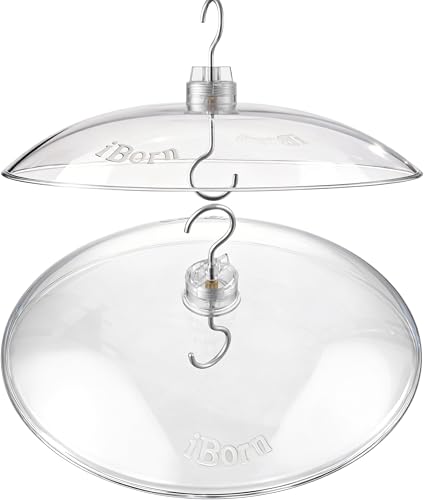
Better for: Feeders where a mid-sized shield is ideal, offering full protection against rain and snow while maintaining visibility of birds. The 13″ coverage provides a strong barrier with a central integration design that minimizes gaps where water could seep in. Chew-proof polycarbonate adds longevity for outdoor use.
Why selected: The central hook design and thick polycarbonate construction reduce water intrusion and deter chewing, helping keep seed fresher. Caution: Slightly larger footprint may require more mounting space on smaller setups.
iBorn Baffles for Bird Feeders, 19.5” Oversized Cover (Transparent)

Best for: Larger feeders or setups needing additional rain protection and a built-in deterrent against squirrels. The 19.5″ size offers comprehensive coverage, keeping seeds and nectar drier in heavy weather. Polycarbonate adds durability, and a threaded buckle aids secure installation.
Why selected: Provides full-area protection with a robust, chew-resistant material. Caution: Heavier weight may require sturdier mounting compared to smaller shields.
Gtongoko 12″ One-Piece Cover (Transparent)

Best for: Budget-conscious buyers needing simple, quick setup for most hanging feeders. The curved dome blocks rain and leaves while offering clear visibility of feeding birds. Durable PC plus metal hooks provide a stable, uncomplicated solution.
Why selected: Easy installation and a transparent view of birds feeding. Caution: May offer less protection against extreme weather compared to larger or multi-layer shields.
Eyrosa 11.5″ Red Dome Rain Guard (Red)

Best for: Attracting attention of hummingbirds and orioles with a bright color cue. The 11.5″ red dome provides additional weather protection while serving as a vivid beacon in the garden. Rust-resistant metal ensures durability for year-round use.
Why selected: High-visibility color helps guide small nectar feeders to the shielded station. Caution: Red may stand out more in highly manicured landscapes; consider blending options if a natural look is preferred.
Buying Guide: How To Choose The Right Bird Feeder Rain Shield
What size do you need? Smaller feeders benefit from 11.5″ shields, while larger setups may require 19.5″ or 13″ options to prevent water intrusion and protect more seed or nectar. Consider the feeder’s diameter and hanging height when selecting a shield.
What material matters? Polycarbonate shields are chew-proof and durable for outdoor use, offering clarity to watch birds. Metal shields resist rust but may heat up in hot sun. Clear shields help monitor seed levels, while colored shields can act as yard accents or attract specific birds.
How important is installation ease? Some models feature straightforward, tool-free mounting and included screws, while others require shepherd’s hooks or tree trunks. If you move feeders seasonally, choose a shield with simple assembly and light weight.
Do you want added wildlife deterrents? Some designs double as squirrel guards or have dual-hook setups that secure feeders against sagging. Consider shields marketed as full protection for outdoors to minimize seed waste in rain or snow.
How does visibility affect feeding? Transparent shields let you observe birds without removing protection. If you prefer a focal point in the garden, a colored shield can create a bright, noticeable feeding station while still shielding the food.
Frequently Asked Questions
- What is the best shield size for a standard seed feeder? A shield around 11.5″ to 13″ covers typical seed feeders well, balancing protection and ease of use.
- Do rain guards deter squirrels? Some models offer chew-proof polycarbonate or larger sizes that help deter raiders, but dedicated squirrel guards may be more effective in combined setups.
- Will a transparent shield attract more birds? Transparency helps birds feel safe as they feed, but color and contrast can also attract attention; choose based on your garden conditions.
- Are metal shields prone to rust? Premium metal shields are rust-resistant and designed for long outdoor use, though they should be cleaned periodically to maintain appearance.
- Can I install these shields on any feeder? Most shields fit standard hanging and pole-mounted feeders; verify compatibility with your feeder’s size and mounting method.
- Do shields require maintenance? Wipe away debris and check fasteners periodically to prevent sagging and ensure continued rain protection.