Best Bermuda Grass Seed for Hay and Pasture
Answering the question “which Bermuda grass seed is best for hay and pasture?” this guide highlights five top options designed for grazing and hay production. Each product is evaluated for drought tolerance, growth rate, and suitability to farm or ranch settings. This overview helps buyers pick seeds that establish quickly, yield well, and survive in hot, dry conditions. The following selections are best for readers focused on hay quality, stand density, and rotational grazing suitability.
Summary of selected products:
| Product | Best For | Key Benefit | Notes |
|---|---|---|---|
| Outsidepride Forage Bermuda Seeds | Pasture and hay production | Early spring growth with multiple cuttings | Yellow Jacket coating for improved germination |
| Scotts EZ Seed Patch & Repair Bermudagrass | Repairing bare spots | Patchable seed with mulch and fertilizer | Ideal for spot reseeding in tough conditions |
| Pennington Bermudagrass Grass Seeds for Lawn | Lawn-to-pasture transition | Thick, self-spreading growth | Improved cold tolerance |
| Scotts Turf Builder Grass Seed Bermudagrass (8 lb) | New lawn and overseeding | 3-in-1 formula with fertilizer and soil improver | High drought resistance |
| Outsidepride Chilly Verde Bermuda Grass Seed | Pasture and grazing in varied climates | Winter-hardy and drought-tolerant | Forage yields 3–5 tons per acre potential |
Outsidepride Forage Bermuda Seeds – 40 lb

Best for: large-scale pasture and hay production. These forage Bermuda seeds start green-up early in spring, enabling earlier grazing or hay cutting. They support multiple cuttings every 4-6 weeks, which helps maximize forage yield and cost efficiency for farmers and ranchers. The Yellow Jacket coating is designed to improve germination and establishment under limited irrigation.
Selected because: It combines high yield potential with drought tolerance and broad regional adaptability. The coating may help establish stands faster in varied soils, making it a strong choice for hay operations needing reliable early growth and sustained yield.
Caution: As with any seed, establishment depends on proper soil prep, seed depth, and moisture during germination. In extreme drought, supplemental irrigation can improve outcomes.
Scotts EZ Seed Patch & Repair Bermudagrass
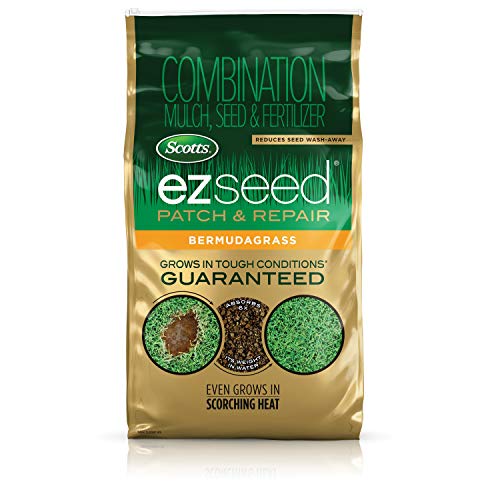
Best for: repairing bare lawn spots and establishing new Bermudagrass in small areas. This product blends seed, mulch, and fertilizer with tackifier to hold seed in place and promote germination in tough conditions. It is designed for quick improvement of damaged turf in sun-exposed yards.
Selected because: It provides an all-in-one patch kit that supports rapid germination and establishment, making it useful for hay-producing pastures with irregular patches that require urgent regrowth.
Caution: Not ideal as a sole source for large-field hay pastures. Best used as a repair or patch solution rather than a full pasture seed blend.
Pennington Bermudagrass Grass Seeds for Lawn – 5 lb

Best for: establishing a thick, self-spreading Bermuda lawn that can fuel hay-making operations as part of a managed pasture. The seed mix emphasizes cold tolerance and deep root development, helping it survive cooler shoulder seasons and support long-term vigor.
Selected because: It supports robust turf density and a strong root system, which translates to improved forage yield in rotational grazing systems when used as part of a larger pasture plan.
Caution: For best results, match seeding timing to typical warm-season windows and avoid overseeding into frost-prone periods in marginal climates.
Scotts Turf Builder Bermuda Grass Seed – 8 lb
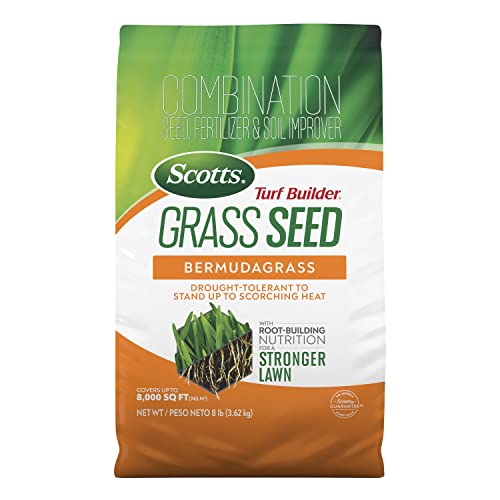
Best for: new lawn establishment and overseeding with a three-in-one formula that includes seed, fertilizer, and soil improver. Designed for full sun, it offers strong drought resistance and a sturdy root system to support dense turf growth.
Selected because: The integrated fertilizer and soil improvement components can help establish a resilient stand quickly, which is advantageous when converting pastures into productive hay-producing turf under consistent management.
Caution: Like all Bermuda blends, performance depends on proper sun exposure and soil preparation. Avoid shaded sites where growth may be slower.
Outsidepride Chilly Verde Bermuda Seed – 10 Lbs

Best for: warm-season perennial forage with excellent winter hardiness and drought tolerance. It forms dense sod and spreads aggressively via stolons and rhizomes, supporting grazing, hay production, and multiple harvests per season.
Selected because: It is specifically bred for broader climate adaptability, including winter hardiness, which expands the usable window for hay production in variable southern-to-midwestern regions.
Caution: Growth in very acidic or highly alkaline soils may vary; ensure soil pH compatibility with warm-season Bermudagrass to maximize establishment.
Buying Guide: Bermuda Grass Seed For Hay and Pasture
- Climate and soil — Choose seed varieties with drought tolerance and broad soil adaptability if you have hot, dry seasons or varied pastures. Winter-hardy options can extend the grazing season in cooler areas.
- Germination and establishment — Look for seed coatings or formulations that promote faster germination and uniform stands. Coatings like Yellow Jacket may improve establishment in dry conditions.
- Forage yield and regrowth — Prioritize seeds designed for multiple cuttings per growing season or high dry matter yields when planning hay production.
- Root system and turf density — Deep roots and self-spreading growth improve drought resilience and stand longevity, reducing maintenance needs over time.
- Use case and management — Distinguish seeds intended for pure pasture, lawn-to-pasture transitions, or patch repair. Some blends are optimized for seed-and-feed lawns, while others target large-scale hayfields.
Frequently Asked Questions
- What Bermuda grass seed is best for hay production? For hay production, look for varieties with high forage yield and drought tolerance, such as forage-focused Bermuda seeds and cold-tolerant blends suitable for your climate.
- Do Bermuda seeds require specific soil pH? Bermuda grasses generally prefer a neutral to slightly acidic soil (pH around 5.8–7.0). Confirm the pH tolerance of the chosen cultivar for best results.
- How long does establishment take? Germination typically occurs within 5–14 days under ideal moisture, with full establishment taking several weeks. Warmer soils speed up establishment.
- Can Bermuda grass survive winter in my region? Some varieties are winter-hardy or have good cold tolerance, while others are strictly warm-season. Check the cultivar’s hardiness for your region.
- Is one product better for patch repair or whole-field seeding? Patch repair products are optimized for bare spots, while other blends are designed for large-scale seeding or overseeding. Choose based on area and project scope.
- How does seed coating affect germination? Coatings that improve moisture retention and germination can help establish stands faster, especially in dry conditions.