Best Long-Handled Weeding Sickle for Easier Yard Work and Weed Removal
Answering the search for a reliable long-handled weeding sickle, this guide highlights five practical options designed to reduce bending, increase reach, and improve weed removal efficiency. These tools are best for gardeners with back or knee concerns, small to medium beds, or areas that require standing weeding. This overview explains who each tool suits best and why, with clear, fact-based comparisons you can rely on for quick decisions.
Summary table of selected products:
- YEELOR Weeding Sickle — best for adjustable length and 2-in-1 blade design for soft and hard weeds
- Haliaeetus Sickle Hoe — best for tight spaces with long reach and elbow design
- KAKURI Japanese Weeder Tool Long Handle 42″ — best for traditional Japanese blade and standing weed removal
- KAKURI Japanese Weeding Sickle Long Handle 45″ (Tri-Edge) — best for multi-edge efficiency and edge durability
- Berry&Bird Japanese Weeding Sickle — best for multi-purpose garden tasks with durable ash handle
YEELOR Weeding Sickle With Adjustable Handle
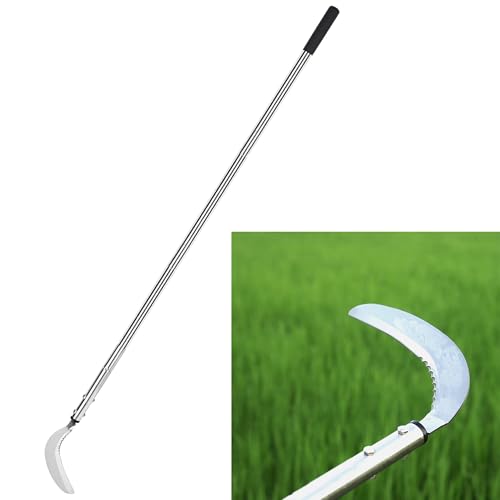
This tool combines a high-strength stainless steel handle with a sharp stainless steel blade, offering bend resistance and rust-proof performance. It is designed to cut dense weeds with a single swing and is durable for years, reducing replacement needs for frequent weeders. The 2-in-1 blade design includes a straight edge for soft weeds, a wavy edge for tougher growth, and a sharp tip to pull out deep-rooted weeds. The length options (51.7″, 37.3″, 21.5″) support upright weeding and minimal bending, with a light 1.6-pound weight to lessen arm fatigue. Best for: busy yards and farms needing versatile weed control without frequent tool swaps.
Limitations to consider: while the 51.7″ version suits large beds, users in very tight spaces may prefer a shorter option for maneuverability. Also, 1.6 pounds is light, which may feel insufficient for very dense growth for some users.
Haliaeetus Sickle Hoe — Long 58 Inch Reach

This 58″ Japanese-inspired weeding tool minimizes bending by extending reach to back beds and long-planted borders. An elbow design helps the blade scrape shallow weeds efficiently, while a sharp tip enables deeper cuts to reach roots. The tool’s compact overall footprint makes it suitable for tight spaces and narrow beds, allowing gardeners to weed with minimal disturbance to adjacent plants. Best for: those who need a standing approach to weed removal in mixed beds or raised planters.
Limitations to consider: the focus on scraping and chopping may require a learning curve for first-time users, and longer handles can be cumbersome in very small, crowded plots.
KAKURI Japanese Weeder Tool Long Handle 42″

This traditional Japanese sickle features a twisted blade designed to pull out weeds from the roots, including soil. It comes with a long wooden handle for upright weeding, reducing back and knee strain, and a razor-sharp Japanese steel blade for durability and precision. Best for: gardeners who favor classic Japanese blade geometry and standing weed removal across larger beds.
Limitations to consider: carbon steel blades require post-use care to prevent rust, such as cleaning and applying oil after use, to maintain edge and longevity.
KAKURI Japanese Weeding Sickle Long Handle 45″ (Tri-Edged)

This 45″ long-handle sickle uses a triple-edged blade designed to slice through grass and tough weeds while standing. The Japanese carbon steel blade offers sharpness and ease of sharpening, with a laminated blade structure that enhances edge durability. Best for: users who want quicker cutting efficiency and a blade that stays sharp longer on tough garden growth.
Limitations to consider: carbon steel blades need regular maintenance to resist rust, and longer handles may require more space for storage in small sheds or garages.
Berry&Bird Japanese Weeding Sickle With Long Handle

This versatile tool combines a long ash wood handle with a sturdy weeding sickle designed for weeding, cultivating, soil loosening, and digging. The ash wood handle offers a natural grip and extended reach, while a cowhide cord provides easy carrying and hanging. Best for: gardeners seeking a multi-purpose tool that can manage weeding and soil work in one swing.
Limitations to consider: wooden handles require care to prevent cracking in extreme weather; store dry to maintain longevity.
Buying Guide: Choosing The Right Long-Handled Weeding Sickle
What is your preferred reach and posture?
Options range from 21.5″ to 58″ handles. For knee- or back-relief, choose longer handles that let you weed while standing. For tight spaces or smaller beds, shorter handles may offer better control.
What weeds are you targeting?
Blade type matters. Straight edges excel on soft weeds, wavy or serrated edges handle tougher growth, and triple-edged blades offer cutting versatility. If you need to pull roots, look for a tool with a pointed tip designed for that job.
Material and maintenance considerations
Stainless steel blades resist rust and align with low-maintenance preferences. Japanese steel blades stay sharp longer but often require oiling or factory care to prevent rust. Wooden or laminated handles add grip and resilience but require upkeep to prevent cracking or warping.
Ergonomics and weight
Lightweight designs reduce fatigue, but sturdier builds may feel heavier. When possible, test the balance of the tool with the handle extended and retracted to ensure comfortable use for your typical tasks.
Storage and space considerations
Long-handled tools require sufficient storage room. If space is limited, consider a shorter handle option or a hanging solution for easy access and safety.
Durability and intended use
Consider whether the tool is built for heavy-duty garden or occasional weekend use. Durable builds with rust-resistant blades save maintenance time and replacement costs over time.
Frequently Asked Questions
- What is the main advantage of a long-handled weeding sickle? It allows standing-up weed removal, reducing bending and strain while improving reach in beds and borders.
- Which blade type is best for tough weeds? A wavy or serrated edge is typically better for tough weeds, while straight edges handle soft, young growth more easily.
- Do carbon steel blades require special maintenance? Yes, carbon steel blades should be dried after use and may require oiling to prevent rust, especially in humid conditions.
- Is a wooden handle as durable as metal? Wooden handles offer good grip and natural shock absorption but require careful storage to prevent cracking, while metal handles excel in rugged use and weather resistance.
- Can these tools be used for soil digging as well? Some models are multipurpose (cultivating, soil loosening, digging), but check blade design and handle strength for digging tasks.
- Which tool is best for large, open beds? A longer-handled sickle with a sturdy blade designed for standing weeding is typically ideal for open, expansive areas.