Best Aquarium Plant Fertilizer Tabs for Rooted Plants
Aquarium plant fertilizer tabs provide nutrients in the substrate, where root-feeding plants can access them. Seachem Flourish Tabs are available in 40-tab and 10-tab packs for periodic maintenance; FZONE Root Tabs suit buyers seeking a slow-release formula; the 100-count root tabs include tank-size dosing guidance; and NilocG ThriveCaps provide a listed mix of macronutrients and micronutrients. Compare package size, stated release or replacement interval, and nutrient details before choosing.
| Product | Best for | Notable detail |
|---|---|---|
| Seachem Flourish Tabs, 40 tabs | Regular use in established planted tanks | Renew every three to four months |
| Seachem Flourish Tabs, 10 tabs | Trying a smaller pack | Same stated maintenance interval |
| FZONE Root Tabs | Slow-release root feeding | Claims nutrient release for two to three months |
| 100-Count Root Tabs | Buyers who want dosing guidance | Includes spacing and tank-size examples |
| NilocG ThriveCaps | Root feeders needing listed micro- and macronutrients | Lists nitrogen, phosphorus, potassium, magnesium, iron, and micronutrients |
Seachem Flourish Tabs, 40-Tab Pack

This larger pack is best for aquarium keepers who expect to use root fertilizer regularly or maintain multiple rooted plants. Seachem recommends adding new Flourish Tabs once every three to four months for optimal plant growth, making the stated maintenance interval easy to plan around.
The manufacturer says the tabs will not alter pH in general. However, they have slightly acidic properties in very soft or unbuffered water, similar to peat moss. Consider that caveat if your aquarium has either water condition.
Seachem Flourish Tabs, 10-Tab Pack

Choose this smaller pack if you want the listed Seachem maintenance product without starting with the 40-tab quantity. It is also a practical option for a smaller planting project or for buyers who want to see how a scheduled tab routine fits their aquarium care.
The listed replacement interval is once every three to four months. As with the larger pack, Seachem notes that the tabs have slightly acidic properties in very soft or unbuffered water, despite not altering pH under general conditions.
FZONE Slow-Release Root Tabs

FZONE is best for freshwater aquarium owners looking for a root-directed, slow-release fertilizer. Its listed NPK ratio is 1:0.3:2.6, described as low in nitrogen and phosphorus and higher in potassium. The product is intended for placement in the substrate so nutrients reach plant roots.
The manufacturer says the controlled-release formula provides nutrients for two to three months and describes the tabs as safe for fish and shrimp. Use the product as directed and place it in the substrate; these are root tabs, not a substitute for following the aquarium’s overall care routine.
100-Count Slow-Release Root Tabs
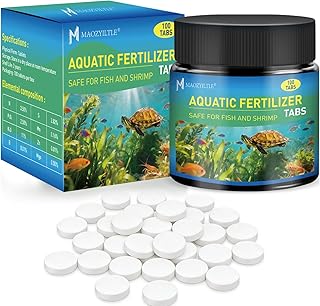
This product is best for buyers who want a large tab count and explicit starting-dose guidance. Its instructions recommend beginning at 80% of the recommended dose, observing plant growth, and then adjusting. The listed example is one tab with at least five inches of spacing, including five tabs for a five-gallon tank and ten for a 10-gallon tank.
The formula lists an NPK ratio of 1:0.5:2.8 and is described as root-directed and safe for fish and shrimp. A small white suspension after application is identified by the seller as normal; the listing says it should dissipate in three to four hours. Follow the product’s directions when dosing.
NilocG ThriveCaps Root Fertilizer

NilocG ThriveCaps are best for rooted plants such as sword plants, Cryptocoryne, and Echinodorus, which the product identifies as plants that benefit from substrate nutrition. The capsules deliver nutrients into the substrate and list nitrogen, phosphorus, potassium, magnesium, iron, and essential micronutrients.
Choose this option if the listed nutrient range is a priority. The provided product information does not specify a replacement schedule or a capsule-per-tank dose, so check the package directions for application details rather than estimating a dose.
Buying Guide: How to Choose Aquarium Plant Fertilizer Tabs
Which plants benefit most from root tabs?
Root tabs are intended for plants that take up nutrients through their roots in the substrate. The listed products specifically call out sword plants, Cryptocoryne, Echinodorus, and other rooted plants. Match the fertilizer to the plants you keep and place tabs in the substrate according to the product instructions.
Should you choose a slow-release formula?
Compare the stated feeding or replacement interval. FZONE claims a two-to-three-month release period, while Seachem recommends adding new tabs every three to four months. These intervals come from the product information and are not identical; follow the directions for the particular product you select.
How important are NPK details?
NPK describes nitrogen, phosphorus, and potassium. FZONE and the 100-count product list low-nitrogen, low-phosphorus, higher-potassium ratios. NilocG lists those three macronutrients plus magnesium, iron, and micronutrients. Choose based on the product’s stated nutrient profile and your aquarium’s needs, rather than assuming all tabs have the same formula.
How many tabs should you use?
Use the package directions because dosing varies by product and aquarium. The 100-count listing provides tank-size examples and recommends starting with 80% of its suggested amount, then monitoring plant growth. The supplied details for other products do not give a specific tab-per-gallon dose.
Are these products suitable for fish and shrimp tanks?
FZONE and the 100-count root tabs are described by their sellers as safe for fish and shrimp. For any product, use it as directed and consider the listed water-condition caveats. Seachem notes slightly acidic properties in very soft or unbuffered water.
Frequently Asked Questions
What do aquarium plant fertilizer tabs do?
They place fertilizer in the substrate so rooted aquatic plants can access nutrients near their roots.
Can I use root tabs for carpeting plants?
FZONE lists dense carpeting plants among the plants its tabs are designed to support. Check the package directions for placement and dosage.
How often should aquarium root tabs be replaced?
It depends on the product. Seachem recommends a three-to-four-month interval, while FZONE states a two-to-three-month nutrient-release period.
Is a white suspension after adding tabs always a problem?
Not according to the 100-count product listing, which describes a temporary white suspension as normal and says it should dissipate in three to four hours. Follow the specific product instructions.