Best 1.5 Inch Nylon Rope Options for Marine and Heavy-Duty Use
The best 1.5-inch nylon rope depends on the length and use you need: the 25-foot 100% nylon line is suited to anchor and dock applications, while longer 100-foot and 600-foot options fit larger projects. A 50-foot rope offers a middle length. One listed 100-foot product is jute, not nylon, so it is an option only for buyers prioritizing natural appearance over nylon’s material properties.
| Product | Length | Material | Best For |
|---|---|---|---|
| Twisted 100% Nylon Rope | 25 feet | 100% nylon | Anchor and dock lines |
| ATERET Nylon-Polyester Blend | 600 feet | Nylon and polyester | Large or repeated projects |
| Premium White Twisted Nylon Rope | 100 feet | 100% nylon | General-purpose use |
| Bulk Ropes Twisted Nylon | 50 feet | Nylon | Flexible, medium-length line |
| Natural Jute Rope | 100 feet | Jute | Decorative installations |
Twisted 100% Nylon Rope, 25 Feet

This 1½-inch, 25-foot rope is made from 100% nylon and uses a three-strand twisted construction. Its listed features include shock absorption, abrasion resistance, and resistance to UV degradation. The product is presented for anchor lines and dock lines.
Best for: Buyers who need a shorter marine line and specifically want 100% nylon. It stands out for its stated marine use and shock-absorbing properties. Choose this if 25 feet meets the job; avoid it if you need a longer continuous rope.
ATERET Nylon-Polyester Blend, 600 Feet
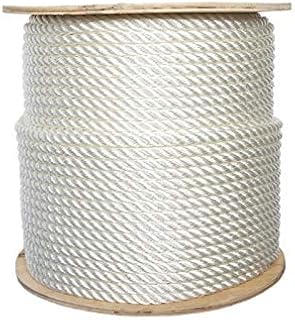
ATERET’s 1½-inch rope is a three-strand twisted nylon and polyester blend supplied in a 600-foot length. The listing describes it as suitable for indoor and outdoor uses such as camping, farming, construction, and DIY work. It also claims resistance to UV rays, abrasion, rot, chemicals, oils, and gasoline, with elasticity and shock absorption.
Best for: Buyers who need a large quantity for multiple tasks or a long project. The blend and extended length distinguish it from the shorter 100% nylon choices. Because this is a blend, choose another option if your project specifically requires 100% nylon.
Premium White Twisted Nylon Rope, 100 Feet

This 1½-inch, 100-foot rope is described as 100% twisted nylon. Its listed uses include boating, camping, farming, crafting, and general utility work. The product information also notes resistance to alkalis, oils, weather, and gasoline, and says the line stays taut after repeated retying.
Best for: Buyers seeking a general-purpose 100-foot nylon line for varied indoor or outdoor projects. It offers more length than the 25- and 50-foot options without the 600-foot commitment. The listing does not provide a working-load rating, so confirm suitability for load-bearing tasks before use.
Bulk Ropes Twisted Nylon, 50 Feet

This 1½-inch white twisted nylon rope comes in a 50-foot length. The product listing identifies marine, construction, towing, camping, and general utility uses. It also highlights flexibility for handling and knot tying, and states that the rope is made in the USA.
Best for: Buyers who need more rope than a short 25-foot line but less than a 100-foot option. Its stated flexibility may be useful when handling and tying knots are priorities. The supplied feature information does not specify UV resistance or a load rating, so verify those details if they matter for your application.
Natural Jute Rope, 100 Feet

Important: This 1½-inch, 100-foot product is natural jute, not nylon. Its four-strand twisted construction and rustic texture are described for railings, landscaping, barriers, and decorative installations. The listing emphasizes appearance and handling rather than nylon’s material characteristics.
Best for: Buyers who want a natural-looking rope for visible decorative or railing projects. It is included as a material alternative, not as a nylon substitute. Avoid this choice if your project requires nylon or specifically calls for synthetic rope.
Buying Guide: How To Choose 1.5-Inch Nylon Rope
Which rope length should you choose?
Match the rope length to the complete run, then allow for knots, attachment points, and any extra material needed for handling. The listed options range from 25 to 600 feet. Shorter lengths can suit a specific line, while longer lengths are more practical for extensive or repeated projects. Do not assume that a longer rope has a higher load capacity.
Do you need 100% nylon or a blend?
Choose 100% nylon when the material specification matters. The 25-foot and 100-foot options are described as 100% nylon. ATERET is a nylon-polyester blend, which its listing presents as elastic and shock absorbing. Check project requirements before choosing a blend, and do not treat the jute option as nylon.
What should you check before using rope under load?
Look for a working-load limit, rope construction details, and application guidance from the manufacturer. The supplied descriptions do not give working-load ratings for these products. Rope diameter alone is not enough to establish safe capacity. For marine, towing, lifting, or other safety-critical uses, verify the exact specifications and inspect the rope before use.
Does twisted construction matter?
All four nylon choices are described as twisted rope, and the listings identify three-strand construction where specified. Flexibility, handling, and knotting can be relevant when selecting a line, but construction details do not replace load ratings or application instructions.
Frequently Asked Questions
Is every product listed a nylon rope?
No. The natural jute option is made from jute, not nylon. The other four listings describe nylon rope, including one nylon-polyester blend.
Which option is specifically listed for dock and anchor lines?
The 25-foot, 100% nylon rope is described for anchor lines and dock lines and lists shock absorption, abrasion resistance, and UV degradation resistance.
Which listed nylon rope is the longest?
The ATERET nylon-polyester blend is listed at 600 feet, making it the longest option in this selection.
Can rope diameter tell me how much weight it can hold?
No. A 1.5-inch diameter alone does not establish a safe working load. Check the product’s load specifications and application guidance before use.