Best 20 Foot Evergreen Trees for Privacy, Shade, and Landmark Landscaping
Looking for trees that can reach roughly 20 feet or more and provide evergreen year-round presence? The options below showcase evergreen trees and large-starting saplings that commonly grow tall, fast, and are suitable for privacy screens, windbreaks, or striking landscape focal points. Each pick is best for buyers seeking hardy, long-term investments, with notes on ideal climates, care, and any shipping or regional considerations.
| Product | Best For | Why It Matters |
|---|---|---|
| Thuja Green Giant (3 Gallon) — Perfect Plants | Fast privacy, medium-large screens | Grows up to 3 feet/year; mature size around 40 ft tall and 20 ft wide. |
| Giant Sequoia (3 saplings) — CitronellaKing | Statement trees for large properties | Ready-to-plant saplings; impressive mature form and hardiness for big landscapes. |
| Carolina Sapphire Arizona Cypress (2.5 Quart) — Plants by Mail | Wind barriers and screens | Blue-grey foliage, 20-30 ft tall at mature size; thrives in full sun. |
| Skyrocket Juniper Tree — Eureka Farms | Narrow spaces, modern landscaping | Columnar form with blue-silver foliage; low maintenance. |
| Aurea Gold Thread Cypress — Green Promise Farms | Colorful year-round accent | Bright yellow foliage; ideal as a landscape highlight or small screen. |
Thuja Green Giant 3 Gallon — Privacy Screen Plant

Best for: Buyers seeking rapid privacy and a tall evergreen screen. The Thuja Green Giant can achieve up to 3 feet of growth annually, reaching a mature size around 40 feet tall and 20 feet wide, making it an efficient option for dense fencing-like privacy and windbreaks.
Why selected: It offers robust year-round foliage, adaptability to various landscaping needs, and can function as a single specimen, dense screen, or living frame for a garden.
Caution: California and Arizona buyers may encounter shipping restrictions; orders to those states may require cancellation requests. Ensure your planting site has well-draining soil and adequate space to accommodate eventual width and height growth.
Giant Sequoia Live Starter Saplings — 3 Pack

Best for: Large landscapes or long-term landmark trees. Ready-to-plant saplings in 2.5-inch cubes are fully rooted and suitable for expansive properties, windbreaks, or dramatic focal points over time.
Why selected: Sequoias are iconic evergreen conifers with substantial stature potential, thriving in sunny, well-drained soils and characterized by bold bark and dense foliage.
Limitation: These trees are slow to reach full height compared to some fast-growing alternatives; plan for decades of growth and a spacious planting site.
Carolina Sapphire Arizona Cypress — 2.5 Quart
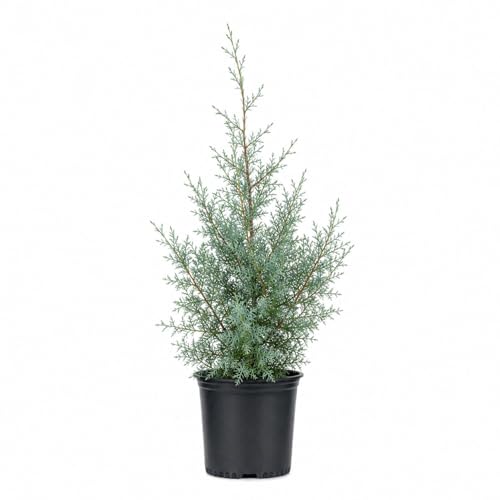
Best for: Buyers wanting a wind barrier or privacy screen with a distinct blue-green hue. The Carolina Sapphire Cypress typically grows to 20-30 ft tall and 15-20 ft wide, offering a pyramidal silhouette in full sun.
Why selected: Full-sun performance and feathery foliage provide year-round visual appeal, with occasional pruning to maintain shape. It also attracts wildlife and supports diverse landscape styling.
Limitation: Pruning should be conservative; avoid removing more than a few inches at a time to preserve natural form.
Skyrocket Juniper Tree — 5 Gal Pot

Best for: Narrow spaces, modern landscapes, and low-maintenance setups. The Rocky Mountain columnar form with blue-silver foliage offers a striking accent without occupying wide ground space.
Why selected: Its columnar growth makes it well-suited for borders, driveways, or urban yards where width is limited. Easy care and drought-tolerant traits contribute to practical landscaping.
Limitation: May require occasional pruning to maintain the natural columnar shape, especially in crowded planting beds or unusual wind exposure.
Aurea Gold Thread Cypress — 2.5 Quart

Best for: A colorful evergreen accent that remains vivid year-round. The Aurea gold thread cypress displays bright yellow foliage and tolerates sun well, making it a standout in mixed borders.
Why selected: It adds a luminous color dimension to landscapes and pairs well with darker greens for contrast. Suitable as a specimen plant or a small screening element.
Caution: While generally hardy, extremely cold regions may require winter protection or placement in sheltered spots to minimize frost damage.
Buying Guide: Key Considerations For Your 20-Foot Evergreen Trees
How tall do you want the trees to be in 5–10 years? Select species with predictable growth rates and mature heights suited to your site.
What climate and soil conditions are there? Pick species with hardiness zones and soil preferences matching your locale to reduce maintenance and improve longevity.
Space and layout: Plan for eventual width and height. Grouping trees too closely can hinder growth and health; provide adequate space for air flow and root expansion.
Maintenance needs: Some evergreens require routine pruning, watering, or pest management. Consider long-term labor and irrigation requirements before purchase.
Shipment and region: Be aware of state shipping restrictions that may affect deliveries to certain areas. Verify availability and delivery terms for your location.
Landscape goal: Decide whether you want a privacy screen, windbreak, specimen focal point, or a color accent. Matching the goal to species traits yields the best long-term results.
Frequently Asked Questions
- Q: Are 20-foot evergreen trees suitable for small yards? A: Some species reach 20–30 feet in maturity but start smaller and can be staged with careful spacing and pruning.
- Q: Which trees grow fastest to 20 feet? A: Species like Thuja Green Giant are known for rapid height gain, though actual speed varies by climate and soil.
- Q: Can these trees be planted in containers? A: Most listed trees are intended for in-ground planting; container growth may limit ultimate size and require more frequent maintenance.
- Q: Do these trees tolerate drought or heat? A: Several species are drought-tolerant once established, but initial watering is crucial in hot, dry summers.
- Q: What maintenance is typical after planting? A: Regular watering, mulching, occasional pruning, and monitoring for pests or diseases suited to evergreen species.
- Q: Are there regional shipping restrictions I should know about? A: Some products may be restricted to certain states; check individual product pages for current limitations.