Best 3″ Nursery Pots for Seed Starting, Transplanting, and Propagation
Answering the top question for hobbyists and small gardeners: 3-inch nursery pots are ideal for seed starting, cuttings, and early transplanting due to their manageable size, drainage, and stackable design. This article highlights five reliable options that balance durability, drainage, and reusability. Each product is selected for different buyer needs—best for beginners, best for propagation, best for frequent reuse, and best for clear visibility of roots. Use the quick-reference table below to compare essentials at a glance.
| Product | Best For | Key Benefit | Limitations |
|---|---|---|---|
| TAQIXI 100 Packs Nursery Pots | Bulk planting and seed starting | Durable, reusable, easy to transplant | May deform with pressure |
| Baaxxango 100 Pcs 3.5 Inch Pots | Succulents and cuttings | Good drainage and easy handling | Top diameter slightly larger |
| FUOAUYK 3 Inch Clear Pots | Seed starting with visibility | Clear for root observation, paired trays | Requires trays for complete set |
| RAOOKIF 50 Pack 3″ Pots | Transplanting and propagation on a budget | Deforms but returns to shape, reusable | Fewer pieces than bulk options |
| RooTrimmer 120Pcs Square 3″ | Square footprint and stacking | Sturdy, good drainage, square shape | Square design may affect airflow compared to rounds |
TAQIXI 100 Packs Nursery Pots, 3 Inches

Designed for repeat use, these 3-inch plastic nursery pots offer a durable option for seed starting and transplanting. The set includes 100 pots with drainage holes. Best for buyers who want large quick-start capacity and easy handling. The soft plastic can be squeezed during transplanting to minimize root disturbance, making it good for delicate cuttings. A potential limitation is that the pots can deform under pressure, though they typically return to shape.
Who it’s best for: home gardeners needing bulk, affordable pots for seedlings and cuttings who value reusability and easy transplanting. Why selected: strong starter choice for frequent use and reliable drainage.
Baaxxango 100 Pcs 3.5 Inch Pots

These pots measure about 3 inches at the top with a 2.3-inch bottom and 3-inch height, featuring 12 small drain holes and a raised rim for easy handling and stacking. Best for succulent propagation, seedlings, and cuttings where a slightly larger top diameter helps with root development. The main caveat is the 3.5-inch label may imply a slightly larger top than standard 3″, so verify fit with your trays.
Who it’s best for: growers needing reliable drainage and easy stacking for propagation workflows. Why selected: good balance of size, drainage, and portability for batch propagation.
FUOAUYK 3 Inch Clear Nursery Pots

This 15-pack includes clear 3-inch pots with matching drainage trays. Clear pots enable easy root observation and moisture checks, which is helpful for seed starting and transplanting to ensure healthy root systems. Tray pairing reduces water mess and keeps workspace tidy. Limitation: primarily a starter kit—expand with additional trays or pots if needed for larger projects.
Who it’s best for: growers who value root visibility and organized watering. Why selected: clear design aids root health monitoring and neat setup.
RAOOKIF 50 Pack Nursery Pots, 3 Inch

These 3-inch pots are described as deformable yet return to their original shape, a trait that simplifies handling during transplanting and re-potting. With 50 pots in the set, they suit smaller projects or phased propagation. Best for budget-conscious gardeners who still need reliable drainage and reusability. Caution: fewer units than other bulk options, so plan project scale accordingly.
Who it’s best for: hobbyists starting multiple batches without committing to bulk quantities. Why selected: value-focused option with reusable design.
RooTrimmer Square Nursery Pots 3″ (120pcs)

These 3-inch square pots come in a pack of 120 with sturdy plastic and good drainage holes. The square footprint helps maximize space in trays and shelves, and they’re designed for seeds starting and germination. Best for those using square-tray systems or who need a stable pot shape that stacks efficiently. Limitation: square pots may alter root spread compared to round pots in some setups.
Who it’s best for: gardeners using square trays or who want compact stacking. Why selected: high quantity and square shape optimize space and handling.
TNTIWQ 40 Pack Clear Nursery Pots
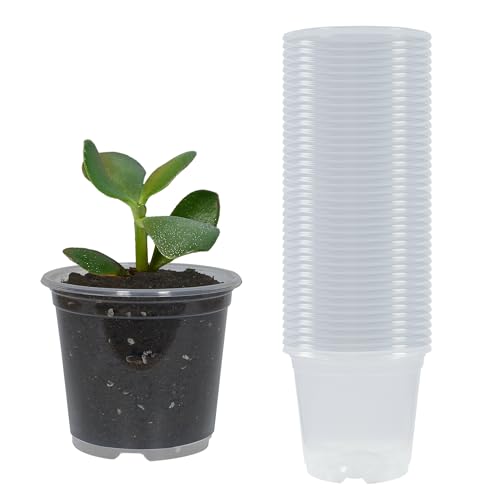
This set emphasizes clear visibility with 3-inch pots and drainage. The thicker plastic supports durability for repeated use, and the clear design helps monitor root growth and soil moisture. Best for growers who want to observe root development closely. A limitation is the smaller 40-pack size, which may require purchasing in multiple bundles for large projects.
Who it’s best for: observers who track root growth and moisture. Why selected: durable, clear pots ideal for careful seed starting and root observation.
Buying Guide
What size should I choose? For most seed starting and cuttings, 3 inches provides a comfortable root volume while remaining easy to handle. If you use square trays, square pots like RooTrimmer can maximize space. If root visibility matters, clear pots like FUOAUYK or TNTIWQ are helpful.
What material matters? Durable plastic is reusable and lightweight. Look for pots with drainage holes and compatible drainage trays to manage water and avoid root rot. For beginners, sets with reseable shapes and simple stacking help create an efficient workflow.
Are all 3″ pots the same for transplanting? Not exactly. Some pots deform under pressure but return to shape; others are rigid but stack well. Consider your transplanting technique: squeeze-and-remove or lift-and-dump methods may benefit flexible pots, while rigid pots reduce soil compression during movement.
How many should I buy? If you run frequent propagation, buying in bulk (like 100 or more pots) reduces per-unit cost and ensures you have backups. For seasonal or small projects, 40–50 piece sets can be adequate.
What about visibility vs. price? Clear pots offer root observation but may show soil sooner, while colored or opaque pots hide soil moisture. Balance visibility needs with your budget and workspace setup.
Frequently Asked Questions
- What is the main advantage of 3-inch nursery pots? They provide adequate root space for seedlings and cuttings while staying compact and easy to manage.
- Do these pots come with drainage holes? Yes, the listed pots include drainage holes, and some sets include matching drainage trays.
- Should I choose square or round pots? Square pots maximize tray space and stability; round pots often offer more uniform root spreading. Choose based on your tray configuration.
- Can I reuse these pots after transplanting? Most of these pots are reusable; avoid prolonged deformation that could affect future use and wash thoroughly between cycles.
- Is a clear pot better than a colored pot? Clear pots aid root observation; colored pots can help with moisture management by reducing light exposure to roots in some setups.
- How many pots should I buy for a batch of seedlings? Estimate your batch size and consider a little extra for replacements or failed germinations. Bulk options save per-unit cost.