Best Aerator for Small Yard: Top Manual Lawn Aerators for Compact Spaces
Answering the question: the best aerator for a small yard is a manual spike or plug aerator that is lightweight, easy to maneuver, and designed to reach compact soils without overpowering your space. This guide highlights five practical options ideal for small lawns, edges, and tight spots. Each product is chosen for ease of use, efficient aeration, and maintenance convenience. Best for homeowners with limited storage, casual gardeners, and first-time lawn care users seeking simple results.
Product Comparison at a Glance
| Product | Spikes | Best For | Key Benefit |
|---|---|---|---|
| Walensee Spike Lawn Aerator (15 Spikes) | 15 | Small lawns, edges, bare spots | Efficient three-row layout for compact areas |
| Snuggalux Lawn Aerator Tool | 15 | Compact soil, high-efficiency | Double-layer self-cleaning spikes |
| Fiedyka Aerator Lawn Tool | 16 | Deeper aeration, dense yards | 3-layer anti-loosening design with self-clean |
| KXGBARN Lawn Aerator Tool | 15 | Anti-clog performance, easy use | Dual-layer self-cleaning spikes |
| Walensee Four-Row Spike Lawn Aerator | 20 | Spot aeration in tight spaces | Four-row coverage for targeted areas |
Walensee Spike Lawn Aerator 15 Spikes

Best for small lawns and lawn edges, the Walensee spike lawn aerator uses 15 iron spikes in a three-row layout, each spike about 2.8 inches long. This design improves coverage per step, helping air, water, and nutrients reach grassroots more efficiently. Best for prepping small areas before seeding, watering, or fertilizing. Caution: for very wet or soggy soils, aeration may feel resistant; allow soil to dry slightly for optimal results.
Snuggalux Lawn Aerator Tool With Self-Cleaning Spikes

This manual aerator features a double-layer self-cleaning spike head that automatically removes dirt and leaves as spikes lift, reducing downtime from clogging. It uses 15 heavy-duty steel spikes to penetrate compacted soil, creating aeration holes that improve airflow, water absorption, and nutrient delivery. Best for busy gardeners who want a faster, low-maintenance option. Limitation: the anti-clog system helps, but very wet or heavy clay soils may still require multiple passes.
Fiedyka Aerator Lawn Tool With 16 Spikes

Equipped with 16 ultra-sharp iron spikes, the Fiedyka aerator offers deeper penetration for effective aeration. A 3-layer anti-loosening top plate locks all spikes in place, preventing wobble and lost spikes. A spring-loaded self-cleaning mechanism ejects debris from the bottom plate for uninterrupted use. Best for larger small yards that require deeper channels. Caution: setup may be heavier than ultra-light models, so choose based on how much ground you cover in a session.
KXGBARN Lawn Aerator Tool With Self-Cleaning Spikes
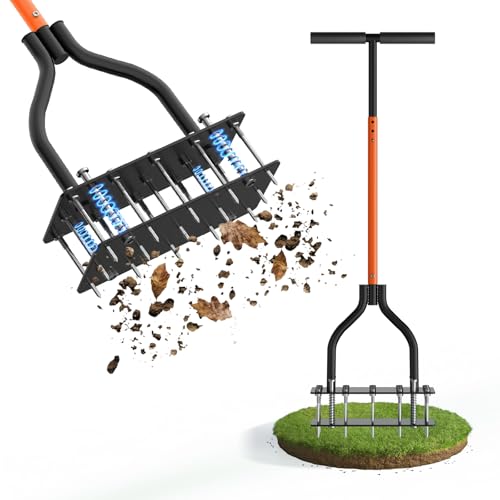
The KXGBARN aerator uses a dual-layer self-cleaning spike design to automatically remove soil and leaves when lifted, keeping spikes clear for faster work. It includes 15 heavy-duty steel spikes for deep penetration, which helps improve airflow, water uptake, and nutrient delivery. Best for those who need a reliable, clog-resistant option. Limitation: the dual-layer mechanism may require occasional inspection to ensure spikes remain securely fastened.
Yard Butler Manual Lawn Coring Aerator

Although primarily a coring design, this Yard Butler iron tool improves soil aeration through durable dual plugs and a leverage-friendly long handle. Best for homeowners seeking a robust, long-lasting option with comfortable grip and minimal bending. Caution: coring models can be heavier and slower for very small lawns compared to spike-only tools.
Walensee Rolling Lawn Aerator

This heavy-duty manual roller uses 30 spikes arranged in a matrix and includes a fillable drum to add weight for deeper penetration. Best for small yards needing more consistent soil penetration and even aeration. Limitation: added weight means more effort, especially on large sessions. A good fit for those who want uniform results in tighter spaces.
Walensee Four-Row Spike Lawn Aerator

Designed for small yards, this four-row spike aerator concentrates 20 sharp spikes across a compact footprint for spot aeration, overseeding, and soil prep. Best for precise soil work along edges and tight bed lines. Limitation: fewer rows than some larger models means slightly less coverage per pass in larger zones.
Buying Guide: How To Choose The Right Aerator For Your Small Yard
- Type of aeration: Spike vs plug. Spike aerators are lighter and easier to use for small yards; plug aerators remove cores and are more aggressive but heavier.
- Spikes vs rows: More spikes in a single pass improve coverage. Multi-row designs help with small spaces and edges.
- Weight and ground conditions: Heavier models penetrate compact soil more effectively but require more effort. Some models offer fillable drums or weight adjustments.
- Self-cleaning features: Anti-clog or self-cleaning spikes reduce downtime in wet or debris-filled soil.
- Ease of use: Long handles, ergonomic grips, and stable footing matter for user comfort and consistency.
- Durability and materials: Steel spikes and reinforced plates resist bending and wobble for repeated use across seasons.
- Maintenance: Look for simple assembly, secure spike retention, and minimal parts that require regular tightening.
Frequently Asked Questions
- What’s better for a small yard, spike or plug aeration? Spike aerators are typically lighter and easier to maneuver in tight spaces, while plug aerators remove cores for deeper channels. For very small yards, a spike model is usually more practical.
- How many passes should I make in a small yard? Start with 2–3 passes in different directions, then assess soil and root response. Avoid over-aerating in a single session.
- Can I aerate wet soil? Aeration performs best when the soil is slightly moist but not soggy. Very wet soil can clump and clog tools, reducing effectiveness.
- Is self-cleaning necessary? Self-cleaning spikes help maintain efficiency, especially in clay or clay-loam soils where debris clogs are common.
- Should I weigh down a rolling aerator? Weighing can improve penetration in hard soils but adds physical effort. Use the drum option or add weight gradually to avoid over-stressing the ground.
- How do I know if aeration is working? You should see fresh soil channels and improved water absorption after the next rain or irrigation. Healthier root zones typically follow after a couple of weeks.