Best Air Pumps for Fish Ponds: Reliable Aeration for Healthier Water
Choosing an air pump for a pond or large aquarium involves balancing airflow, head height, efficiency, and durability. The right pump keeps oxygen levels steady, supports beneficial bacteria, and powers features like air stones or fountains. Below are five top-rated options tailored for ponds and large tanks, spanning compact units to high-output models. Each product section includes a quick overview, specs, and practical considerations to help you select the best fit for your setup.
| Product | Brand | Output | Power | |
|---|---|---|---|---|
| AquaMiracle 600GPH (18W) | AquaMiracle | 600 GPH | 18 W | Small to mid-sized ponds |
| AquaMiracle 1750GPH (120W) | AquaMiracle | 1750 GPH | 120 W | Large ponds, hydroponics |
| AquaMiracle 1200GPH (58W) | AquaMiracle | 1200 GPH | 58 W | Medium to large ponds |
| Pawfly 254 GPH | Pawfly | 254 GPH | 7 W | Medium to large tanks and ponds |
| AQQA 356 GPH (10W/15W options) | AQQA | 356 GPH (15W option) | 10–15 W | Up to 1000 gal systems, hydroponics |
The following selections were chosen for their relevance to pond aeration, durability, and flexibility. Each product has adjustable or multi-outlet options, making them suitable for running air stones across ponds, waterfalls, or hydroponic setups. Energy efficiency and heat dissipation are also considered for longer life in outdoor or semi-outdoor environments.
AquaMiracle 18W 600GPH Aquarium Air Pump
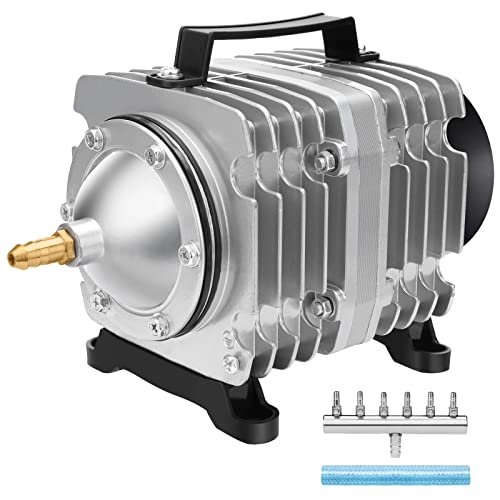
The AquaMiracle 600GPH unit combines high output with a compact form factor. Its 18W electromagnetic motor delivers 600 GPH at a pressure of about 0.02 MPa, suitable for mediumpond volumes and hydroponic setups. The aluminum housing enhances heat dissipation, which helps maintain endurance in warmer conditions or when used in sun-exposed locations. Lubricant-free internals reduce maintenance needs and contribute to a longer service life. For outdoor ponds, ensure the unit is placed in a well-ventilated area and consider a cooling fan if heat buildup becomes noticeable. This model is a solid choice for mid-sized fish ponds requiring steady aeration without excessive noise.
Key considerations:
– Output suitability depends on pond size and depth; measure your water volume and head height.
– Aluminum housing aids cooling but placement matters for longevity.
– Keep away from accumulation of debris; regular filter checks help sustain performance.
AquaMiracle 1750GPH 120W Pond Aerator

Built for larger installations, this 120W pump delivers a robust 1750 GPH with a pressure around 0.032 MPa. The aluminum housing provides excellent heat dissipation, and its heavy-duty design targets ponds, large aquariums, and hydroponic systems that require substantial aeration. Lubricant-free construction supports long-term reliability while maintaining efficiency. Place the unit where airflow is unrestricted and consider pairing with multiple stones or a spray bar to maximize dissolved oxygen distribution. Suitable for koi ponds or water gardens with higher oxygen demands.
Key considerations:
– High-output needs proper electrical protection and weatherproofing if used outdoors.
– Ensure adequate space above water level to reduce splash and noise.
– Regular inspection of hoses and connectors prevents leaks and maintains even air distribution.
AquaMiracle 1200GPH 58W Aluminum-Air Pump
This 58W model provides 1200 GPH with similar heat-dissipating aluminum housing. It’s a versatile choice for mid-to-large ponds or multi-tank installations where high flow is needed without an extreme electrical load. The lubricant-free mechanism and sturdy piston system aim to reduce power consumption while extending life. Its design supports placing multiple air outlets across a pond’s surface for uniform oxygenation. Plan for adequate ventilation and consider a maintenance schedule to replace pre-filter media as needed.
Key considerations:
– Ideal balance of power and noise; verify noise ratings in your environment.
– Useful with air stones, diffuser plates, and decorative fountain features.
– Durability in outdoor conditions; ensure IP-rating or enclosure is appropriate for your location.
Pawfly 254 GPH Multi-Outlet Air Pump

The Pawfly unit provides 254 GPH with a compact footprint and a robust 7 W motor. It includes multiple outlets and a flow-control lever, enabling per-outlet adjustments for balanced oxygenation across a pond surface. This makes it suitable for medium-size aquariums and water gardens that need reliable aeration without excessive electrical use. Its design favors quiet operation at lower settings, with higher flow producing a noticeable, but manageable, hum. Ideal for homes with multiple tanks or a single larger pond requiring several air lines.
Key considerations:
– Multi-outlet capability helps with even distribution; use a manifold if needed.
– Check for vibration dampening to minimize noise at higher flows.
– Ensure outlet tubing is compatible with your diffusers or stones to prevent leaks.
AQQA 356 GPH Ultra-Quiet Pond Aerator

The AQQA model delivers 356 GPH with a choice of 10W or 15W variants, producing air pressure around 0.026–0.03 MPa. It’s designed for ponds or large tanks up to around 600–1000 gallons and includes multiple outlets and adjustable flow. The unit emphasizes durable copper motor components and stable airflow, helpful for fish respiration and root growth in hydroponics. It is suitable for outdoor deployment in covered locations, and its adjustable flow supports fine-tuning to match seasonal oxygen needs in ponds.
Key considerations:
– Energy efficiency with copper-wired motor design helps long-term reliability.
– Use per-outlet regulators to customize oxygenation across different zones of a pond.
– Place above water level to reduce submergence risk and improve cooling; monitor heat buildup in hot climates.
Buying Guide: Key Purchase Considerations For Pond Air Pumps
When selecting an air pump for a pond, consider the following factors to ensure you meet your system’s oxygen needs without over-investing:
- Flow rate and head height: Calculate required GPH based on pond volume and depth. Higher head height requires stronger pumps or multiple outlets.
- Outlet configuration: Multi-port setups enable distributed aeration. Consider a manifold or multiple diffusers for even oxygenation.
- Power and efficiency: Higher wattage units deliver more air but consume more electricity. Lubricant-free designs reduce maintenance needs.
- Heat dissipation and placement: Aluminum housings help with heat, but ensure adequate ventilation and avoid enclosed spaces to extend life.
- Noise level: Look for models with quiet operation ratings, especially if the pond is near living or outdoor living areas.
- Durability and weatherproofing: Outdoor ponds demand weather-resistant housings or protective enclosures. Regular checks prevent failures due to moisture.
- Maintenance: Replacement diaphragms, diffusers, or pre-filters extend pump life. Keep spare hoses and clamps on hand for seasonal changes.
- Installation considerations: Ensure secure mounting, proper tubing, and correct diffuser placement to maximize oxygen transfer.
- Warranty and support: A solid warranty helps offset outdoor exposure risks and provides assurances for long-term use.
In summary, match the pump’s output to your pond’s size and depth, plan for horizontal and vertical head, and prioritize reliability and heat management. For outdoor ponds, select models with robust housings and ensure proper ventilation. For hydroponic setups or water gardens, consider adjustable outlets and per-outlet controls to optimize oxygen delivery where it’s most needed.