Best American Dark Green Arborvitae for Privacy Screens
Answer: Choose these American arborvitae options to create fast, dense privacy screens with year-round greenery. The top picks here suit different buyers—privacy hedge planners, beginner planters, seed-start enthusiasts, and those seeking compact or larger-scale screening. The following selections emphasize dark green foliage, reliable growth, and adaptable hardiness across common American planting zones.
| Product | Best For | Key Benefit |
|---|---|---|
| Greenwood Nursery: Live Trees – American Pillar Arborvitae | Fast-growing privacy hedges | Rapid height gain for narrow screen needs |
| ‘Nigra Dark Green’ Arborvitae Shrub | Compact, durable screens | Dark green color with evergreen structure |
| TomorrowSeeds American Arborvitae Seeds | DIY privacy screens from seed | Cold-hardy, adaptable germination |
| KVITER 150 American Arborvitae Tree Seeds | Large-scale plantings | High germination and quick establishment |
| Perfect Plants Thuja Green Giant 2ft. Tall 8-Pack | Established starter hedges | Dense foliage with tall-mature potential |
Greenwood Nursery: American Pillar Arborvitae — 2 Quart Pots

The American Pillar Arborvitae is designed for fast privacy hedges in narrow spaces. It is described as a truly fast-growing evergreen, capable of gaining 3 feet or more per year after the first planting season when spaced 2.5–3 feet apart. Best for buyers seeking quick screening along fences, pool areas, or property lines where a narrow, upright silhouette is preferred. A limitation is that very tight spacing or extreme pruning can affect the natural narrow habit over time; plan for regular maintenance to maintain the hedge shape.
’Nigra Dark Green’ Arborvitae Shrub — Thuja Occidentalis

This Nigra Dark Green variety is a compact, evergreen shrub suitable for low to mid-height screens. Best for buyers wanting dark-green color and a manageable mature height of roughly 20–30 feet, depending on pruning. It thrives in full sun to partial shade. Use caution if aiming for very tall, dense screens in limited space, as size can vary with climate and soil conditions.
TomorrowSeeds American Arborvitae Seeds
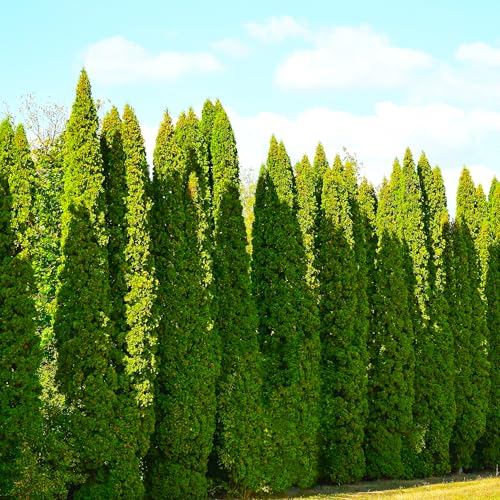
These seeds offer a DIY path to establishing evergreen privacy screens or hedges. They emphasize dense, year-round foliage and wind protection. Best for buyers who enjoy growing from seed and want to tailor density through planting patterns. A caution is the longer lead time to establish a visible hedge, as germination and seedling growth require care and adequate space, sunlight, and well-drained soil.
KVITER 150 American Arborvitae Tree Seeds

These seeds are pitched for high germination in zones 2–8 and are suitable for creating fast-growing privacy trees. They’re best for buyers who prefer growing from seed and want to establish a hedge in stages. A potential limitation is the need for cold stratification and consistent moisture to maximize germination rates, which requires planning and care.
Perfect Plants Thuja Green Giant 2ft. Tall 8-Pack

The Green Giant is a popular privacy evergreen, known for dense foliage and a robust growth habit. Best for buyers aiming to quickly establish a larger, more substantial screen from starter plants. It can reach substantial height and width, so ongoing pruning may be needed to maintain a desired shape. Avoid if you want a very narrow hedge from the outset without consistent maintenance.
Greenwood Nursery: American Pillar Arborvitae — 5 Quart Pots
This larger-potted variant supports faster immediate screening. Best for buyers seeking a quicker visual impact with fewer transplant shock issues. It shares the same fast-growing traits as the smaller pots but requires more space for root expansion. A limitation could be the larger initial investment and transit handling for bigger pots.
Buying Guide: Key Considerations For Selecting American Arborvitae
- Purpose and space: Are you building a tall, narrow privacy screen or a broader hedge? Narrow, fast-growing varieties fit tight spaces; larger specimens suit expansive borders.
- Growth rate and mature size: Plan for how tall and wide you expect the hedge to become. Regular pruning affects final dimensions.
- Soil and sun: Most American arborvitae prefer full sun to partial shade and well-drained soil. Poor drainage can hinder growth and health.
- Hardiness zones: Choose cultivars suited to your climate. Some seeds and nursery stock specify zone compatibility (e.g., zones 2–8).
- Starting method: Decide between starting from seeds (more economical, longer to establish) vs. nursery plants (faster, more predictable results).
- Maintenance: Consider pruning needs, water requirements, and potential pest or disease considerations in your region.
- Color and texture: Dark green foliage offers a classic look; some varieties have deeper or glossier tones that contrast with other landscape elements.
FAQ
- What is the best American arborvitae for quick privacy?
- Answer: Upright, fast-growing varieties created for privacy hedges, such as pillar-like cultivars, can provide quick screening when planted with recommended spacing.
- Do arborvitae seeds reliably establish into hedges?
- Answer: Seeds can establish successfully with proper stratification and soil conditions, but germination rates vary by lot and climate.
- What spacing is ideal for a privacy hedge?
- Answer: For narrow, vertical hedges, space plants about 2.5 to 3 feet apart to encourage dense growth within 2–3 years.
- Are these plants suitable for cold climates?
- Answer: Many Thuja occidentalis varieties tolerate zones 3–7 or 2–8, depending on cultivar and seed stock.
- What maintenance does a mature arborvitae hedge require?
- Answer: Regular trimming to maintain desired width, irrigation in dry periods, and monitoring for common pests and diseases in your region.