Best Animal Netting for Garden Protection
Guarding your garden from birds, deer, and other small animals is essential to protect fruits, vegetables, and ornamental plants. Below is a curated guide to five reliable garden netting options, highlighting sizes, mesh density, durability, and installation features. The selections focus on durable, reusable netting with easy setup and broad animal coverage, suitable for American gardens and various outdoor spaces.
| Product | Brand | Size / Mesh | Key Benefit |
|---|---|---|---|
| Feitore Deer Fence Netting | Feitore | 7 ft x 100 ft; 3/4″ mesh | Strong, reusable deer and bird protection |
| ORIVOGAS Plastic Mesh Fence | ORIVOGAS | 4×75 ft; 5/8″ square mesh | Versatile, reinforced edges, heavy-duty barrier |
| FARAER Garden Netting | FARAER | 10×10 ft; 0.8 mm x 1 mm mesh | Ultra-fine protection with see-through design |
| KLEWEE Bird Netting | KLEWEE | 7.5 ft x 100 ft; 3/4″ mesh | Strong, reusable barrier against multiple pests |
| Mklsit Deer Netting Fence | Mklsit | 8 ft x 100 ft; 3/4″ mesh | Taller, heavier-duty protection for larger spaces |
Feitore Deer Fence Netting
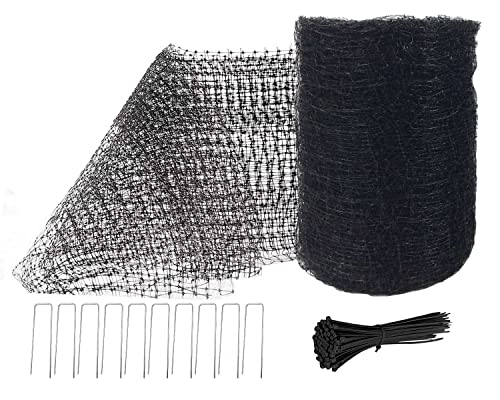
Feitore Deer Fence Netting offers a robust 7 ft by 100 ft barrier with a 3/4 inch square mesh. The polypropylene construction provides durability to resist tearing, rust, and rot, making it reusable across seasons. Included accessories—installation nails and cable ties—facilitate quick setup. This netting functions as an effective barrier against deer and birds, while remaining safe for plants and adaptable for other small animals. It is easy to reposition as garden layouts change and can be repurposed for ponds, shrubs, or trees without compromising growth.
ORIVOGAS Plastic Mesh Fence

ORIVOGAS Deer Fencing features reinforced edges with ropes for quick, tangle-free installation and secure ground fastening. Its 5/8” square mesh and 55 gsm HDPE weave provide tear resistance, UV protection, and resilience against deer, dogs, and other intruders. The design emphasizes versatility, serving not only as a garden barrier but also as a temporary fence, snow fence, or poultry barrier. This flexibility makes it suitable for protecting crops, pools, and family spaces in varied outdoor settings.
FARAER Garden Netting
FARAER Garden Barrier Netting provides an ultra-fine 0.8 mm x 1 mm mesh in a 10×10 ft frame. The see-through design allows sunlight, air, and moisture to reach plants while keeping out birds, insects, and other animals. Its lightweight construction is easy to drape over vegetables, fruits, or greenhouse rows. The netting’s versatility extends to use in orchards or indoor windows, where it can shield tree leaves and reduce dust while minimizing visual obstruction.
KLEWEE Bird Netting

KLEWEE Bird Netting scales to 7.5 ft by 100 ft with a 3/4 inch mesh, designed to deter birds, deer, squirrels, and other small pests. The kit includes metal U-shaped staples and zip ties, facilitating straightforward installation across raised beds, fruit trees, and shrubs. Constructed from UV-stabilized polypropylene, the netting is durable and reusable, offering long-term garden protection without impeding plant growth or pollinator access when designed correctly.
Mklsit Deer Netting Fence
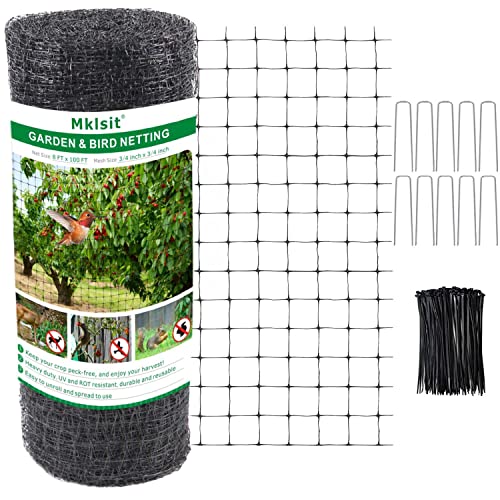
Mklsit Deer Netting Fence expands to 8 ft in height and 100 ft in length with a 3/4 inch mesh. The taller, heavier fence provides strong animal barriers for larger garden areas and trees. Made from UV-stabilized polypropylene, it resists tearing and remains reusable through multiple seasons. The design emphasizes sturdy performance against birds, deer, and small mammals while allowing adequate airflow and sunlight to reach plants.
Buying Guide
- Mesh size: Choose 3/4 inch to 5/8 inch mesh for a balance between protection and airflow. Finer mesh blocks smaller pests but may restrict pollinators if misapplied.
- Height and area coverage: Taller nets (6–8 feet) suit larger shrubs and trees; longer lengths (75–100 feet) reduce gaps in extensive beds. Consider modular or roll-out designs for flexibility.
- Durability: Look for UV-stabilized, UV-resistant HDPE or polypropylene. Reusability matters for long-term value and environmental impact.
- Installation: Tools and accessories (stakes, ties, staples) speed setup and reduce tangles. Reinforced edges and tensioning features improve longevity in windy areas.
- Versatility: Some nets double as temporary fences or plant protectors for livestock, pets, or snow. Assess if you need a barrier for multiple uses.
- Plant health considerations: Ensure the netting allows adequate air, light, and water. See-through designs help monitor plant growth without removal.
- Impact on pollinators: If protecting fruiting plants, plan placements to avoid shading key pollinator activity and flowering zones.
- Maintenance: Remove and inspect nets periodically to prevent entanglement with vines or branches and to check for wear or tears.
- Cost vs. risk: Heavier-duty nets cost more upfront but save time and crop losses over seasons in high-animal-pressure areas.
- Evaluate your garden layout: bed shapes, trees, and trellises influence netting fit and mounting approach.
- Test a small area first: Verify that the mesh density and height effectively deter target pests while not hindering plant growth.
- Plan for seasonal changes: Some nets may need removal during harvest or reconfiguration after pruning.
- Check compatibility with garden birds: Allow access for pollinators and beneficial birds as needed.
- Storage considerations: Choose nets that fold compactly for off-season storage to maximize lifespan.
By selecting the right animal netting and installing it thoughtfully, American gardeners can protect crops and ornamentals while maintaining healthy, productive plants across seasons.