Best Anti Termite Spray for Wood That Really Works in Homes
Answering the search for effective anti termite spray for wood, this guide highlights five reliable options that target termites and other wood-infesting pests. These products are suited for homeowners seeking quick-on-contact control and long-lasting protection for indoor and outdoor wood structures. The top picks vary by application style: some offer precise crack-and-crevice treatment, others provide broad-area coverage or foam delivery for voids. This overview helps choose the right spray based on your pest problem, space, and convenience.
Summary table of selected products
| Product | Best For | Key Benefit | Limitations |
|---|---|---|---|
| Terro Ready to Use Indoor/Outdoor T1901SR (2 Pack) | Quick, on-contact with long residual control | Two-way nozzle for broad or precise application; up to one month residual | May require multiple applications for severe infestations |
| Spectracide Terminate Termite & Carpenter Ant Killer | Indoor and outdoor barrier treatment | Kills on contact; up to 9 months indoors | May require repeated use for active colonies |
| Terro Ready to Use Carpenter Ant & Termite Killer (T1100-6) | Versatile DIY termite and ant control | Kills on contact; up to 4 months residual | Best for cracks, crevices, and trails |
| Spectracide Terminate Termite Killing Foam | Foam delivery for voids and channels | Expands into hard-to-reach areas; termite and carpenter bee control | Foam may require patience to settle in voids |
| BASF Termidor Foam 20 oz | Professional-grade foam for deep penetration | Non-repellent formulation; strong penetration of voids | Typically part of professional treatment plans |
Terro Ready to Use Indoor and Outdoor Carpenter Ant, Termite, and Carpenter Bee Killer Aerosol Spray
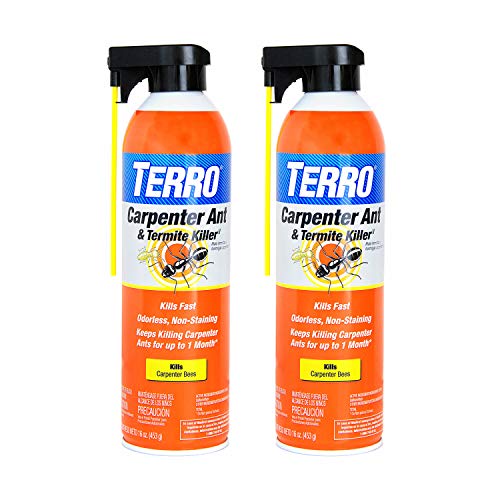
Best for: Homeowners needing a fast-acting spray with convenient coverage. The Terro T1901SR kills wood-infesting insects including carpenter ants, termites, and carpenter bees. It offers fast action on contact and provides residual control for up to a month. The two-way nozzle supports both broad applications and precise treatment in cracks and crevices, making it suitable for both walls and tight spaces around wood structures.
Why selected: This product combines immediate effectiveness with a practical spray design, helping homeowners target visible pests and protect vulnerable wood areas. It is particularly useful in rooms with infestations near wooden framing or decking, and for quick spot treatments.
Caution: Avoid over-application in confined indoor spaces to minimize residue in living areas. Always ventilate after use and follow label directions for safe use around pets and children.
Spectracide Terminate Termite & Carpenter Ant Killer

Best for: Indoor and outdoor barrier treatments that aim to stop termites and carpenter ants across larger spaces. This product kills on contact and provides extended protection indoors—up to nine months—making it suitable for long-term prevention around foundations, window frames, and decks.
Why selected: It offers a substantial protection window with a single application, which is valuable for homeowners in termite-prone regions. It also targets other listed pests, giving a broader pest control option for mixed infestations.
Caution: Indoor use requires careful ventilation and adherence to label directions to minimize exposure in living areas. Not ideal as a sole treatment for severe infestations without professional guidance.
Terro Ready to Use Carpenter Ant & Termite Killer (T1100-6)

Best for: DIY termite and carpenter pest control with versatile use around cracks, crevices, crawl spaces, and trails. This spray provides on-contact kill with residual action lasting up to four months, suitable for ongoing maintenance around wooden structures.
Why selected: The spray’s crack-and-crevice targeting makes it effective for treating active trails and entry points. It’s a solid option for homeowners who want a straightforward spray for routine maintenance without larger equipment.
Caution: Do not rely on it as the sole treatment for large or established colonies. For significant infestations, professional assessment is recommended.
Spectracide Terminate Termite Killing Foam
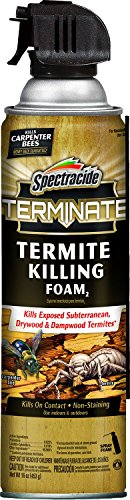
Best for: Foam delivery that expands into voids and channels behind veneers, voids in damaged wood, and other hard-to-reach areas. It specifically targets exposed termites upon contact and also treats carpenter bees in active tunnels.
Why selected: Foam expansion makes this product useful for localized treatment where termites hide in wall cavities or behind wood panels. It’s a practical option when access to voids is possible without major demolition.
Caution: Allow foam to fully expand and settle before checking results. Overuse can create excess foaming in undesired areas; follow application guidelines carefully.
BASF Termidor Foam 20 oz

Best for: Deep-penetration foam that treats wall voids, decks, and other wood elements where termites and other pests may inhabit void spaces. This product is designed for thorough spot treatments with strong penetration capabilities.
Why selected: Termidor Foam provides a powerful option when the goal is to reach hidden colonies within wood structures. It supports targeted treatment without invasive procedures like fumigation, making it a favored choice for professionals and knowledgeable DIYers.
Caution: For larger infestations or complex structures, consider professional application guidance to ensure comprehensive coverage and safety around building materials.
Buying Guide: Key Considerations For Choosing The Right Anti-Termite Spray
- Application style: Do you need broad coverage, crack-and-crevice precision, or foam expansion into voids? Choose based on where pests hide in your wood structures.
- Target pests: Some sprays kill termites, carpenter ants, and carpenter bees on contact, while others emphasize long-term residual protection. Match to your pest profile.
- Indoor vs outdoor use: If treating living spaces, prioritize low-odor, quick-ventilating products. Outdoor-only uses may allow stronger formulations but require caution for plants and pets.
- Penetration and delivery: Foams and multi-directional nozzles help reach hidden infestations. Consider whether you need deep penetration into voids or surface applications.
- Safety and ventilation: Always follow label directions, wear protective gear if recommended, and ensure proper ventilation during and after application.
- Residue duration: Evaluate how long protection lasts in your environment. Longer residual control reduces reapplication frequency but may require careful surface considerations.
- Reapplication plan: Some products offer up to several months of protection; plan for maintenance cycles to prevent reinfestation.
Frequently Asked Questions
- What is the best spray for termites on wood surfaces? A: The best choice depends on access to voids and desired coverage. Foam and crack-and-crevice sprays are useful for hidden infestations, while broad-contact sprays work for accessible areas.
- Can I use termite sprays indoors around wooden furniture? A: Yes, but follow label directions for indoor use, ensure ventilation, and avoid applying near food areas and children’s spaces.
- Do these sprays kill carpenter bees as well as termites? A: Some formulations target carpenter bees in addition to termites and carpenter ants, but always verify the listed pests on the product label.
- How long does residual protection last? A: It varies by product and conditions; some provide up to a month, others claim up to nine months indoors. Reapplication may be needed for ongoing risk areas.
- Should I hire a professional for termite treatment? A: For extensive infestations or structural risk, professional assessment is advised. DIY products work for localized, manageable problems.
- Are these sprays safe for pets and kids? A: Use caution; read the label for safety guidance, allow proper ventilation, and keep treated areas off-limits until dry and safe.