Best Apple Tree Fertilizer for Healthier Trees and Richer Harvests
Apple trees respond best to balanced, timely nutrition that supports leafy growth, strong roots, and flavorful fruit. The right fertilizer helps apples develop robust canopies, withstand seasonal stress, and yield fruit with excellent size and sweetness. This guide highlights five highly regarded Apple Tree fertilizers available to American gardeners, spanning organic blends, liquids, and slow-release options. Each product is chosen for proven performance with apple trees, from early-season growth to fruit development. Review the key nutrients, application guidelines, and ideal scenarios to determine the best fit for your orchard or backyard trees.
The table below offers a quick snapshot of the five selections, including brand and primary benefit. Use it as a starting point to compare options before diving into full details for each product.
| Product | Brand | Main Benefit |
|---|---|---|
| Farmer’s Secret Fruit Tree Booster Fertilizer | Farmer’s Secret | Early-growth nutrition; phosphorus-rich formula |
| TPS NUTRIENTS Apple Tree Fertilizer | TPS NUTRIENTS | Balanced liquid feed for apple, pear, and other fruit trees |
| HiThrive 16oz Apple Tree Fertilizer | HiThrive | Nitrogen, phosphorus, potassium blend for growth and fruit quality |
| Old Cobblers Farm Wicked Growth Apple Tree Fertilizer | Old Cobblers Farm | Balanced nutrients for strong roots and abundant harvests |
| Espoma Tree-Tone Organic Fertilizer | Espoma | Organic 6-3-2 with calcium for apples and other fruit trees |
Farmer’s Secret Fruit Tree Booster Fertilizer

Farmer’s Secret Fruit Tree Booster Fertilizer comes in a 32-ounce bottle designed for all fruit trees, including apples. The label emphasizes a highly concentrated formula that targets early growth—precisely the period after dormancy when trees are most eager to develop a strong root and shoot system. The product aims to deliver phosphorus-rich nutrition to support root development and flower formation, setting the stage for robust fruit set and eventual yield. The marketing notes suggest that “a little goes a LONG way,” which typically means a smaller application rate per tree while still delivering meaningful results. This can be advantageous for home orchards with limited application windows or gardeners seeking a straightforward regimen during the critical first weeks of spring.
In practice, the fertilizer is positioned to support early-season vigor, helping trees recover from winter and move into active growth as buds begin to swell. It’s compatible with a broad range of fruit trees beyond apples, making it a versatile choice for mixed-home orchards. Users should follow label directions to avoid over-fertilizing and to minimize the risk of nutrient burn, especially on younger trees or in soils with high organic matter. While the emphasis on early growth is clear, success with any concentrated formula depends on proper dilution, even coverage, and timely watering during and after application.
TPS NUTRIENTS Apple Tree Fertilizer

TPS NUTRIENTS Apple Tree Fertilizer is a liquid plant food designed for a broad spectrum of fruit trees, including apple trees, pears, and other orchard crops. Its liquid form makes it easy to measure and apply, with rapid nutrient availability that can be advantageous for trees showing early signs of slower growth or stress. The product is marketed as a versatile solution suitable for all apple trees and other fruit-bearing species, which can be helpful for gardeners who manage multiple tree types in one landscape. Liquid feeds can be particularly useful when quick nutrient uptake is desired, such as during active growth or a period of rapid foliage development.
When using a liquid fertilizer, consider compatibility with irrigation schedules or sprayer applications. Proper dilution and even coverage are essential to maximize uptake and prevent leaf burn or runoff. Monitoring soil moisture is important, as dry soil can hinder absorption. For apple trees, consistent, moderate feeding during the growing season can support leaf vigor and fruit set, but it’s important to align the feeding schedule with the tree’s phenological stages and local climate conditions. TPS NUTRIENTS offers a practical option for gardeners preferring a straightforward liquid feed with broad compatibility.
HiThrive 16oz Apple Tree Fertilizer

HiThrive’s 16-ounce Apple Tree Fertilizer is designed to make 16 gallons of spray, with a focus on delivering macronutrients and micronutrients that promote robust growth and fruit development. The formula includes nitrogen for vibrant foliage, phosphorus to help establish roots and fruit development, and potassium to improve fruit quality and size. Additional micronutrients such as calcium, iron, and zinc support overall tree health, helping leaves stay strong and fruit to form evenly. The concentrated mix provides strong value, with the option to scale up as you expand your orchard or garden beds.
The product emphasizes a balanced approach to feeding fruit trees, aiming to boost growth while encouraging larger, juicier apples. It can be particularly useful for home growers who want a straightforward, spray-ready solution that works across multiple seasons. As with any liquid feed, even coverage and regular watering are critical to ensure uniform uptake and to minimize the risk of nutrient burn on sensitive tissues during peak growth. HiThrive’s blend targets core needs of apple trees and complements standard pruning and irrigation practices.
Jobe’s Organics Granular Apple Tree Fertilizer

Jobe’s Organics Granular Garden Fertilizer provides a 4-pound bag of organic, 3-5-5 NPK fertilizer grains designed to feed fruit and citrus plants with minimal runoff and odors. This option is OMRI-listed for organic gardening, making it appealing to gardeners seeking an approved organic approach for their apple trees. The granular format supports slow, steady nutrient release, aligning with typical pruning and growth cycles. The product’s organic composition means it is less likely to cause rapid flushes of growth that can stress trees, offering a more gradual, sustainable feeding strategy.
For apple trees, the organic granules help establish a stable nutrient baseline that supports flowering and fruit development over time. It is especially suitable for those who prefer not to use synthetic fertilizers or who want to maintain organic certification for edible landscapes. As with all granular products, timing and coverage matter; apply evenly around the drip line and water to help the granules dissolve and reach the roots efficiently. This option pairs well with mulch and soil-building practices to improve long-term soil health.
Old Cobblers Farm Wicked Growth Apple Tree Fertilizer
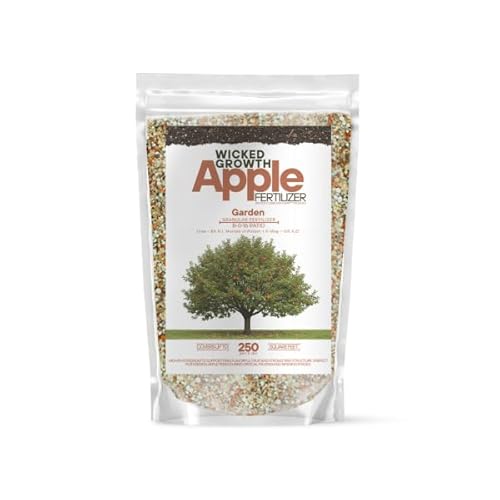
Old Cobblers Farm Wicked Growth Apple Tree Fertilizer is a balanced blend designed to strengthen root systems and promote vigorous growth across all apple varieties. The packaging options include multiple weight choices, enabling gardeners to select the right amount for their tree size and planting density. The product description emphasizes improved nutrient uptake and the development of a solid root foundation, which supports steady growth and resilience during fruiting. The potassium component is highlighted for enhancing fruit quality, sweetness, and overall yield, making it a practical option for home orchards focused on consistent harvests.
With a focus on robust roots and healthy foliage, Wicked Growth aims to provide sustained nutrition that translates into better flowering and more abundant fruit formation. Apple trees rely on a well-established root system to access water and minerals, so this fertilizer’s emphasis on foundational health can be advantageous for younger trees establishing themselves and for mature trees maintaining productivity. As with all fertilizers, follow label directions and consider soil tests to tailor applications to your specific site conditions.
Espoma Tree-Tone Organic Fertilizer

Espoma Tree-Tone Organic Fertilizer is a ready-to-use organic 6-3-2 blend with added calcium, designed for all trees including apple and peach. The product emphasizes an environmentally friendly profile with no sludges or toxic ingredients, making it appealing to gardeners prioritizing organic or low-impact feeding. Its packaging notes that best results come from spring and fall applications, aligning with traditional orchard practices. The inclusion of calcium supports cell wall development, which can enhance stress tolerance and fruit quality. This option is particularly attractive to those seeking a simple, low-synthetic approach to tree nutrition.
Tree-Tone’s organic base helps feed the tree gradually, reducing the risk of nutrient shock while supporting steady growth, leaf development, and fruitful yields over time. Because it is ready to use, it minimizes mixing steps and simplifies routine maintenance. While organic blends often release nutrients more slowly than synthetic liquids, they can contribute to long-term soil health and sustained production, especially when combined with watering, mulching, and proper pruning strategies.
Buying Guide
Choosing the Right Fertilizer Type: Organic vs Synthetic
Organic fertilizers, like Espoma Tree-Tone, tend to release nutrients more slowly and improve soil structure over time. They are favored by gardeners seeking sustainable practices and organic certification for edible crops. Synthetic or conventional blends, such as some liquid feeds, can deliver rapid results during active growth but may require more careful timing to avoid leaf burn or excessive lushness at the expense of fruit development. Consider your goals, soil health, and local regulations when choosing between organic and synthetic options. For apples, a mix of slow-release support and timely nutrients often yields the most consistent yields.
Nutrient Ratios and Key Elements for Apple Trees
Growth and fruit production rely on a balance of macronutrients (nitrogen, phosphorus, potassium) and important micronutrients (calcium, magnesium, iron, zinc). A fertilizer with a higher nitrogen level can promote leafy growth, but excessive nitrogen late in the season may delay fruit ripening. Phosphorus supports root development and blossom formation, while potassium improves fruit size and sweetness. Calcium helps fruit firmness and tree health. When selecting a product, review the N-P-K ratio and the presence of micronutrients to match your tree’s stage (post-dormancy growth, fruit set, or post-harvest recovery) and soil needs.
Application Timing and Method
Timing is crucial for apple trees. Early spring applications target new growth and bud break, while summer feeding can support fruit development. Some products are designed for spraying (liquids) or for root zones (granular or spikes). Always follow label directions to avoid salt burn and over-fertilization. For young trees, smaller, more frequent applications are often better than a single heavy dose. If you’re using a concentrated product, consider diluting according to the chart and applying at the drip line to reach the feeder roots effectively.
Coverage, Concentration, and Application Frequency
Concentrated formulas can deliver more months of feed with less product, potentially lowering long-term costs but requiring careful measurement. Granular or spike forms provide slower release, which can be beneficial for consistent nutrition across growing seasons. Liquid feeds deliver quicker nutrient availability, suitable for addressing short-term deficits or seasonal flushes. Evaluate your tree size, soil type, irrigation options, and the effort you’re willing to invest when deciding how often to feed and which format to use.
Environmental Impact and Safety
Organic options are typically favored for their lower environmental impact and reduced risk of chemical runoffs. In home gardens, the proximity to edible fruit makes careful handling essential. Always store fertilizers in a cool, dry place and keep them away from children and pets. If using synthetic products, consider pairing with soil-building practices such as compost or mulch to support microbial activity and soil health. For those with sensitive soil or water concerns, starting with an organic option and monitoring tree response can be a prudent approach.
Choosing the Right Fit for Your Orchard
When selecting a fertilizer for apple trees, consider your landscape scale, tree age, and climate. A young orchard may benefit from a formula that emphasizes root and canopy establishment, while mature trees may require ongoing balanced nutrition to sustain fruit quality. If you grow several fruit varieties, a versatile product that works across species can simplify management. Finally, read product labels for compatibility with pest control programs and any seasonal restrictions in your region. The right fertilizer, applied thoughtfully, supports healthier trees and more abundant harvests over time.