Best Aquatic Plant for Aquarium: Easy Live Plant Options for Beginners and Tinkerers
Direct answer: If you want reliable, low-maintenance aquatic plants for a freshwater tank, start with beginner-friendly bundles and well-known hardy varieties that tolerate low light. These options are suitable for new aquariums, community tanks, or tiny habitats where CO2 is not used. The top picks below cover easy care, varied textures, and scalable sizes for medium to large tanks. Each product is best for a specific setup, from low-light starter tanks to larger planted aquariums.
Buyer-oriented summary table
| Product | Best For | Notes |
|---|---|---|
| Live Aquarium Plants Bundle – 6 Freshwater Plants | Beginners seeking mix-and-match variety | Low-light friendly, mixed species |
| Amazon Sword – Echinodorus Bleheri x3 | Medium to large tanks, focal plant | Tall growth, needs pruning to keep light for others |
| CANTON AQUATICS Live Aquarium Plants Bundle 10 Assorted | Tanks needing diverse textures | Beginner-friendly, CO2 not required |
| Java Fern and Anubias Bundle | Low-tech, hardy decor | Attach to rocks/wood; slow growth |
| Marcus Fish Tanks 6 Jungle Val | Hanging/float-friendly background | Easy to grow, good for taller tanks |
Live Aquarium Plants Bundle – 6 Freshwater Plants

This mixed plant pack is designed for simplicity and reliability. It includes hardy freshwater plants suitable for beginners or anyone who wants a lush, natural look without CO2 systems. The assortment provides varying leaf shapes and heights to create depth in the aquarium. Best for new tanks or setups where low maintenance is essential. A caution: the exact species may vary, but include familiar low-demand varieties like Anubias or Java fern elements.
Amazon Sword – Echinodorus Bleheri x3 Plants

Amazon Sword Bleheri offers a tall, striking focal plant for mid-to-back positions in larger tanks. It tends to be undemanding and grows well even in modest light. The plant benefits from periodic pruning to prevent shading of smaller foreground plants. Best for medium to large aquariums seeking a dramatic greenery feature. Limitation: it requires regular trimming to maintain light access for neighboring plants.
CANTON AQUATICS Live Aquarium Plants Bundle 10 Assorted

This 10-plant assortment delivers a beginner-friendly, low-maintenance option with varied textures and growth habits. It includes bare-root, floating, and attached plants, all greenhouse-grown and pre-inspected. Best for new tanks needing versatility and a balanced, natural appearance. Choice tip: avoid overstocking with too many tall species in a small tank, which can shade shorter foreground plants.
Java Fern and Anubias Aquarium Plant Bundle
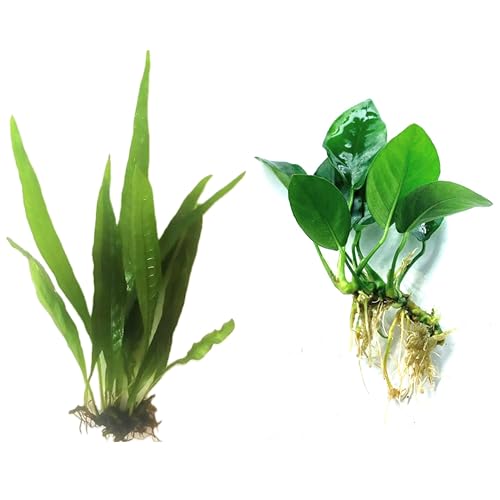
This duo focuses on easy, low-maintenance decor with slow-growing plants that attach well to rocks or driftwood. Anubias and Java Fern are well-suited for beginners who want resilient greenery without substrate dependency. Best for shaded corners or low-light tanks where fast-growing plants may struggle. Caution: extreme temperatures can affect live plants, especially during winter.
Marcus Fish Tanks 6 Jungle Val

Jungle Val is a classic background plant that grows tall, making it ideal for larger tanks or vertical display. It is forgiving and easy to propagate, which makes it a good pick for beginners wanting a plant that fills space with minimal effort. Best for: use as a soft screen behind foreground plants. Limitation: occasional leaf die-off can happen if lighting is not evenly distributed, so position spacing matters.
Buying Guide
What matters most when choosing aquatic plants?
Consider tank size, light levels, and water parameters. For low-tech setups, choose hardy, low-light varieties (Anubias, Java Fern, Vallisneria) that don’t require CO2 supplementation. For focal plants, select tall, visually striking species (Amazon Sword) to create a garden-like composition. Starter bundles provide immediate diversity without complex care.
Which plants fit beginners vs. experienced aquarists?
Beginners benefit from mixed bundles and single-species plants known for resilience in varied light. More experienced hobbyists may want fast-growing foreground species or dense carpeting types that require careful pruning and light management to prevent shade buildup.
Should I mix floating, rooted, and attached plants?
Yes. A combination yields depth and resilience. Floating species manage surface light and help reduce algae risk, while rooted plants anchor the substrate and support a natural ecosystem. Attach plants like Java Fern and Anubias to décor to maximize space and reduce substrate competition.
How to care for these plants long-term?
Regular trimming, consistent water quality, and stable temperatures support plant health. Remove decaying leaves promptly to prevent nutrient imbalance. For low-light tanks, avoid overcrowding with high-demand species. Always observe plant response after introducing new greenery to adjust lighting or placement as needed.
What if temperatures threaten plant health?
Extreme temperatures can stress live plants. If you anticipate heat or cold events, plan purchases accordingly and stagger introductions to minimize shock. In winter, avoid ordering live plants when temperatures are expected to fall below freezing at the lowest point of the day.
Quick tip: matching to fish and tank mates
Choose plants that offer hiding spots or grazing surfaces for compatible fish and shrimp. Taller plants provide visual barriers and reduce aggression, while low-growing species create inviting foreground zones for smaller tank inhabitants.
Frequently Asked Questions
- What is the easiest aquatic plant for a true beginner?
Species like Java Fern and Anubias are widely regarded as user-friendly due to their tolerance for low light and simple attachment needs.
- Do I need CO2 for these plants?
For the listed beginner-friendly options, CO2 is not required. These plants grow well in typical home aquarium lighting without supplemental injections.
- How should I position Amazon Sword in my tank?
Place it in the mid-to-back of medium or large tanks, with space for tall growth and pruning to maintain light for foreground plants.
- Can I mix five different plant types in one aquarium?
Yes, a diverse mix supports a natural appearance and ecosystem. Balance light exposure so shorter foreground plants receive enough light.
- What maintenance is needed after introducing new plants?
Monitor growth, remove dead leaves, trim when necessary, and ensure stable water conditions to prevent stress on plants and aquatic life.
- Are these plants suitable for shrimp tanks?
Most listed options are suitable for community tanks including shrimp, but verify each plant’s compatibility with your specific shrimp species and tank setup.