Best Bermuda Grass Seed for Golf Courses: Top Picks for 2026
Answering the question “which Bermuda grass seeds are best for golf courses?” this guide highlights five reliable options that deliver dense, wear-resistant turf suited to fairways, roughs, and practice greens. These selections emphasize quick establishment, drought tolerance, and performance under high use. They’re ideal for golf course grounds crews, course superintendents, and turf professionals seeking consistent Bermuda turf. The overview below pairs each product with practical buyer considerations and suitability notes.
Summary table of selected products
| Product | Best For | Key Benefit | Seed Type |
|---|---|---|---|
| Outsidepride Full House Bermuda Seed Mix (2 lb) | New lawns and overseeded fairways | Fast germination and establishment | Mix |
| Outsidepride Maya Blackjack II Bermuda (5 lb) | Southern lawns and high-use turf | Fine-textured, carpet-like turf | Seed |
| Pennington Bermudagrass Seed (5 lb) | Reliable lawn establishment | Improved cold-tolerant varieties | Seed |
| Scotts Turf Builder Bermudagrass Seed (8 lb) | Overseeding and new lawns | 3-in-1 formula: seed, fertilizer, soil improver | Seed |
| Scotts EZ Seed Patch & Repair Bermudagrass (10 lb) | Bare spot repair | Seed with mulch and fertilizer | Seed mix |
Outsidepride Full House Bermuda Seed Mix
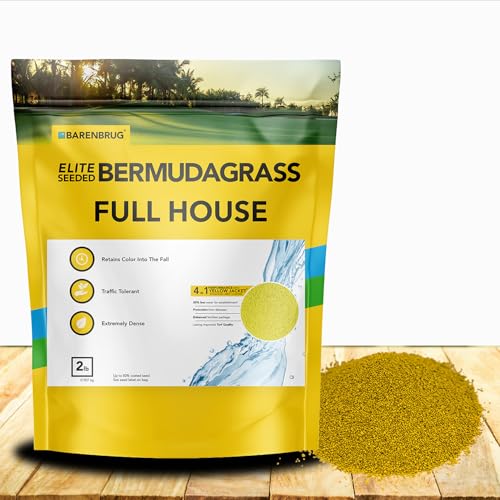
Best for: Golf course overseeding and warm-season turf renovations where fast coverage is needed. This blend combines Monaco and Hollywood Bermuda seeds to accelerate establishment in spring and summer conditions.
Why selected: It is formulated for quick germination—germination can begin within a week under ideal conditions, with full coverage in 4-6 weeks. The mix supports verbose seeding rates (2-3 lb per 1,000 sq ft) to achieve dense turf quickly, which is advantageous for aggressive course maintenance programs.
Limitations: Requires full sun and well-drained soil; performance may dip in shaded areas or poorly drained substrates.
Outsidepride Maya (Blackjack II) Bermuda Grass Seed – 5 lb

Best for: Southern lawns and high-use turf areas on golf courses where a fine-textured, dense turf is desired. The Blackjack II variety is known for fast germination and robust vigor.
Why selected: It delivers a carpet-like turf that remains visually appealing under heavy foot traffic. It’s particularly suitable for mid-to-late spring sowing and overseeding in hot climates.
Caution: This seed may require optimal heat and moisture management; in cooler regions, establishment could slow without appropriate warmth and irrigation.
Pennington Bermudagrass Seed for Lawn – 5 lb

Best for: Establishing durable southern lawns and high-use turf areas on golf courses where strong root systems are essential.
Why selected: Pennington emphasizes improved cold tolerance, helping maintain solid spring-to-fall performance in borderline climates, which supports longer-use seasons on tees and fairways.
Limitation: The data does not specify exact germination timing; expect several weeks to full coverage depending on conditions.
Outsidepride Maya (Blackjack II) Bermuda Seed – 25 lb
Best for: Larger golf course projects, repair programs, or re-grass substitutions where a premium Bermuda seed is needed for long-run density and resilience.
Why selected: The Blackjack II 25 lb bag provides a cost-effective option for sizable areas requiring uniform carpet-like turf with high wear tolerance. It supports rapid establishment and consistent texture across expansive zones.
Limitation: Larger bag requires equipment and storage capacity; ensure seed is kept dry and properly sealed until use.
Outsidepride Maya Blackjack II Bermuda Seed – 10 lb
Best for: Mid-sized courses or partial overseed projects where fine texture and quick coverage are priorities.
Why selected: This weight offers a balance between coverage for moderate-to-large zones and manageability for crews focusing on precision overseeding. It maintains the fine texture and vigor associated with Blackjack II.
Caution: As with other Bermudagrass seeds, sun exposure and soil drainage are critical for best results; poor drainage can slow establishment.
Buying Guide: Bermuda Grass Seed For Golf Courses
What should you consider when choosing Bermuda grass seed for golf courses?
- Climate suitability: Southern heat tolerance and winter hardiness differ by variety. If your course experiences hot summers with mild winters, fine-textured Bermuda like Blackjack II variants may perform best.
- Establishment speed: For urgent overseeding, select blends advertised for fast germination and rapid coverage within 4-6 weeks.
- Soil and sun exposure: Bermuda grasses demand full sun and well-drained soils; shade or poor drainage can hinder germination and stand density.
- Wear tolerance: Golf courses require seeds with strong root systems and high wear resistance to withstand mowing, cart traffic, and maintenance equipment.
- Seed mix vs. pure seed: Blends can provide better establishment across diverse soil pockets; pure cultivars may offer uniform texture but less adaptability to microclimates.
- Maintenance compatibility: Consider compatibility with existing fertilization and irrigation programs to avoid nutrient imbalances during establishment.
Practical recommendations by use case
- Overseeding existing fairways: Consider blends with rapid germination and dense turf formation to minimize downtime.
- New construction or bare patches: Choose seed with proven vigor and deeper root development for quick fill-in and long-term stability.
- Repair projects: A product with mulch-like aids or integrated fertilizer helps seed stay in place while germinating.
Frequently asked questions
- Q: Which Bermuda seed is best for high-traffic golf course areas?
A: Fine-textured varieties with high vigor, such as Blackjack II-based blends, are favored for their dense stand and durability. - Q: Do these seeds require special soil preparation?
A: Yes. Prepare well-drained soil, ensure proper seed-to-soil contact, and apply light irrigation after seeding. - Q: Can Bermuda seed be used in shade?
A: Bermuda grasses prefer full sun; shade can reduce germination rates and turf density. - Q: How long before overseeding shows results?
A: Germination often begins within a week under ideal conditions, with full coverage in roughly 4-6 weeks for fast-establishing blends. - Q: Is a seed-and-fertilizer combination recommended?
A: For some products, yes. Seed with fertilizer can improve early growth and root development, but follow product directions for timing. - Q: What maintenance is needed after seeding?
A: Regular mowing, targeted irrigation to avoid drought stress, and adherence to a nutrient plan help establish and sustain dense turf.