Best Black Dirt for Landscaping: Topsoil, Compost, and Decorative Covers
The best black dirt for landscaping depends on whether you need lawn topdressing, a planting mix, or a dark decorative surface. Coast of Maine Monhegan Blend is specifically labeled for lawn seeding and reconditioning, while Michigan Peat Garden Magic is a compost and topsoil blend for planting and landscaping. For surface color or decorative detail, consider Mosser Lee black sand, Gardenera black mulch cover, or black lava rock. These products serve different purposes, so match the material to the job rather than choosing by color alone.
| Product | Best suited for | Product type |
|---|---|---|
| Coast of Maine Monhegan Blend | Lawn seeding and topdressing | Black earth lawn soil |
| Michigan Peat Garden Magic | Planting and landscaping | Compost and topsoil blend |
| Mosser Lee Black Sand | Small-area soil covering | Black sand soil cover |
| Gardenera Premium Black Mulch Cover | Decorative coverage | Black mulch cover |
| Black Lava Rock | Decorative plant topdressing | Volcanic rock |
Coast of Maine Monhegan Blend Lawn Soil

This one-cubic-foot bag is described as an organic and natural black earth lawn soil for seeding projects, topdressing, and lawn reconditioning. Its stated lawn uses make it the most directly targeted choice here for homeowners working on a seeded or worn lawn.
Best for: Lawn projects where the intended use is topdressing or reconditioning. Choose this if you want a product specifically presented as lawn soil rather than a decorative black cover. The listing does not provide a detailed ingredient breakdown, so check the package for composition and application directions before use.
Michigan Peat Garden Magic Compost Top Soil

Michigan Peat Garden Magic is a 40-pound compost and topsoil blend described as containing dark reed sedge peat and sand. Its listed uses include indoor and outdoor planting, potting, gardening, and landscaping, and the product is described as moisture-retaining.
Best for: Buyers seeking one soil blend for general planting and landscape work. It is a better fit than a decorative cover when the task involves filling or mixing soil around plants. Avoid choosing it solely for lawn seeding if you specifically want a product labeled for that job. The listing does not state a coverage area, so estimate needs based on the project and package directions.
Mosser Lee Black Sand Soil Cover

Mosser Lee ML1112 is a five-pound black sand soil cover. The product name identifies it as a covering material, making it distinct from bagged lawn soil and compost blends. Its smaller package can suit a limited area or a project where a soil-cover product is preferred.
Best for: Small-scale covering where the buyer wants black sand rather than bulk topsoil. Choose this if a cover is the goal, not a general-purpose planting medium. A five-pound bag may be insufficient for a large landscape, and the provided product information does not specify coverage or intended plant types.
Gardenera Premium Black Mulch Cover
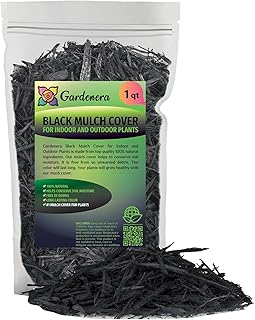
Gardenera’s product is a one-quart black mulch cover marketed for landscape color and nutrient-related benefits. The small package size makes it more suitable for a limited area or a specific accent than for covering a large yard.
Best for: Buyers looking for a dark mulch-style cover in a compact quantity. Choose it when appearance is a priority and the project is small. The listing’s name does not specify the material composition, coverage, or how its stated benefits are delivered, so review the package details before applying it to a larger planting area.
Black Lava Rock for Plant Topdressing

This 18-pound product is black volcanic lava rock in a listed size range of 1/8 to 1/4 inch. Its stated uses include decorative landscaping and top dressing for bonsai, cacti, and succulents. The product name also describes it as intended to release excess water.
Best for: Decorative plant topdressing where a granular rock surface is wanted instead of soil or mulch. Choose this for the plant types named in the listing or for small landscape accents. It is not a substitute for lawn soil or compost, and its rocky texture may not suit projects that need a fine, soil-like surface.
Buying Guide: How to Choose Black Dirt for Landscaping
Do you need soil, compost, or a surface cover?
Start with the task. For lawn seeding and topdressing, the Coast of Maine product is explicitly labeled for lawn use. For planting and general landscaping, Michigan Peat offers a compost and topsoil blend. Black sand, mulch cover, and lava rock are surface-oriented alternatives; do not assume they replace planting soil.
How large is the area?
Package size affects practicality. The listed options range from one quart and five pounds to an 18-pound bag, a 40-pound bag, and a one-cubic-foot bag. Small packages are more appropriate for limited applications. For a larger area, confirm coverage on the package and calculate the quantity needed before purchasing.
Does the surface material match your project?
Black sand and mulch cover offer different material types, while lava rock creates a visibly rocky top layer. Consider whether you need a fine, soil-like finish or a granular decorative surface. Also check product directions for placement depth and use; those details are not provided for every item here.
Frequently Asked Questions
Is black dirt the same as black mulch?
No. Black dirt usually refers to soil or a soil blend, while black mulch cover is a surface-cover product. Check the product description to confirm the material and intended use.
Which product is labeled for lawn seeding?
Coast of Maine Monhegan Blend is described as black earth lawn soil for seeding projects, topdressing, and lawn reconditioning.
Which option is a compost and topsoil blend?
Michigan Peat Garden Magic is described as a compost topsoil blend containing dark reed sedge peat and sand.
Can lava rock replace black soil?
No. The listed lava rock is intended for decorative landscaping and plant topdressing, not as a lawn soil or compost replacement.
What should I check before ordering?
Confirm the product type, package quantity, intended use, coverage information, and application directions. These details help prevent choosing a decorative cover when the project requires soil, or buying too little for the area.