Best Boat Bottom Antifouling Paint Options for 2026
If you’re looking to minimize barnacles, weeds, and slime on the hull below the waterline, choosing the right antifouling paint is essential. This guide highlights five top options suitable for a variety of boats and water conditions, including fiberglass, wood, and steel hulls. It explains who each product is best for, why it was selected, and any important limitations to consider. Whether you own a sailboat or a powerboat, you’ll find choices optimized for ease of use, environmental considerations, and performance in salt, fresh, or mixed waters.
| Product | Brand | Type / Notable Feature | Best For |
|---|---|---|---|
| Rust-Oleum Marine Flat Boat Bottom Antifouling Paint (Quart) | Rust-Oleum | Copper-releasing antifouling; covers up to 110 sq ft | Fiberglass, wood, or steel hulls needing a simple, quick-to-recoat option |
| TotalBoat JD Select Ablative Antifouling Bottom Paint (Quart) | TotalBoat | Ablative, self-polishing; low odor and low VOCs | Saltwater or freshwater boats; easy cleanup and seasonal reactivation |
| TotalBoat JD Select Ablative Antifouling Bottom Paint (Gallon) | TotalBoat | Ablative film; heavy-duty protection; same low odor/VOCs | Larger vessels or longer seasons requiring extended protection |
| TotalBoat Spartan Boat Bottom Paint (Quart) | TotalBoat | High copper content; burnishable for racing finish | High fouling conditions; performance-oriented hulls |
| TotalBoat Underdog Marine Antifouling Bottom Paint (Gallon) | TotalBoat | Economical single-season protection; durable under trailering | Frequent-use boats in varying saltwater conditions |
Rust-Oleum Marine Flat Bottom Antifouling Paint

Rust-Oleum’s marine antifouling formula is designed for fiberglass, wood, or steel surfaces. It slowly releases copper to deter fouling and can be recoated in about four hours, with a launch window of roughly 16 hours. Coverage reaches up to 110 square feet, making it suitable for smaller to mid-sized hulls. Best for boaters who want a straightforward, fast-recoat option and reliable interim protection. A potential limitation is copper-based chemistry, which may require environmental considerations in marinas with strict guidelines.
Best for: Casual or recreational boaters with moderate fouling risk and a need for quick turnarounds. Choose this if: you want a simple, widely compatible antifouling paint with fast recoat times.
Caution: Copper-based antifouling can have environmental considerations in sensitive marina zones; verify local regulations before use.
Key features:
- Fiberglass, wood, or steel surfaces
- Slow copper release for fouling prevention
- Recoat in 4 hours; launch in 16 hours
- Coverage up to 110 sq ft
TotalBoat JD Select Ablative Antifouling Bottom Paint (Quart)

This TotalBoat option uses an ablative, self-polishing film that wears away gradually as the boat moves, reducing paint buildup and easing next-season sanding. It’s formulated with low odor and low VOCs and cleans up easily with soap and water, making it friendly for marinas with environmental restrictions. It’s suitable for fiberglass, wood, and steel boats in both salt and fresh water. Best for: boats in mixed water environments seeking easier maintenance and a continuous antifouling effect. Limitation: no maximum dry time before launch is specified, so follow local guidelines for safe launching after application.
Best for: Boats needing seasonal upkeep with reduced sanding and simple cleanup.
Caution: While low VOC, ensure proper ventilation during application and cure.
Key features:
- Ablative, self-polishing coating
- Low odor, low VOCs; soap-and-water cleanup
- Suitable for fiberglass, wood, steel; salt and fresh water
TotalBoat JD Select Ablative Antifouling Bottom Paint (Gallon)

The gallon version provides the same self-polishing, ablative benefits as the quart, designed for larger boats or longer seasons. It’s compatible with fiberglass, wood, and steel hulls in both salt and fresh water and continues to minimize sanding next season due to its gradual wear. Best for: bigger vessels or frequent use where ongoing antifouling protection is needed. Limitation: higher upfront material cost and larger containers may require more careful storage.
Best for: Larger or heavily used boats needing extended antifouling performance.
Caution: Ensure storage conditions keep the product from direct heat or freezing.
Key features:
- Ablative, self-polishing coating
- Low odor, low VOCs; easy cleanup
- Ideal for fiberglass, wood, steel; salt and fresh water
TotalBoat Spartan Boat Bottom Paint (Quart)

TotalBoat Spartan is designed for high-fouling conditions with a higher copper content for maximum antifouling protection against barnacles and slime. It produces a smooth, abrasion-resistant finish suitable for achieving greater speed and fuel efficiency, and it can be burnished for a racing finish. The ablative formula means reduced paint buildup over time. Best for: performance-oriented vessels operating in demanding waters. Limitation: higher copper content may not be ideal for marinas with strict environmental rules; verify compliance before use.
Best for: Sail and power boats in high fouling environments seeking a racing-ready finish.
Caution: Handle copper-containing coatings with care and follow marina regulations regarding copper usage.
Key features:
- High copper content for strong antifouling
- Burnishable finish for smoother, faster hulls
- Ablative protection with reduced paint buildup
TotalBoat Underdog Marine Antifouling Bottom Paint (Gallon)
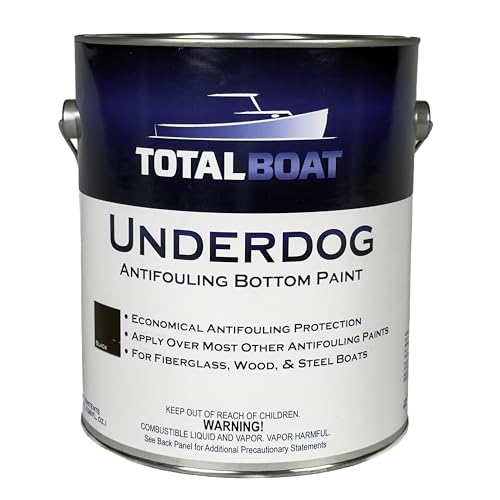
TotalBoat Underdog offers economical one-season protection with a copper biocide designed to keep barnacles and mussels from clinging to hulls in saltwater conditions. It’s suitable for fiberglass, wood, steel, and iron bottoms, with an emphasis on boats used frequently in various water types. Best for: budget-conscious boat owners needing straightforward antifouling for a single season. Limitation: may require reapplication sooner than higher-end blends in heavy fouling areas.
Best for: Boats that run regularly and want economical, dependable antifouling.
Caution: Expect shorter protection windows in extreme fouling environments; plan reapplication accordingly.
Key features:
- Economical single-season protection
- Copper biocide for barnacle and growth control
- Durable finish suitable for trailering and beaching
Buying Guide: Key Considerations for Boat Bottom Antifouling Paint
- Water type and fouling risk: Saltwater and high-fouling environments typically demand higher copper content or ablative formulations, while freshwater or low-fouling needs may tolerate lower copper paints.
- Hull material compatibility: Ensure the paint works with fiberglass, wood, steel, or iron as appropriate for your boat.
- Application and cure times: Consider recoat windows, launch times, and whether you need quick turnaround or longer cure periods.
- Environmental and marina rules: Low-VOC and low-toxicity options help with marinas with restrictions; copper-heavy paints may face environmental guidelines.
- Maintenance and reapplication: Ablative paints gradually wear away, reducing sanding; consider how often you plan to haul out and reapply.
- Spread and coverage: Check the square footage coverage per quart or gallon to size purchases to hull area.
- Cost and storage: Higher-capacity containers reduce per-gallon cost but require more storage space and handling.
FAQ
- What is ablative antifouling paint?
Ablative antifouling slowly wears away as the boat moves, continually exposing fresh biocide and reducing paint buildup on the hull. - Do I need to launch promptly after applying antifouling paint?
Most products have recommended cure and launch windows; follow the manufacturer’s guidelines and local marina rules for safe launching times. - Can I repaint over existing antifouling paint?
Yes, in many cases you can recoat, but you may need surface preparation and compatible product matching; always consult the product instructions. - Is low-VOC paint better for marinas?
Low-VOC and low-odor formulations are generally preferred in marinas with environmental restrictions, though performance depends on water type and fouling pressure. - Which product is best for high-fouling waters?
Products with higher copper content or high-performance ablative formulas, such as Spartan or other copper-rich options, tend to perform better in heavy fouling conditions. - How should I store antifouling paint?
Store in a cool, dry place away from heat sources; ensure containers are tightly closed to prevent evaporation and fume buildup.