Best Bonsai Driftwood for Aquariums: Natural, Safe, and Beautiful
Answering the question most buyers search for: which bonsai driftwood or bonsai-style wood is best for aquariums? This guide highlights five top natural options that suit different tank sizes and stocking levels. Ideal for beginners seeking easy setup, experienced aquarists crafting lush scapes, and hobbyists building micro landscapes. The selections prioritize natural driftwood that balances water chemistry, provides hiding places, and creates natural aesthetics.
Summary Table
| Product | Best For | Key Benefit |
|---|---|---|
| Azil Aquascape Bonsai Driftwood Tree 10” | Sizable tanks, dramatic layout | Natural, easy submersion, unique texture |
| Azil Bonsai Driftwood Aquarium Tree (10.1”) | Balanced biotope, medium tanks | Natural materials, pH/TDs balancing |
| Ultum Nature Systems Bonsai | Creative hardscape builders | Handcrafted, ecological benefits |
| majoywoo Natural Coral Driftwood (3 pcs, 6-10″) | Small to medium nano tanks | Distinct shapes, versatile styling |
| YZHZOM 2pcs Small Bonsai Aquarium Tree | Mini layouts, terrarium-style tanks | Handmade, balanced water environment |
Azil Aquascape Bonsai Driftwood Tree 10”

Overview: Natural and unique driftwood that anchors aquascapes with a tree-like silhouette. Best for larger tanks or as a focal point in mid-ground layouts. The wood is described as 100% natural and safe for fish and aquatic plants, with easy installation and submersion.
- Best for: Large tanks or dramatic centerpieces.
- Why selected: One-of-a-kind natural piece that requires minimal prep.
- Limitation: As a natural product, expect minor variations in shape and coloration between pieces.
Azil Bonsai Driftwood Aquarium Tree (10.1″ Length)

Overview: A handcrafted bonsai tree made from genuine driftwood. This piece suits medium tanks and creates organic layouts with plants, rocks, and water features. Promotes balanced pH and TDS over time, and pairs well with mosses and aquatic plants.
- Best for: Medium-sized tanks seeking natural landscaping with a focal tree.
- Why selected: Expert craftsmanship yields an authentic, high-visibility sculpture.
- Limitation: Requires proper initial soaking or boiling before placement to remove any uncertain tannins.
Ultum Nature Systems Bonsai

Overview: Handcrafted wood pieces designed as bonsai-style hardscape for aquariums, terrariums, and vivariums. This option emphasizes ecological benefits—water-softening properties and shelter for small tank inhabitants—and encourages plant integration for a natural aqua-terrarium look.
- Best for: Creative hobbyists building layered habitats.
- Why selected: Combines artistic bonsai aesthetics with ecological benefits for tank life.
- Limitation: Buoyancy means you may need to weigh it down or anchor it during setup.
majoywoo Natural Coral Driftwood (3 Pcs)
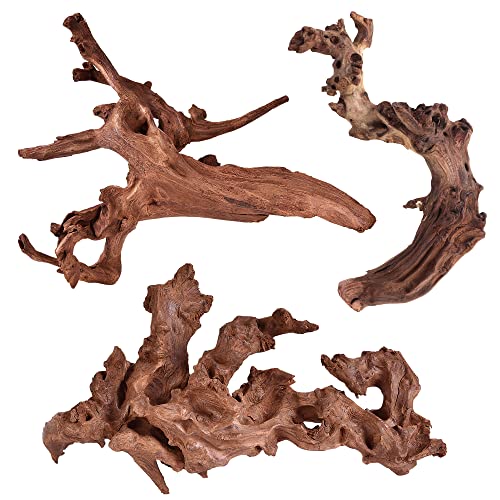
Overview: A varied trio of driftwood branches, designed to fit multiple tank sizes and styles. Each piece is unique and can be arranged to create natural-looking trees, arches, or backdrops. The assortment provides flexibility for diverse aquascapes.
- Best for: Small to medium tanks needing multiple texture points.
- Why selected: The set offers variety in shape for quick, natural looks without extensive rearranging.
- Limitation: Sizes range from 6″ to 10″—check tank dimensions to ensure a proper fit.
YZHZOM 2pcs Small Bonsai Aquarium Tree

Overview: A two-piece set of compact bonsai-style trees designed for tiny layouts or terrariums. Made from driftwood and rock bases fused together, these trees are easy to place and maintain, balancing alkalinity and acidity.
- Best for: Nano tanks and terrarium-inspired aquascapes.
- Why selected: Small footprint with natural look that complements low-tech setups.
- Limitation: Small scale can limit dramatic impact in larger tanks.
Buying Guide
What size is right for your tank?
Choose pieces that fit your aquarium dimensions. Large trees (like 10” options) work as focal points in bigger tanks. Smaller sets suit nano tanks or back-row accents in mid-to-large tanks.
Natural driftwood vs. resin or faux options
Natural driftwood offers ecological benefits and tannin release that can soften water. Resin and faux driftwood provide consistent appearance and easier handling but do not affect water chemistry the same way.
Safety and prep considerations
Natural wood often needs soaking or boiling before placement to reduce tannins and to help it sink. Some pieces may harbor hitchhikers or require trimming. Always follow the manufacturer’s prep instructions when available.
Integration with plants and hardscape
Consider how the wood will interact with moss, bucephalandra, Java ferns, or Anubias. Plan on anchoring stems or attaching plants to create a more natural landscape and to minimize driftwood movement.
Maintenance impact
Wooded decorations can alter water chemistry gradually. Track changes in pH and hardness as you introduce new wood, especially in delicate planted tanks or shrimp-inhabited systems.
Best practice for placement
Place larger pieces toward the center or back of the tank and use smaller clusters toward the foreground or sides to build depth. Ensure the wood is fully submerged and stable to avoid shifting with water flow.
FAQ
- Are bonsai driftwood pieces safe for fish?
- Will driftwood affect my aquarium’s pH?
- Should I soak driftwood before use?
- What tank sizes suit bonsai driftwood best?
- Can I attach plants to driftwood?
- What’s the best way to avoid driftwood shifting?
Yes. The selected products report natural, safe materials. Follow prep instructions to minimize tannin staining and to ensure proper sinking.
Natural driftwood can slightly soften water and lower pH in the short term. Some pieces help balance pH and TDS over time, depending on the wood type and tank chemistry.
Soaking or boiling is commonly recommended to reduce tannins and to help wood sink, especially for larger pieces.
Large focal pieces fit bigger tanks; small sets suit nano tanks. Consider room for plant growth around the wood and the overall hardscape balance.
Yes. Attaching mosses, Anubias, Java ferns, and similar plants to driftwood creates a natural look and hides the substrate interface.
Weigh or anchor large pieces, especially buoyant bonsai driftwood. Use aquarium-safe weights or rocks to secure placement.