Best Border Bricks for Flower Beds and Garden Edging
The best border bricks for flower beds offer a neat, durable edge that keeps mulch and plants in place while resisting soil, weed, and lawn care wear. This guide focuses on easy-install edging options—perfect for DIY gardeners, homeowners updating beds, and those who want a clean, professional look without trenching. The top picks suit different garden layouts, from curved beds to straight borders, and accommodate varying levels of terrain and maintenance needs. Read on to find choices that fit your flowers, paths, and yard design goals.
| Product | Best For | Why It Stands Out |
|---|---|---|
| Landscape Edging Border – Faux Stone (Brown, 17 ft) | Curved garden beds | Stone-look design blends with natural gardens; easy spike installation; flexible for curves. |
| Landscape Edging Border – Faux Stone (Gray, 17 ft) | Low-profile borders | Neutral finish that matches stone-and-soil tones; similar install to the brown variant. |
| Beuta Landscape Edging – 1 Pack (Cobblestone) | Flower beds and edging resets | Six-brick sections, stays in place, made in the USA; good for neat, stable borders. |
| Beuta Landscape Edging – 4 Packs (Cobblestone) | Large beds and wider borders | Multiple sections for extended edges; strong stability and weed protection. |
| 2-Inch x 33 Ft Landscape Edging Border – Black | Long, straight borders | No-dig installation with spikes; flexible and easy to trim; ideal for straight runs. |
Landscape Edging Garden Border Faux Stone Edging, Brown

Product highlights: 2.75 inches tall, stone-like border designed to complement flower beds, lawns, and paths. The brown color blends with natural mulch and soil tones. Easy installation uses anchoring spikes; no digging required. Flexible spines allow curves, while still forming straight runs when needed. Best for curved borders around flower beds, trees, and garden perimeters.
Who it’s best for: DIY gardeners seeking a natural-looking border that is quick to install and adaptable to curved layouts. Why selected: versatile stone-look design and simple spike-based anchoring make it suitable for most soil types without trenching. Caution: The 2.75-inch height may be less visible in tall mulch-heavy borders; consider taller options if you need a more pronounced edge.
Landscape Edging Garden Border – Faux Stone, Gray

Product highlights: 2.75 inches tall gray stone-look border designed for flower beds and gardens. Easy to install with anchoring spikes; fits various soil types. Flexible enough for curves and straight sections, suitable for edging around trees and shrubs.
Who it’s best for: Gardeners who want a neutral, stone-like border that complements gray-toned stones and mulch. Why selected: identical construction to the brown variant, providing color choice without sacrificing performance. Caution: Color shade may vary slightly with outdoor exposure; test a small section first if exact matching matters.
Beuta Landscape Edging – Cobblestone 1 Pack

Product highlights: 6-brick section totaling 48″ L x 4″ W x 2.25″ H with three spikes. Made in the USA and designed to stay in place, protecting beds from mulch migration and weed-eater damage. Provides a polished, cohesive look across flower beds.
Who it’s best for: Homeowners needing a sturdy, ready-to-install edging that stays neat through seasons. Why selected: strong, localized border with consistent shape and reliable stability. Caution: Limited height; might require multiple sections for taller mulch levels or more pronounced edges.
Beuta Landscape Edging – Cobblestone 4 Packs

Product highlights: 4 packs, each with 6 bricks totaling 48″ L x 4″ W x 2.25″ H per pack and 12 spikes. Stays in place, protects beds, and is made in the USA. Ideal for longer borders and larger plantings requiring consistency and durability throughout seasons.
Who it’s best for: Gardeners expanding edging across multiple beds or creating wider borders. Why selected: value and coverage across several sections, with reliable performance. Caution: Some users may prefer taller edging for prominent borders in high-traffic areas.
2-Inch x 33 Ft Landscape Edging Border with 50 Spikes (Black)
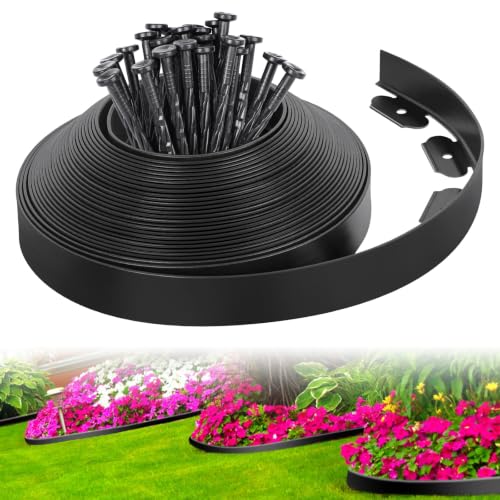
Product highlights: 33 feet of edging with 50 spikes for quick, no-dig installation. Plastic edging is easy to trim to length and resists rust. Flexible polyethylene construction folds for curves and straight sections alike.
Who it’s best for: Gardeners wanting a long, straight edging run with simple trimming. Why selected: combines ease of installation with durability and curve capability. Caution: Edges are plastic and may require extra care around heavy lawn maintenance equipment to avoid cracking in extreme cold.
Buying Guide
What edging material should I choose for flower beds?
Stone-look and cobblestone edgings provide a natural aesthetic that mimics hardscape borders, great for traditional gardens. Plastic and PE edging offer budget-friendly flexibility, easier shaping for curves, and resistance to rust. Choose based on your design goal: natural stone look or practical, long-lasting performance.
Should I pick taller or shorter borders?
Shorter borders (around 2.5 inches) work well to define beds without visually overpowering plants. Taller borders (3–4 inches) help contain mulch and prevent weed migration in high-traffic or windy areas. Consider mulch depth and plant height when deciding border height.
Are curved or straight borders better for growing beds?
Curb-friendly edging that bends into curves is ideal for irregularly shaped beds and tree rings. For long, linear borders along sidewalks or paths, straight edging provides a clean, low-maintenance edge.
What installation method works best for DIYers?
No-dig, spike-driven edging is fastest and least disruptive to existing soil. Look for edging with included spikes and clear installation guidance. Flexible designs that bend with curves reduce the need for cutting and custom fittings.
How do I maintain edging over the seasons?
Most edging is designed to withstand seasonal changes, but check for any shifting after heavy rainfall or frost. Straight runs may benefit from occasional spike checks, while curved borders should be inspected for deformation and readjusted as needed.
Buying considerations at a glance
- Edge height and depth relative to mulch and plants
- Color and texture to match your garden aesthetics
- Flexibility for curves vs. stable straight lines
- Number of sections or total length needed for your beds
- Installation effort: no-dig spikes vs. trenching
FAQ
- What is the typical height for flower bed edging? A: Most options range from about 2.5 to 4 inches, balancing visibility and plant height.
- Can edging protect beds from weed eaters? A: Yes, many edging products are designed to shield soil and mulch from damage caused by lawn equipment.
- Is curved edging more difficult to install? A: Flexible edging is easier to curve; rigid edging can be used for straight sections with occasional cuts for corners.
- Can I use edging with different garden materials? A: Yes, edging can separate beds from grass, pavers, and walkways, and can complement stone or gravel paths.
- Do edging products require maintenance? A: Most require minimal maintenance, mainly occasional checks for shifting spikes and alignment after weather events.
- Is DIY installation worth it for border projects? A: For most homeowners, yes, since no-dig options reduce labor and mess, and many products include all necessary spikes.