Best Bug Spray for Vegetables: Safe, Effective Options for the Garden
Direct answer: Choose garden insect sprays that target common vegetable pests while protecting edible crops and staying safe for edible harvests. For most vegetable gardens, a mix of contact insecticides, neem-based solutions, and multi-purpose formulas works best depending on the pest: aphids, caterpillars, mites, and whiteflies are typical culprits. The top products below are selected for ready-to-use convenience, broad pest coverage, and compatibility with edible plants. This guide helps each buyer decide which product fits their garden size, pest type, and organic preferences.
| Product | Pest Focus | Best For | Notes |
|---|---|---|---|
| BioAdvanced Organics Brand Tomato, Vegetable & Fruit Plant Bug Spray | Aphids, caterpillars, mites | Organic or near-organic edible crops | Ready-to-use; curative for mildew |
| Bonide Captain Jack’s Neem Oil | Mites, mildew, various insects | Organic-friendly gardens | Three-in-one: fungicide, miticide, insecticide |
| Sevin Insect Killer Ready to Use 1 Gallon | Over 700 listed insects | General garden pest control | Contact killer; broad spectrum |
| BioAdvanced Vegetable and Garden Insect Spray (Concentrated) | Aphids, caterpillars, thrips | Vegetables and fruit crops | Concentrated; mix-and-apply |
| Earth’s Ally 3-in-1 Insecticide, Miticide, Fungicide | Soft-bodied insects; plant diseases | Indoor/outdoor organic gardening | Essential oils blend; residual repellency |
BioAdvanced Organics Tomato, Vegetable & Fruit Bug Spray – 24 oz
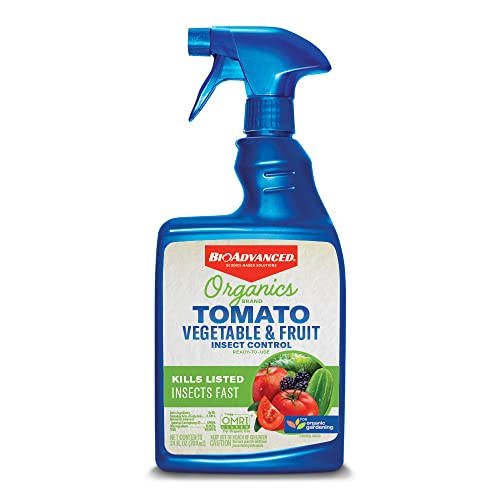
This ready-to-use spray provides quick contact-kill protection for edible plants. It targets aphids, caterpillars, mealybugs, spider mites, and other listed pests, helping protect organic tomatoes, vegetables, and fruits. It is labeled for curative control against powdery mildew, expanding its utility beyond insects. Best for gardeners who want a single spray for both pests and some diseases and prefer organic-friendly formulations. A caution: test on a small leaf area first to avoid any phytotoxicity on sensitive varieties.
Bonide Captain Jack’s Neem Oil – 32 oz Ready-to-Use

Neem oil serves as a multi-purpose pest control option with fungicidal properties. It kills pests at multiple life stages (egg, larvae, adult) and helps prevent fungal diseases, making it a versatile choice for organic gardens. It is ready to use and can be applied close to harvest in many cases. Best for gardeners managing mites and mildew on leafy greens and fruiting plants. Limitations include potential sensitivity on some beneficial insects if over-applied and a shorter residual effect in hot sun.
Sevin Insect Killer Ready to Use – 1 Gallon

This broad-spectrum option provides rapid control on contact and covers a wide range of pests that affect vegetables and ornamentals. It is particularly useful for larger garden areas where quick action against many insect species is needed. Best for homeowners with a variety of crops and pests, or as a go-to for severe infestations. A limitation is potential non-target impact; avoid blooming crops and pollinators during active spraying when possible.
BioAdvanced Vegetable & Garden Insect Spray – 32 oz (Concentrated)

This concentrated formula is designed to kill a broad range of garden pests on contact, including aphids, caterpillars, thrips, hornworms, and whiteflies. It is specifically aimed at protecting fruit and vegetables, with an easy mixing method for garden sprayers. Choose this if you prefer a single concentrate that you mix as needed and apply to a variety of vegetables. Precautions include following label directions for dilution and spray coverage to avoid leaf burn on delicate crops.
Earth’s Ally 3-in-1 Insecticide, Miticide, Fungicide – 32 oz

Earth’s Ally blends essential oils to deliver an insecticidal effect along with miticidal and fungicidal action. It provides residual repellency after application, helping keep pests at bay between treatments. This product is suitable for organic gardening and can be used both indoors and outdoors. Best for gardeners seeking a natural-feeling, non-synthetic option with pest-repellent benefits. A potential limitation is that essential-oil-based formulas may require more frequent applications in hot or windy conditions.
Buying Guide: Key Considerations For Selecting Vegetable Pest Sprays
- Pest profile: Identify whether your primary issues are aphids, caterpillars, mites, thrips, or a broader spectrum of pests. Some formulas target specific pests more effectively than others.
- Edible crop safety: Look for products labeled safe for vegetables, herbs, and fruits. Consider organic or near-organic options if you prefer fewer synthetic ingredients.
- Mode of action: Decide between contact killers (immediate knockdown), systemic or residual products (longer protection), and multifaceted products (fungicide/miticide/insecticide).
- Preparation and application: Ready-to-use sprays save time, while concentrates require mixing. Consider your garden size and whether you have a sprayer.
- phytotoxicity risk: Test on a small leaf area if trying a new product, especially on delicate greens or new transplants.
- Impact on beneficials: If your garden includes pollinators or natural predators, choose formulations with lower impact on beneficial insects when possible.
- Seasonal use: Some sprays are better early in the season, while others are suitable for ongoing applications. Follow label timing for harvest intervals.
Frequently Asked Questions
- What is the best spray for a mixed pest problem in a vegetable garden?
– A combination approach often works best: a neem-based or organic spray for mildew and mites, plus a broad-spectrum contact insecticide for rapid knockdown of multiple pests. - Are these sprays safe to use on edible crops?
– Most listed products are formulated for use on vegetables and fruit crops when label directions are followed. Always read the label for harvest intervals and recommended uses. - Can I spray trees and herbs with the same product?
– Some products are broad to cover fruit trees and garden edibles; others are targeted. Check label specifics to ensure compatibility with herbs or tree fruiting crops. - How often should I reapply after rain?
– Reapplication frequency depends on the product’s residual effects and rainfall. Follow the label’s guidance on reentry and rainfast times. - Is spraying harmful to beneficial insects?
– Some products have broader activity and may affect non-target insects. When possible, apply during non-activity periods, use targeted products, and avoid flowering plants. - Do these sprays kill eggs and larvae as well?
– Neem oil and some multi-insecticides claim activity against multiple life stages, but check label statements about eggs and early instars for each product.