Best Bulk 1 Gallon Nursery Pots for Seedlings and Transplants
Finding the right bulk 1 gallon nursery pots helps gardeners start seeds, propagate cuttings, and upsize transplants without frequent replacements. This guide highlights five widely available options, noting who each pot is best for and why. These pots are ideal for home gardeners, greenhouse owners, and community garden planners who need reliable, lightweight, reusable containers with good drainage. The selections emphasize thin, flexible plastic that returns to shape, stackability for storage, and practical drainage to prevent root rot.
Overview of selected products at a glance. Use this table to compare opening size, bottom diameter, height, and bulk count. This quick reference helps you decide which pot best suits your plant types and workflow.
| Product | Brand | Opening Diameter | Bottom Diameter | Height | |
|---|---|---|---|---|---|
| Guuozzli 100 Pcs 1 Gallon Flexible Nursery Pots | Guuozzli | 6.5 in | 5.1 in | 6.7 in | 100 |
| JERIA 100-Pack 1 Gallon Flexible Plant Nursery Pots | JERIA | 6.7 in | 5.1 in | 6.9 in | 100 |
| GroTheory 100 Pack 1 Gallon Nursery Pots | GroTheory | 6.7 in | 5.1 in | 6.9 in | 100 |
| HECTOLIFE 100-Pack 1 Gallon Flexible Pots | HECTOLIFE | 6.7 in | 5.1 in | 6.9 in | 100 |
| Qyyiguf 60 Pcs 1 Gallon Plant Pots | Qyyiguf | 6.5 in | 5 in | 6.7 in | 60 |
Guuozzli 100 Pcs 1 Gallon Flexible Nursery Pots
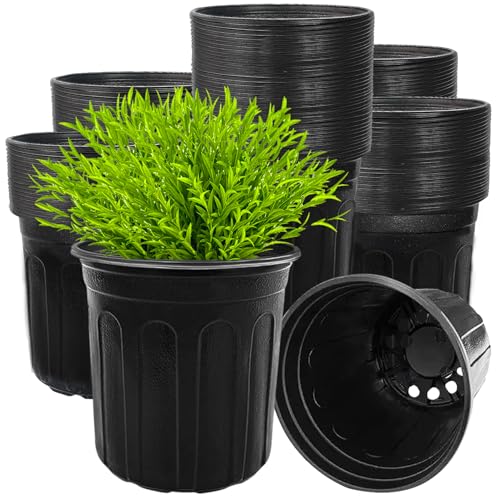
Best for budget-conscious growers who need a high-count option for seed starting and early transplants. These pots feature 16 drainage holes to promote ventilation and prevent root rot. The lightweight, flexible plastic is easy to handle, stack, and reuse. Suitable for garden beds, patios, and greenhouses. A potential limitation is that ultra-thin plastic may show wear with heavy usage or rough handling over multiple seasons.
JERIA 100-Pack 1 Gallon Flexible Pots

Best for hobbyists who want included plant labels for quick seedling identification. The 100 pots come with 100 labels and 16 drain holes for moisture management. The soft, lightweight plastic is reusable and can recover after compression. Choose this if labeling seedlings clearly is part of your workflow; avoid if you need rigid, rigid-walled pots for long-term stability in windy outdoor spaces.
GroTheory 100 Pack 1 Gallon Pots

Best for growers who want a reliable bulk option with plant labels included. The set includes 100 pots and 100 plant labels, offering a convenient way to organize multiple varieties. The pots are described as elastic and capable of holding up well to a light pressure. If you need a good balance of durability and stackability, this is a strong pick; use care when stacking to prevent edge creasing.
HECTOLIFE 100-Pack 1 Gallon Pots
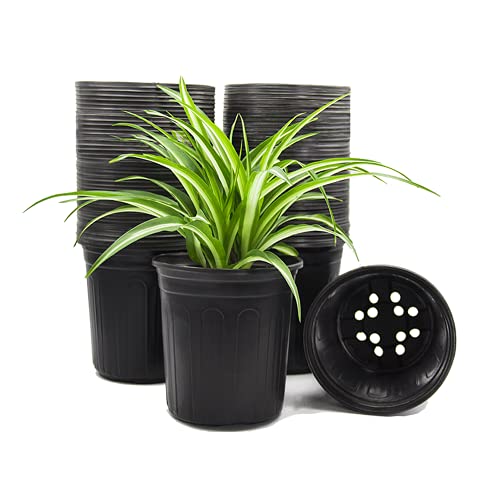
Best for gardeners needing a robust bulk solution with consistent sizing. These pots measure height 6.9 inches, with a 6.7-inch opening and 5.1-inch bottom diameter. The soft plastic is lightweight, reusable, and easy to handle. The bottom drainage holes support ventilation and water management. A limitation is that very large plants may require sturdier walls over time in windy environments.
Qyyiguf 60 Pcs 1 Gallon Pots With Drainage Holes

Best for compact kits or balcony gardens where a moderate count is preferred. The 60 pots come with 60 white labels for seedling identification. The pots’ 16 drainage holes provide good moisture control, and the soft plastic allows easy reshaping after squeezing. Choose this if space-saving is important; avoid if you need the exact 1-gallon interior volume with thicker walls for long-term use.
Guuozzli 50 Pack 1 Gallon Pots
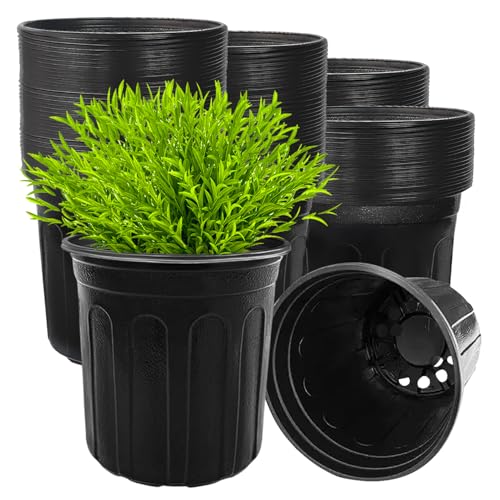
Best for small batch projects or where cost per pot matters. This set includes 50 pots with 16 drainage holes for efficient moisture management. The pots are lightweight and flexible, returning to shape after compression. They stack well for storage. If you need more variety in volume or more stacks in a single order, consider larger bulk options.
Jgalnim 60 Pack 1 Gallon Pots

Best for growers who want thicker-flexible pots with secure drainage. The 60-count batch provides a practical balance of volume and price. Each pot features a round bottom drainage design to promote ventilation and reduce root issues. Use this if you value resilience during handling and stacking; avoid if you require ultra-thin pots for ultra-lightweight needs.
Buying Guide
Key considerations when choosing bulk 1 gallon nursery pots:
- Material and durability: Soft, flexible plastic is lightweight and reusable, but check for tear resistance if you handle pots often.
- Drainage design: Look for 12–16 drainage holes to support airflow and prevent overwatering.
- Dimensions: Ensure opening, bottom, and height fit your plant types and transplant plan.
- Included accessories: Some sets include plant labels for seedling identification—useful for large seedling trays.
- Stackability and storage: Narrow rims and flexible walls aid stacking and space-saving storage.
- Reuse and care: Most plastic pots return to shape after compression, but how you store them affects longevity.
- Cost vs. quantity: Higher counts reduce unit price; weigh your production needs against storage space.
- Outdoor vs. greenhouse use: Windy areas benefit from slightly thicker walls; consider your climate and exposure.
FAQ
- What size is considered a 1-gallon nursery pot?
– Most 1-gallon pots have a height around 6.7–6.9 inches, an opening diameter around 6.5–6.7 inches, and a bottom diameter near 5 inches. - Are these pots reusable after transplanting?
– Yes, many are designed to flex and return to shape; they can be reused if not damaged during removal. - Which pot is best for labeling seedlings?
– Pots that come with plant labels or are easy to write on are ideal; JERIA’s set includes labels for tagging. - How many drainage holes are typical?
– Most options feature 12–16 holes, enabling good drainage and aeration to prevent root rot. - Should I choose a bulk 100-pack or smaller packs?
– Choose based on batch size, space for storage, and whether you prefer fewer reorders during peak seasons. - Do these pots hold up in outdoor wind?
– They are lightweight; if wind is a concern, consider slightly thicker or sturdier walls or use them in sheltered locations.