Best Butterfly Netting for Garden: Top Picks to Shield Plants From Pests
Garden butterfly netting helps protect vegetables, fruits, flowers, and trees from a wide range of pests while still allowing sun, air, and water to reach plants. This guide highlights five top-rated options designed for American gardens, from lightweight row covers to heavy-duty bird and deer barriers. Each product is evaluated on mesh size, durability, ease of use, and suitability for different crop types. Use the selections below to compare features and choose netting that best fits your garden size, climate, and pest pressure.
Product Overview
| Product | Brand | Size | Key Benefit |
|---|---|---|---|
| Garden Netting Pest Barrier: 4’x10′ | Garden Tailor | 4′ x 10′ | Fine mesh, UV resistant, durable. Great for row covers and raised beds. |
| Unves 10’x20′ Garden Netting | Unves | 10′ x 20′ | Large, versatile, suitable for nurseries, orchards, and crops. |
| Garden Netting Ultra Fine 8x10Ft | YFFSIDMY | 8′ x 10′ | Ultra-fine mesh for small pests; multi-use for beds and greenhouses. |
| Garden Insect Netting Pest Barrier: 4’x10′ | Garden Tailor | 4′ x 10′ | Fine mesh with see-through design; suitable for vegetables and flowers. |
| Garden Barrier Netting 10x10Ft | FARAER | 10′ x 10′ | Ultra-fine 0.8mm x 1mm mesh; protects crops while allowing airflow. |
Garden Netting Pest Barrier: 4’x10′ Fine Bug Netting
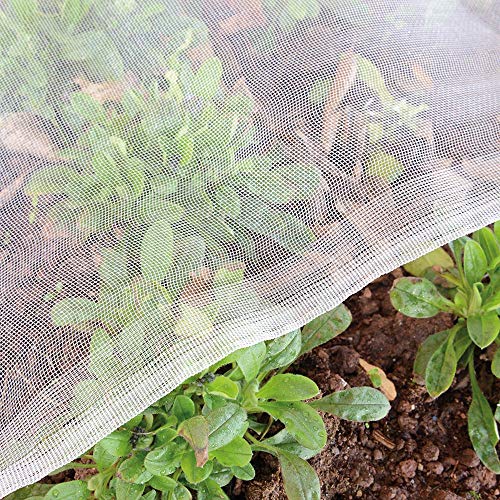
Summary: This Garden Tailor netting provides a fine barrier against cicadas, carrot flies, aphids, and similar pests. It is UV-resistant and made of 100% new HDPE, designed to be durable yet light enough for easy handling. The tight selvedge reduces unraveling, making it suitable for extended use in raised beds and garden rows. It doubles as indoor screening when needed, such as windows or planters, offering versatility beyond outdoor beds.
Unves 10’x20′ Garden Netting

Summary: Unves offers a sturdy, large-area netting solution ideal for families and farms. The mesh is durable and weather-resistant, with good air circulation to keep crops healthy. It is versatile enough for nurseries, raised beds, berry bushes, and fruit trees, while clips or weights secure it in place. Its semi-transparent composition helps monitor crop growth while deterring birds and insects during peak growing seasons.
Garden Netting Ultra Fine 8x10Ft

Summary: This 8×10 foot netting by YFFSIDMY features a very fine 0.8–1.0 mm mesh, designed to block small pests like aphids and seed-eating insects while allowing light, water, and air to pass. It is adaptable for raised beds, greenhouses, nurseries, and outdoor gardens. The material is lightweight, UV-resistant, and durable, with edges that resist unraveling after trimming to fit hoops, frames, or arches.
Garden Insect Netting Pest Barrier: 4’x10′

Summary: This 4’x10′ pest barrier netting emphasizes effectiveness against cicadas, carrot flies, and aphids. The HDPE composition ensures UV resistance and durability, with a tight selvedge to prevent unraveling. The netting is presented as an all-purpose barrier suitable for crops, ponds, windows, or indoor use, making it a flexible option for various garden configurations.
Garden Barrier Netting 10x10Ft

Summary: The 10×10 foot FARAER netting uses a 0.8mm x 1mm ultra-fine mesh to guard crops against birds and small animals, including squirrels and rabbits, without hindering plant growth. The lightweight polypropylene construction is reusable and easy to handle, making it a practical choice for larger garden plots, orchards, and mixed crops requiring reliable coverage across multiple seasons.
SnugNiture Garden Netting 10x33FT

Summary: SnugNiture’s large 10×33 feet netting provides substantial coverage for extended rows or larger plantings. With a 0.1 mm to 0.1 mm ultra-fine mesh, it blocks birds, deer, and smaller pests while remaining see-through for sunlight and water. The material is durable, water- and sun-resistant, and designed to be lightweight enough to drape easily over crops without restricting growth.
Buying Guide
Key considerations when selecting butterfly netting for a garden include mesh size, coverage area, durability, and ease of setup. Here are the main perspectives to weigh:
- Mesh size vs. pest type: Finer meshes (0.8–1.0 mm) deter small insects and birds, but may reduce airflow slightly. Coarser meshes are easier to install but provide less protection from tiny pests.
- Area and layout: For raised beds or compact plots, 4′ x 10′ or 8′ x 10′ sections are convenient. For larger yards, 10′ x 20′ or 10′ x 33′ nets reduce the number of pieces required.
- Durability and climate: UV-resistant HDPE or polypropylene nets withstand sun exposure and rain. Look for tight selvedges to prevent unraveling after trimming.
- Installation approach: Consider nets with easy-to-secure edges, clips, or weights for quick setup. See-through designs help monitor plant growth while protected.
- Multi-use versatility: Some nets double as pond covers, windows screening, or greenhouse protection, providing value beyond gardening alone.
- Reusability and storage: Reusable nets save money over time. Ensure they are easy to fold, store, and reuse across seasons.
Usage Scenarios And Recommendations
For home gardens with vegetable rows, a 4′ x 10′ or 10′ x 10′ barrier can shield tomatoes, peppers, lettuce, and beans from birds and flying insects. In orchards or berry patches, larger nets such as 10′ x 20′ or 10′ x 33′ provide broad coverage with fewer seams. If deer pressure is a concern, stronger, reinforced 7′ x 100′ or 10′ x 10′ barriers can offer extended protection with minimal maintenance. Always secure the edges and allow some slack to prevent tearing during wind events. Regularly inspect for gaps and wear, especially at corners and along windward edges.
Additional Considerations
– Color and visibility: Green nets blend with foliage, while white nets may reflect more sun and be easier to see when setting up.
– Impact on pollinators: Use netting that doesn’t completely exclude beneficial insects where possible; consider removing nets during peak pollination or using partial covers.
– Seasonal timing: Deploy nets before pests become active in spring and early summer for best protection, and remove or adjust during harvest to maximize yield and health.