Best Chemical Tree Killer: Top Options for Safe Stump and Root Removal
Homeowners and landscapers face stubborn stumps, unwanted woody plants, and aggressive vines that sprout back after cutting. The right chemical tree killer can accelerate stump decay, prevent re-sprouting, and protect nearby lawns, gardens, and structures. This guide reviews five effective products, spanning concentrated stump killers, ready-to-use solutions, and root-control formulas. Each option targets woody growth while offering practical usage tips, safety considerations, and real-world application scenarios for American yards and properties.
| Product | Brand | Best Use |
|---|---|---|
| Bonide Stump-Out Stump & Vine Killer | Bonide | Stumps, vines, foliar spray |
| Tordon RTU Specialty Herbicide | Dow AgroSciences | Kills woody plants and trees; cut stumps |
| Stump Stop Ready-to-Use | OMNI DEPOT | Pre-mixed stump and brush control |
| Roebic FRK Foaming Tree Root Killer | Roebic | Foams in pipes; root destruction |
| Pure Copper Nail Spikes (Multiple Packs) | Dubbs Hardware | Copper-based stump/root management |
Bonide Stump-Out Stump & Vine Killer
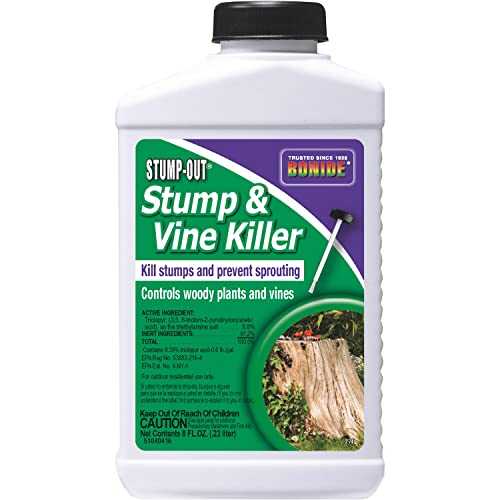
Bonide Stump-Out is a versatile concentrate designed to control woody plants and vines. The product is labeled to stop undesirable listed woody vines and broadleaf weeds, while the concentrate can be used undiluted as a stump killer to prevent sprouting. It also serves as a foliar spray when applied with a hose-end or tank sprayer. For stump removal, unsprayed stumps absorb the active ingredients through the cut surface, making it harder for new growth to resume. This multi-use approach helps homeowners simplify vegetation control in yards, driveways, and fence lines.
In practical terms, Stump-Out is suited for immediate stump treatment after cutting, especially when established trees and shrubs threaten to re-sprout. The product’s foliar spray capability adds flexibility for treating invasive vines and broadleaf weeds in surrounding beds. When using the concentrate, homeowners should follow label directions for mixing and application to avoid harming nearby ornamentals. The result is a targeted, fast-acting solution that can reduce subsequent maintenance by decimating regrowth at the source.
Safety and handling considerations include wearing protective gear during mixing and application, especially when applying undiluted concentrate. Keep children and pets away until treated areas are dry. The product’s broad applicability makes it appealing to homeowners managing mixed landscapes, fence rows, and transition zones between turf and woodland edges.
Tordon RTU Specialty Herbicide

Tordon RTU is a ready-to-use woody plant and tree killer designed for cut surfaces and non-cropland areas. This herbicide translocates through the plant’s vascular system, helping to stop resprouts across more than twenty woody species. It is specifically noted for its effectiveness on cut stumps along fence lines, roadsides, and rights-of-way. A key caveat is regulatory: this product is not for sale in certain states such as Alaska, California, Washington, and several others listed on the label, so buyers must verify eligibility before purchase. The high-translocation capability makes it a strong option for larger or stubborn stumps that resist regrowth.
Application strategy with Tordon RTU centers on applying to freshly cut surfaces to maximize uptake. Timing matters: the surface should be exposed and accessible to ensure the chemical penetrates the root system. Because the product is potent, users should follow label instructions precisely and wear protective gloves and eye protection during handling. The result is robust control of regrowth for sensitive sites like along fence lines or roadside vegetation, where re-sprouting can undermine clearing efforts.
Environmental considerations include monitoring for potential off-target effects, especially in areas where non-target woody plants are desirable. Some users may opt for spot treatment to minimize exposure to ornamentals and deciduous trees. With proper use, Tordon RTU offers a reliable solution to persistent woody growth and sprouting issues on larger landscapes.
Ready-to-Use Stump Stop
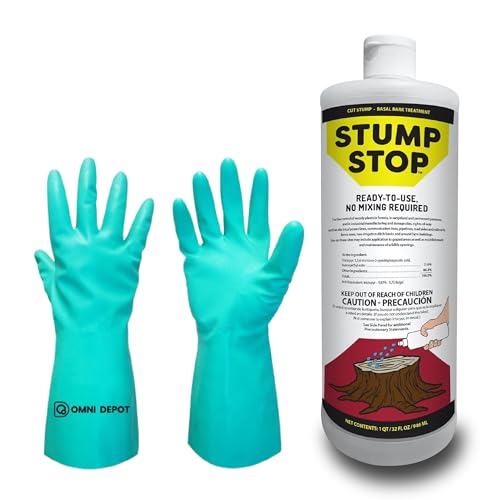
Stump Stop is a ready-to-use stump and brush killer that eliminates the need for mixing or pre-mixing. This product provides a pre-mixed solution you can apply directly from the container, which increases convenience in field settings or on large landscapes. The label emphasizes versatility across forests, rangelands, permanent pastures, and industrial sites, making it a practical choice for remote or expansive properties. Multi-site utility notes highlight effectiveness along railways, roadsides, fence rows, and farm buildings, helping maintain clear lines and reduce maintenance in hard-to-reach areas.
From an efficiency perspective, Stump Stop appeals to professionals and homeowners who value quick deployment. The ready-to-use format reduces setup time and minimizes the risk of improper dilution. It’s also suitable when access to sprayers or mixing equipment is limited. When applying, ensure you target freshly cut surfaces and reapply as needed, following safety guidelines to prevent overspray onto desired vegetation. The ease of use and broad applicability position Stump Stop as a practical option for busy crews and large-scale vegetation management projects.
Safety notes include wearing gloves and eye protection, avoiding windy conditions, and keeping bystanders away during application. The product’s straightforward use makes it ideal for maintenance crews, rural properties, and homeowners handling roadside clearings or timberland management tasks.
Roebic FRK Foaming Tree Root Killer

Roebic FRK Foaming Tree Root Killer is designed to prevent clogs and backups in household drain systems while keeping surrounding trees safe. The product foams on contact with water, filling the entire pipe line to target root intrusion and remove existing blockages. It contains an active ingredient designed to inhibit new root growth along the entire pipe system, offering a long-term solution to root-related sewer and septic issues. The formulation emphasizes environmental safety around trees and non-target vegetation, ensuring that treatment does not indiscriminately harm adjacent flora during use.
This product is particularly suitable for homeowners who face recurrent root blockages in septic fields or drain lines that intersect landscaped areas. For best results, follow the labeling instructions for application, including water flush criteria and recommended intervals between treatments. While FRK focuses on pipe systems, it complements landscaping plans by addressing root control concerns in areas near structures, walkways, or gardens where invasive roots threaten infrastructure.
Key considerations include ensuring compatibility with septic systems and avoiding over-treatment near sensitive plantings. The foam action helps minimize manual digging and reduces the risk of spreading chemical behind the line. Users should wear protective gear and follow disposal guidelines for used containers. When used correctly, Roebic FRK provides a targeted method to curb root growth in plumbing while preserving nearby trees and vegetation.
Copper Nail Spikes For Tree Killing

Dubbs Hardware offers copper-based removal tools that rely on copper ions to affect tree vitality. The 12-pack features 4-inch nail spikes crafted from 99% pure copper, designed for robust performance in stump and root management. The spikes provide a durable, non-chemical or low-chemical approach to tree removal, presenting an eco-friendly option for homeowners seeking a physical method rather than chemical sprays. The thicker nails resist bending and are built for repeated use in yard projects, landscaping, and long-term stump management.
Pure copper methods appeal to gardeners seeking a non-toxic alternative to conventional herbicides. The approach involves drilling holes and driving copper nails into stumps, with the expectation that copper ions disrupt water and nutrient transport in the tree. While not a traditional chemic al killer, it is still a widely used technique among landscapers who prefer a low-impact strategy. These spikes pair well with manual stump removal plans and can be applied as part of a broader management approach to prevent sprouting and encourage decay.
When considering copper nails, users should recognize that effectiveness varies with tree species, stump size, soil conditions, and wood age. This method usually requires patience and consistent application, especially for larger stumps. Proper safety practices encompass eye protection and gloves during drilling and hammering. For those prioritizing an eco-friendly, non-chemical option, copper nails provide a practical alternative within a broader stump-removal strategy.
Copper Nail Spikes Pack (3.5 Inch) By Dubbs Hardware

This variant from Dubbs Hardware features 3.5-inch copper nails designed for stump and root management, emphasizing the same eco-friendly, chemical-free approach as the larger pack. The nails’ copper composition aims to release ions that interfere with the tree’s ability to absorb water and nutrients, contributing to a gradual decline in vigor. The durable, corrosion-resistant spikes are suitable for use in various environments, including landscaped borders, fence rows, and roadside plantings. Users can pair these nails with a drilling tool to drive the spikes into the stump, creating a long-lasting treatment plan.
Choosing between 3.5-inch nails and 4-inch nails will depend on stump diameter and wood density. Both sizes prioritize safe handling and proper tool use. While copper nails can be less disruptive to nearby vegetation than chemical sprays, results may take longer to manifest, especially in older stumps. For gardeners exploring non-chemical options, copper spikes offer a practical, reusable method to aid stump decay and reduce regrowth when used thoughtfully.
Buying Guide: How To Choose The Best Tree Killer For Your Property
When selecting a tree killer, homeowners should balance effectiveness, safety, regulatory compliance, and site conditions. The following considerations help navigate the options highlighted above and similar products:
Understand The Target and Site
Stump killers are designed to prevent sprouting after cutting, while root killers focus on underground systems and invasive roots. Consider the size and location of the stump, proximity to plants, pets, and children, and whether you’re addressing a fence line, road shoulder, or garden bed. For septic systems or drain lines, root killers like Roebic FRK can prevent clogs without harming nearby vegetation when used as directed.
Regulatory And State Considerations
Some herbicides have state restrictions. For example, certain Tordon RTU label directions indicate sale limitations in particular states. Always verify local regulations and purchase from compliant retailers. Avoid treating areas where non-target ornamentals or crops could be affected by drift or runoff. The Buying decision should reflect local rules and safe-use practices.
Application Method And Convenience
Concentrates like Stump-Out require dilution and careful mixing, while ready-to-use products such as Stump Stop offer quick deployment with less preparation. Hose-end sprayers, tank sprayers, or direct application to cut surfaces provide different workflows. Homeowners with limited time or access to equipment may prefer ready-to-use formulations for faster results, while professionals handling extensive landscapes might opt for concentrates with customizable rates.
Environmental Impact And Safety
Weigh environmental considerations, including potential effects on nearby trees, shrubs, or garden beds. Copper nails provide an eco-friendly option with minimal chemical exposure, but results may take longer. Chemical stump and root killers deliver faster outcomes but require careful handling, protective gear, and adherence to label directions. Always read the label, follow re-entry intervals, and store products securely away from children and pets.
Effectiveness, Timing, And Longevity
Some products deliver rapid results on fresh stumps, while others rely on systemic action that may take weeks or months. In perennial landscapes, expect multiple applications for persistent woody species. For root killers, the emphasis is on long-term root suppression and soil health around the pipe network or near infrastructure. Consider your priorities: speed, safety, environmental impact, or long-term control when choosing a product line.
Cost, Availability, And Compatibility
Prices vary by product type, volume, and distributor. Availability can shift by season or region. Always compare product labels to ensure compatibility with your target species and property. For mixed-use areas, select a product that offers both stump and brush control or combine a stump killer with a separate root-control solution to cover multiple problem areas.
Summary Of Practical Options
- Best quick-action stump control: Bonide Stump-Out for concentrated, versatile use with foliar spray capability.
- Strong translocation and stump treatment: Tordon RTU provides long-lasting control with regulatory caveats.
- Ready-to-use convenience: Stump Stop saves time on large clearings and remote sites.
- Root-control and pipe protection: Roebic FRK targets root growth in drainage systems while sparing surrounding trees.
- Non-chemical approach: Copper nails offer an eco-friendly method for stump management and gradual decay.
These perspectives illustrate how the best tree killer options balance effectiveness, safety, and environmental responsibility. For many properties, a combination approach—using a stump killer for above-ground control and a root-control method for below-ground concerns—delivers comprehensive vegetation management with minimal re-growth and infrastructure risk.