Best Clay Orchid Pots With Holes for Healthy Root Growth and Easy Repotting
The best clay orchid pots with holes promote airflow, proper drainage, and sturdy support for orchids. This guide highlights five top picks that balance durability, root health, and ease of use. Whether you’re repotting a small orchid or maintaining a cluster of mature plants, these pots help prevent overwatering and encourage vibrant blooms. Best for beginners who want straightforward care, and for seasoned growers seeking reliable, long-lasting terracotta options.
Summary of selected products:
| Product | Size | Key Benefit | Best For |
|---|---|---|---|
| Jucoan 3 Pack 6 Inch Terracotta Orchid Pots | 6″ top / 4.75″ height | ||
| Orceler 6 Inch Terracotta Pots | 6″ outer diameter / 4.7″ height | ||
| vensovo 6 Inch Terracotta Pots | 6″ outer diameter / 4.6″ height | ||
| JUXYES 6 Inch Small Pots | ~4″ pot, 3.5″ saucer | ||
| vensovo 4 Inch Terracotta Pots | 4″ outer diameter / 3.1″ height |
Jucoan 3 Pack 6 Inch Terracotta Orchid Pots
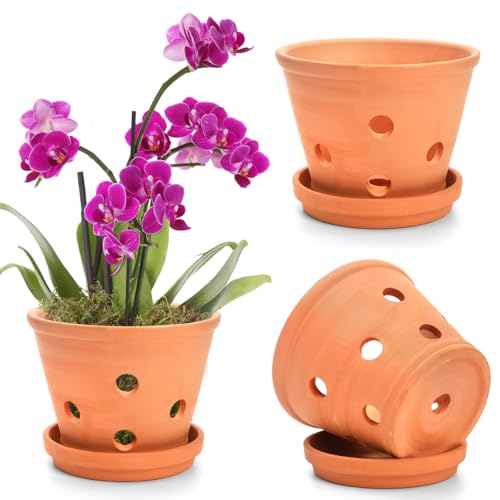
Best for: growers needing a complete starter set for repotting small to medium orchids. Why selected: strong terracotta construction, holes on the sides, and a bottom drainage design. The included saucers help manage excess moisture and protect surfaces. Caution: ensure the pots’ terracotta fits your orchid’s root mass; overly large spaces can slow stabilization for tight-rooted species.
Orceler 6 Inch Terracotta Pots With Holes

Best for: orchid enthusiasts seeking durable terracotta with proven air flow. Why selected: fired at 1922°F for crack resistance and durability; side holes promote healthy root growth and efficient drainage. Includes saucers to keep growing areas clean. Caution: heavier weight may require more careful handling when moving large plants.
vensovo 6 Inch Terracotta Pots With Holes
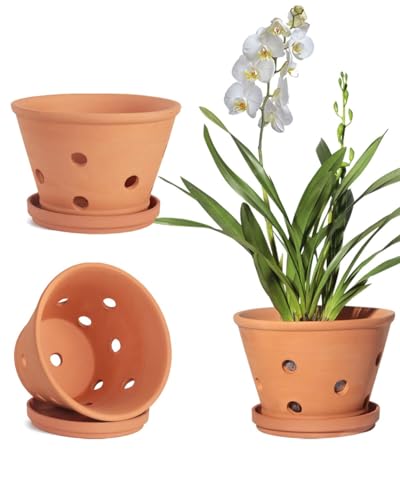
Best for: indoor or outdoor setups where airflow and root health are priorities. Why selected: sturdy terracotta with multiple side holes and a bottom drain hole; designed to support healthy roots and vibrant blooms. Caution: ensure the pot’s interior dimensions suit the orchid species’ potting mix volumes to avoid crowding.
vensovo 8 Inch Terracotta Pots (2 Pack)

Best for: larger orchids or groups of orchids needing stable, spacious pots. Why selected: larger terracotta pots with side holes and a bottom drainage hole promote air circulation and prevent overwatering. Caution: the heavier pots require careful placement and support on delicate surfaces.
T4U Orchid Pot Terracotta Set

Best for: orchid growers prioritizing a mix of sizes and a simple unglazed terracotta design. Why selected: nine side vents plus a bottom drainage hole support airflow and moisture control; unglazed terracotta aids natural moisture exchange. Caution: unglazed surfaces may require more frequent cleaning to prevent mineral buildup on pot rims.
JUXYES Pack of 6 Small Pots With Holes

Best for: creating a cluster of compact orchid displays or for starter plants. Why selected: stable, heavy terracotta with matching saucers helps minimize tipping for top-heavy specimens. Caution: the smaller size may limit root growth for larger orchid varieties over time.
Buying Guide: How To Choose The Right Clay Orchid Pots With Holes
- Size and planter depth: Choose pots that fit the orchid’s root system and growing medium. Too-large pots can overwater, too-small pots may restrict growth.
- Hole design and drainage: Look for multiple side holes plus a bottom drainage hole to promote air flow and water release. Saucers help keep surfaces clean and prevent root rot from standing water.
- Material and finish: Terracotta is porous, encouraging moisture exchange but may dry faster. Unglazed pots enhance air and moisture exchange, while glazed pots retain moisture more.
- Weight and stability: Heavier pots offer stability for top-heavy plants but can be harder to move. Consider placement location and handling needs.
- Durability and delivery: Pots fired at higher temperatures tend to be more crack-resistant. Confirm packaging and drop tests when available.
What to consider by orchid type
- Compact varieties often thrive in 4–6 inch pots with ample side drainage holes.
- Medium to large species may require 6–8 inch pots for stability and room for root expansion.
- Epiphytic orchids prefer breathable pots with numerous small holes and lighter media to avoid waterlogging.
Maintenance tips
- Check drainage regularly to prevent root saturation.
- Avoid using potting mix that becomes soggy; choose appropriate orchid bark or chunky media.
- Clean pots between repotting to minimize disease risk.
FAQ
- Do orchid pots with holes affect watering frequency? Yes, better drainage and airflow reduce overwatering risk, potentially increasing the intervals between waterings.
- Are terracotta pots good for all orchids? Terracotta is good for many orchids that prefer airflow and dryness between waterings, but may dry out faster than plastic.
- Should pots have saucers? Saucers help catch excess water and keep surfaces clean, though remove standing water after watering to prevent root rot.
- Is unglazed clay better than glazed for orchids? Unglazed clay typically provides better moisture exchange, which can be beneficial for root health in many orchid types.
- How many holes are ideal? A pot with multiple side holes plus a bottom drainage hole generally offers balanced airflow and drainage for healthier roots.
- When should I repot an orchid? Repot when roots become crowded, media breaks down, or growth slows; use pots that fit the root system and provide adequate drainage.