Best Coconut Substrate for Plants: Top Coir Bricks, Chips and Mulch for Healthy Growth
Coconut-based substrates offer a renewable, well-draining, and moisture-retentive medium that supports healthy root growth for a wide range of plants. This guide reviews leading coconut coir bricks, chips, and fiber substrates, highlighting how they work, their practical uses, and how to choose the right option for your indoor garden, herbs, vegetables, and flowering plants. The selections below emphasize low EC and balanced pH, easy expansion with water, and compatibility with soil mixes.
| Product | Brand | Notes |
|---|---|---|
| Riare 2 Pack Coco Chips Substrate for Plants- 2.2lb | Riare | 2 bricks, expands to ~7 quarts each, low EC & pH balanced |
| Legigo Pack of 10 Organic Coco Coir Bricks | Legigo | 10 bricks, easy to store, expands with water |
| Riare 4 Pack Coco Chips Substrate for Plants- 4.4lb | Riare | Higher quantity, same expansion and balance |
| Legigo 4 Pack Premium Coco Coir Brick | Legigo | 4 bricks, versatile for soil mixes and mulch |
| ZeeDix 2 Pack Coconut Fiber Substrate | ZeeDix | Terrarium-grade coconut fiber, odor and waste absorption |
Riare 2 Pack Coco Chips Substrate

Each brick is made from pure natural coco coir chips and coconut fiber, offering a 100% organic, degradable substrate. The bricks expand with water to about 7 quarts, making them suitable as a soil substitute or soil amendment. Low EC and balanced pH help support oxygen-rich roots and nutrient uptake. Use alone or mixed with perlite, charcoal, or soil to create a custom growing medium. Ideal for garden, flowers, herbs, and general planting.
Legigo Pack of 10 Organic Coco Coir Bricks

Ten compressed coco coir bricks offer a traditional soil alternative with low EC and balanced pH. Each brick expands rapidly when hydrated and can replace or augment soil for herbs, flowers, vegetables, and houseplants. Lightweight, easy to store, and compatible with other substrates, it provides good aeration and drainage while supporting steady moisture retention for seedlings and mature plants alike.
Riare 4 Pack Coco Chips Substrate
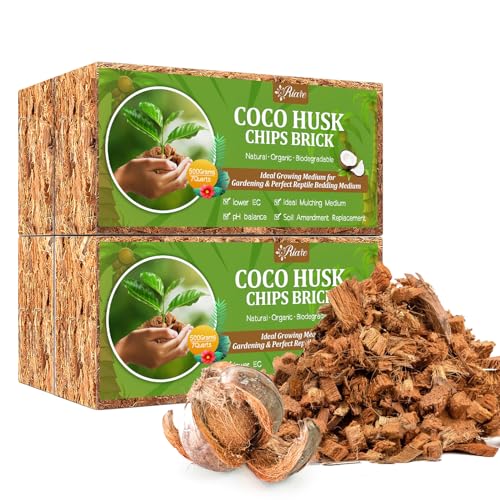
This set includes four coco chip bricks, delivering a total higher substrate mass for larger projects. Like the 2-pack, these bricks expand to a generous volume when soaked, and the low EC/pH-balanced formula helps maintain root vitality and nutrient availability. Great as a base for seed starting, succulent arrangements, or mixed soil systems requiring improved porosity and air exchange.
Legigo 4 Pack Premium Coco Coir Brick

Legigo’s 4-pack provides a flexible option for creating layered potting mixes or larger planting beds. The bricks expand well when water is added, offering robust aeration and drainage while maintaining enough moisture for sustained plant growth. The low EC and balanced pH help minimize nutrient burn and support healthy root development across herbs, vegetables, and ornamentals.
ZeeDix Coconut Fiber Substrate
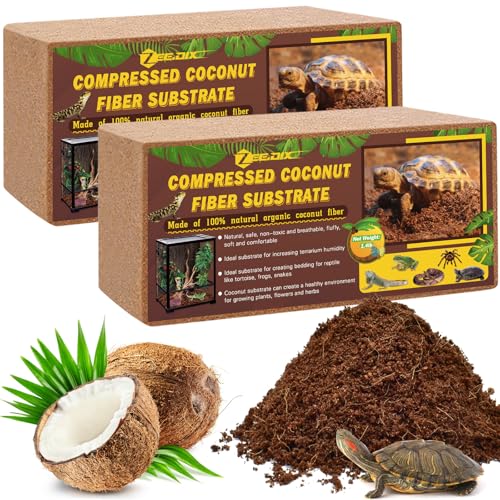
This 2-pack offers coconut fiber substrate ideal for terrarium settings and animal bedding. It is 100% natural, low in EC and balanced in pH, with good absorption for liquids and odors. While frequently used as reptile bedding, it also serves as a lightweight, breathable growing medium in controlled environments where moisture management and odor control are priorities.
Legigo 4 Pack Premium Coco Coir Brick (Alternative)

This set mirrors Legigo’s reliable coir bricks, designed for easy expansion and flexible use in soil mixes. The combined advantages of low EC, pH balance, and high moisture retention supported by the fibrous structure enable even moisture distribution and strong root support. Suitable for herbs, flowers, seedlings, and ornamental plants where container growth and potting soil amendments are needed.
Buying Guide: Coconut Substrate Purchase Considerations
Key factors influence which coconut substrate best fits your gardening goals. First, EC and pH balance matter for nutrient uptake; look for low EC and a stable pH around 5.5–6.5 for broad plant compatibility. Second, expansion behavior matters; bricks should hydrate easily to the recommended volume with minimal effort. Third, aeration and moisture retention impact root health: a breathable, porous material supports oxygen flow while holding adequate moisture. Fourth, compatibility with existing media: many substrates work well when mixed with perlite, vermiculite, or soil for customized blends. Finally, reuse and sustainability: some coir products are reusable in garden beds, while others are best discarded after a season.
Practical guidance for choosing among options:
- For seed starting and germination: prefer fine, well-wetted coco coir bricks with balanced pH and good moisture retention.
- For container plants: select bricks or bricks-plus-chips with strong aeration and a moderate water-holding capacity to prevent root rot.
- For terrariums and animal habitats: opt for coconut fiber substrates designed for bedding with odor absorption and easy disposal.
- Storage and handling: compressed bricks save space; ensure you have a container large enough to soak bricks completely.
Comparative Quick Facts
- Expansion: Most bricks expand to several quarts; plan for adequate soaking space.
- Moisture: Coconut coir offers high moisture retention with good drainage when properly aerated.
- Reuse: Some mixes can be reused or refreshed with water and composted after use; check product guidance.
- Applications: Suitable for seedlings, herbs, flowers, vegetables, and as mulch or soil amendments in garden beds.
Across these options, coconut substrate provides a renewable alternative to peat-based media, supporting sustainable gardening while delivering reliable aeration and moisture management for various plant needs.