Best Large-Capacity Compost Bins for Savvy Gardeners
Yes—these large-capacity compost bins are designed for serious yard waste, kitchen scraps, and steady, long-term compost production. They’re ideal for busy households, community gardens, or anyone who wants a steady supply of nutrient-rich compost without frequent emptying. The top picks below balance capacity, airflow, and ease of use, helping you choose the right bin for your space and workflow. Read on to see which model suits your needs, from heavy-duty metal frames to rotating tumblers that speed up decomposition.
| Product | Capacity | Best For |
|---|---|---|
| BUKLIYN Compost Bin Outdoor | 285 gallons | Large gardens, high-volume waste, long-term storage |
| GEOBIN Compost Bin | 246 gallons (expandable) | Moderate-to-large yards, expandable flexibility |
| Maygrove Outdoor Compost Bin | 53 gallons | Medium yards, continuous flow, easy setup |
| VIVOSUN Outdoor Tumbling Composter | 43 gallons | Continuous feed, easy turning, dual chambers |
| Redmon Outdoor Compost Bin | 65 gallons | Simple design, quick access, durable build |
BUKLIYN Outdoor Compost Bin

Features and design support large-scale composting. Capacity is 285 gallons, with dimensions of 41 by 41 by 39.4 inches. The powder-coated steel frame offers strong durability and corrosion resistance. A spacious interior helps you process heavy yard waste and kitchen scraps with less frequent turning. This bin is best for homeowners who generate significant compostable material and want a robust, long-lasting unit. A potential limitation is the size; it requires sufficient space in your yard or garden to accommodate its footprint.
Who it’s best for: households with sizable outdoor space and heavy seasonal waste. Why selected: the high capacity reduces the frequency of emptying and supports steady compost production. Caution: ensure you have a clear area for assembly and operation, as large components may require assistance to install.
GEOBIN Compost Bin
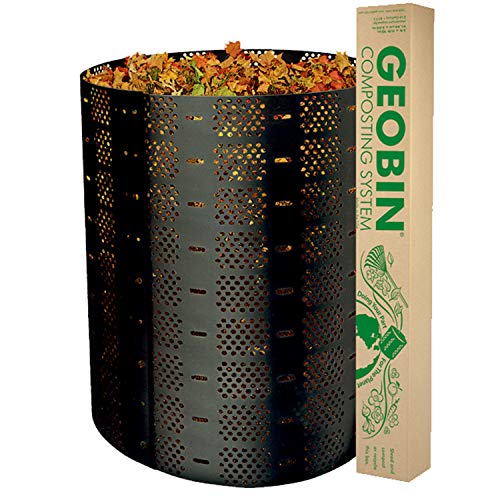
Geobin offers a big, expandable solution with 246 gallons of capacity. The unit emphasizes easy assembly with closure keys and straightforward mobility. A notable advantage is its expandable design, allowing you to adapt to changing waste volumes. The bin is USA-made and focuses on practical setup and efficient airflow. Best for gardeners who want a large-capacity, modular option without overly complex assembly. Limitation: the expandable mechanism may require careful alignment during setup to prevent leaks and ensure a snug fit.
Who it’s best for: growing spaces that may need more or less capacity over time. Why selected: the expandable design balances space and performance, helping you scale as your composting needs grow. Caution: read the assembly steps carefully to ensure airtight seals at expansion points.
Maygrove Dual-Chamber Compost Bin

This 53-gallon dual-chamber tumbler is designed for continuous composting. It rotates 360°, enabling thorough mixing without manual turning. Built-in adjustable air vents help regulate airflow, moisture, and temperature to minimize odors. It’s well-suited for medium-to-large backyards or vegetable gardens where a steady supply of finished compost is desired. A potential drawback is its moderate capacity relative to the largest bins, which may necessitate more frequent maintenance for very high waste volumes.
Who it’s best for: gardeners who want a hands-off turning experience and faster decomposition. Why selected: the continuous two-chamber flow supports non-stop production with relatively simple setup. Caution: odors can still occur if airflow is not properly balanced, so monitor vent adjustments after first use.
VIVOSUN Dual-Chamber Tumbling Composter

With two separate chambers, this 43-gallon tumbler supports continuous composting by letting one side finish while the other accepts fresh waste. The 360-degree tumbling action reduces manual turning, and deep fins on eight panels aid aeration and clump-breaking for thorough decomposition. It’s best for small to medium yards where quick turnover and steady supply of finished compost are priorities. Limitation: the capacity is lower than the largest units, which means more frequent dumping for heavy disposal months.
Who it’s best for: busy households seeking a simple, low-effort setup and consistent composting. Why selected: the dual-chamber system keeps production uninterrupted and avoids manual mixing. Caution: ensure you have enough space for the rotating drum to move freely without hitting nearby objects.
Redmon Outdoor Compost Bin

The Redmon bin supports 65 gallons of capacity and features vent holes for adequate aeration and faster composting. It’s constructed using recycled materials and designed to withstand outdoor conditions, delivering durable performance for urban or suburban yards. This option is well-suited for gardeners who want straightforward use and reliable access to finished material via four-door access and a lift-off lid. Caution: the rectangular design may require more careful placement to avoid obstruction in smaller spaces.
Marcytop Compost Tumbler

This 45-gallon dual-chamber tumbler uses continuous flow with two 22.5-gallon compartments. It features deep fins and ample aeration holes to improve oxygen circulation and reduce clumping, speeding up decomposition. The rotating design eliminates the need to dig or manually mix piles, offering a convenient solution for busy gardeners. It’s an option when you want a balance of capacity and ease of use but not the largest model available. Caution: assembly and turning require a bit of space to operate smoothly.
Buying Guide: Choosing A Large-Capacity Compost Bin
What size should you choose?
Match capacity to your waste output and space. Large households or active gardens benefit from bins in the 200+ gallon range, while smaller yards can manage with 40–60 gallon units. Consider whether you want continuous flow (dual chambers) or batch-style composting (single chamber).
What features matter most?
- Dual chambers for continuous composting vs. single-chamber bins.
- Airflow design and venting to minimize odors and speed decomposition.
- Ease of turning or rotating mechanisms to reduce manual labor.
- Durability of materials (powder-coated steel vs. plastic) for weather resistance.
- Ease of assembly and access to finished compost.
How important is ease of assembly?
For many buyers, a quick setup with simple hardware and clear instructions saves time and reduces frustration. Some models offer snap-together construction with minimal tools, while others require more extensive assembly.
Where should you place it?
Choose a level, accessible location with partial sun to prevent overheating while maintaining moisture balance. Ensure nearby space allows drum rotation or lid operation without obstruction. Secure placement reduces tipping risks and makes turning safer.
Maintenance considerations
Look for removable liners, easy-clean interiors, and straightforward access to turning mechanisms. Regularly monitor moisture and aeration to keep odors in check and maintain steady decomposition rates.
Frequently Asked Questions
- Which large-capacity bin is best for a big backyard? The BUKLIYN 285-gallon bin offers substantial capacity, reducing how often you must empty or manage waste. It’s best for yards with high volume and space for installation.
- Do dual-chamber tumblers really speed up composting? Yes, dual chambers allow one side to finish while the other accepts new waste, enabling a continuous workflow and faster overall production, especially with good aeration.
- Is a metal-bin frame better than plastic? Metal frames tend to be sturdier and more durable in harsh weather, but plastic bins can be lighter and easier to move. Choose based on budget, climate, and space.
- What maintenance helps prevent odors? Ensure adequate airflow with vents or openings, avoid overwatering, and keep the lid closed when not actively loading waste to minimize odors and pests.
- Can these bins handle kitchen scraps and yard waste? Yes, most large-capacity bins are designed to accept both kitchen scraps and yard waste, though you should chop or shred large items to speed up decomposition.
- How long does it take to produce usable compost? In favorable conditions, some systems claim 4–6 weeks per chamber, especially with consistent feeding and proper aeration. Results vary with material and climate.