Best Concrete Pavers on Grass for Walkways, Driveways, and Landscaping
Finding the right concrete paver system for grass surfaces means balancing ease of use, durability, and aesthetic appeal. This guide highlights five practical options that work well on lawns, driveways, and landscaping beds. Each choice is suited to different yard layouts, load needs, and DIY skill levels. Read on to see which paver system best fits your project and soil conditions, along with clear buying considerations and quick FAQs.
Quick reference: top picks at a glance
| Product | Brand | Type | Best For | Link |
|---|---|---|---|---|
| Reusable Plastic Grass Paver Hollow Bricks (Type 2) | MWYZGmold | ABS concrete molds | Grass-filled paths and edging with reusable molds | Amazon |
| Techno Earth Permeable Grass Pavers (Pack of 4) | Techno Earth | Permeable pavers | Grass parking lots, driveways, and access roads | Amazon |
| Permeable Grass Pavers Grid (HDPE) | Generic | HDPE grid pavers | Landscaping and soil reinforcement with grass or gravel | Amazon |
| Betonex Grass Paver Mold | BETONEX | ABS concrete molds | DIY garden paths and grass blocks | Amazon |
| Standartpark HexPave Permeable System | Standartpark | Recycled PPE plastic pavers | Grass patios, walkways, and sheds bases | Amazon |
Each option has distinct strengths: some emphasize permeability to prevent standing water, others focus on ease of molding and reusability, while a few offer heavy-duty load capacity for driveways. Use this table to identify upfront which product category aligns with your site conditions and traffic expectations.
Reusable Plastic Grass Paver Hollow Bricks (Type 2) – Best For Reuse

These concrete molds are made from high-quality ABS material, designed for repeated use. They are best for DIYers who want to craft grass-filled pavers for driveways, walkways, and landscape edging. The Type 2 design features a five-hole layout that provides visual interest while allowing soil and grass to integrate with the paving surface. Use cases include decorative paths, residential front walkways, and edging along garden beds. A caution: thick molded bricks require proper curing and removal from the form to avoid warping.
- Best for: DIY enthusiasts seeking reusable molds and natural-grass inserts.
- Why selected: Reusability lowers long-term costs and enables customization through painting or grass planting.
- Limitation: Requires careful handling to prevent cracks during demolding.
Techno Earth Permeable Grass Pavers (Pack of 4-11 Sf) – Best For Permeable Surfaces

These pavers measure 19.7 by 19.7 inches with a 1.9-inch height and cover about 11 square feet per unit. They are suitable for grass parking lots, driveways, and access roads. The permeable design helps manage runoff and reduce mud, making them a practical choice for properties that require drainage alongside aesthetic green space. Best for: properties needing stormwater management and stable drive paths. Limitation: installation benefits from a proper base to maximize load distribution and permeability.
- Best for: Areas where water infiltration and grass growth coexist.
- Why selected: Combines structural support with natural grass visibility.
- Limitation: Requires base preparation to avoid rutting on heavy loads.
Permeable Grass Pavers Grid (HDPE) – Best For Light Duty Landscaping

This HDPE grid system is designed for soil reinforcement and grass growth, making it well-suited for light-duty driveways and residential landscaping. Its grid layout supports lawn areas while allowing grass roots to establish through the openings. Best for: lawn-to-path transitions and small visual accents within a garden. Limitation: Heavy loads or vehicles may require thicker bases or alternative paver choices to prevent deformation.
- Best for: Light traffic zones and garden reinforcements.
- Why selected: Simple installation and grass-friendly design.
- Limitation: Not ideal for heavy vehicle traffic without additional support.
Betonex Grass Paver Mold – Do-It-Yourself Concrete Blocks
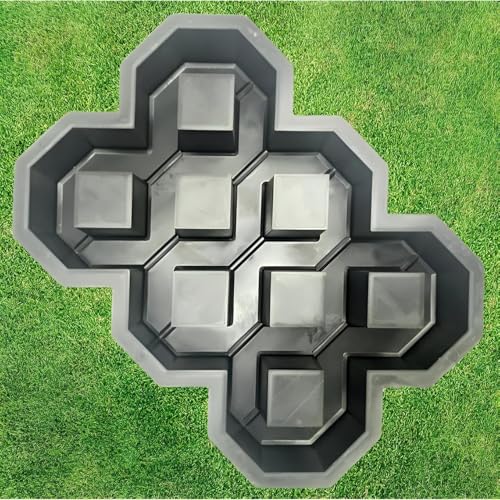
The Betonex mold is designed for DIY concrete pavers with a grass-friendly block aesthetic. The molded bricks can serve as garden paths, stepping stones, or edging, with a size around 19.6 by 15.7 by 2.36 inches. This option is best for homeowners who want a substantial brick footprint with a natural appearance. Limitation: The mold’s weight and size may require multiple casts and proper curing space.
- Best for: Medium-sized garden paths with a classic grass look.
- Why selected: Large paver surface area offers strong visual impact.
- Limitation: Requires adequate curing space and handling due to mold size.
Standartpark HexPave Permeable System – Best For High Load And Drainage

Standartpark’s HexPave system uses 100% recycled PPE plastic with a 1-inch depth and a high load capacity. The set includes 110 units, covering roughly 325 square feet, and the hexagonal design supports versatile layouts for grass patios, walkways, and shed bases. Best for: larger projects requiring robust support and water drainage. Caution: Handle with care during installation to ensure even base contact and consistent drainage performance.
- Best for: Large gardens, driveways, and shed bases with drainage needs.
- Why selected: Strong load capacity and eco-friendly construction.
- Limitation: May require careful base preparation to maximize drainage benefits.
Buying Guide: Concrete Pavers On Grass — What To Consider
Choosing the right system depends on your site, climate, and intended use. Consider these practical questions and answers to guide your decision.
What load will the pavers need to support?
Identify whether the area will bear pedestrian, vehicle, or equipment traffic. Permeable systems with higher structural support are better for driveways and vehicle access, while lighter paths can rely on simpler molds or grids.
How important is drainage and permeability?
Permeable pavers reduce runoff and mud. If your yard has poor drainage or seasonal pooling, prioritize systems marketed as permeable or grid-based to allow grass growth and water movement through the surface.
Is DIY ease a priority?
Reusable ABS molds and simple grid systems appeal to beginners. Consider the time for curing, demolding, and base preparation. Mold thickness and handling requirements influence long-term durability and reuse cycles.
What base preparation is required?
Most systems perform best with a stabilized base, compacted subgrade, and a layer of sand or gravel. Permeable options may require a specifically graded base to ensure even drainage and load distribution.
How does aesthetics affect the choice?
Consider the color and texture you want in your landscape. Some pavers allow painting, staining, or grass filling to achieve a natural, integrated look that complements lawns or garden borders.
Frequently Asked Questions
- What are grass pavers best used for?
- Can I install grass pavers myself, or do I need a contractor?
- Are permeable pavers suitable for high-traffic driveways?
- How do I maintain grass-filled pavers over time?
- Which paver type supports heavy loads without compromising grass growth?
- Do these systems require a specific soil type for optimal performance?
Direct answers:
- Grass pavers are used to create stable surfaces while allowing grass to grow through openings, suitable for paths, patios, and edging.
- DIY installation is feasible for many systems, especially molded ABS or grid designs; follow base preparation and curing guidance.
- Permeable options with proper base can handle moderate traffic; heavy-duty driveways may benefit from higher load-rated systems.
- Maintain grass by regular mowing and reseeding where gaps appear; ensure openings remain unobstructed for drainage.
- Choose permeable systems for drainage, and consider hexagonal or grid patterns for even load distribution.
- Soil type impacts water drainage and root growth; loamy soils with good drainage typically perform well with paver grids.