Best Dwarf Crape Myrtle Shrubs for Small Gardens and Hedge Rows
Answering the search for dwarf crape myrtle shrubs, this guide highlights five compact selections ideal for small landscapes, container gardens, or privacy hedges. Each entry explains who benefits most, why it stands out, and a practical consideration to avoid common missteps. Use this overview to compare bloom color, height, and growth habit side-by-side to pick the right compact crape myrtle for your space.
| Product | Mature Size | |
|---|---|---|
| First Editions Purple Magic Dwarf | Full gallon pot; compact dense shrub | Small gardens, hedge rows |
| Electric Pink Passion Dwarf Crape Myrtle | 6-8 ft tall, 6 ft wide | Colorful focal point, hedges |
| Tonto Crape Myrtle | 8-10 ft tall, 8-10 ft wide | Privacy screens, medium yards |
| Velmas Royal Delight Crape Myrtle | 8-10 ft tall, 8-10 ft wide | Distinctive purple bloom displays |
| Kiowa Crape Myrtle | 6-8 ft tall and wide | Hedges, borders, privacy |
First Editions Purple Magic Dwarf Crape Myrtle

The First Editions Purple Magic Dwarf crape myrtle is a dense, smaller-form shrub suited for tight spaces or as a low hedge. It blooms early in summer with dark purple flowers that stand out against glossy green foliage. The new growth often shows a reddish tint, adding color depth to the landscape as it matures. Best for buyers seeking a compact, long-flowering plant that remains manageable in small beds or along walkways.
- Best for small gardens or rows forming a long-lasting hedge
- Better for early-summer purple bloom and dense form
Best for: homeowners with limited space who want a compact, flowering focal point. Limitation: growth may be slower in very hot or dry sites, so provide steady moisture and sun.
Electric Pink Passion Crape Myrtle

This dwarf selection is prized for its blazing hot pink blooms and compact form that fits well in small yards or as a striking edge plant. The mature size around 6-8 feet tall provides a bold silhouette without overpowering nearby plantings. Foliage emerges with a red-tinted flush in spring, transitioning to deep green that complements the intense pink flowers.
- Best for vivid pink color in a compact canopy
- Better for use as a hedge or specimen in limited-space landscapes
Best for: gardeners wanting a standout color accent. Caution: as a compact tree, it benefits from full sun to achieve the fullest bloom display.
Tonto Crape Myrtle

The Tonto crape myrtle is a fast-growing, compact dwarf tree ideal for small landscapes seeking quick privacy or a dense shrub silhouette. It produces dark watermelon red blooms that contrast with lush, dark green foliage. This choice is favored for those who want a robust plant that fills in quickly and tolerates a range of garden conditions.
- Best for fast growth and bold red blooms
- Better for creating quick privacy or a dense screen
Best for: gardeners prioritizing rapid establishment and a striking color display. Caution: ensure adequate spacing to prevent crowding as it grows to a substantial size for a dwarf variety.
Velmas Royal Delight Crape Myrtle
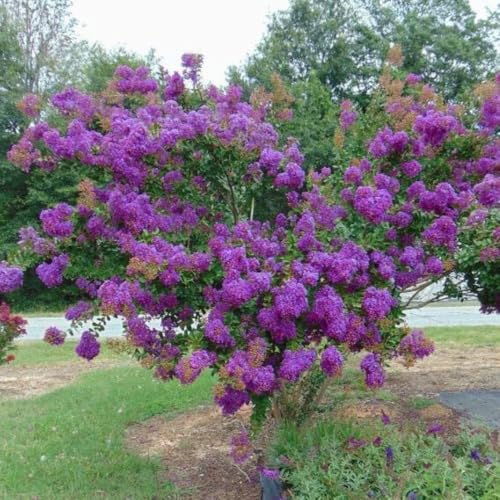
Velmas Royal Delight features extremely dark purple flowers that appear on a dwarf tree with the option to grow as a thick shrub or hedge. It matures around 8-10 feet tall and wide, offering a strong vertical accent without demanding garden space. The plant ships in a smaller size (1-4 feet tall) and is ready for transplanting into a prepared garden bed.
- Best for deep purple blooms and a unique appearance
- Better for mid-sized landscapes that tolerate a taller habit
Best for: buyers who want a dramatic color show with a versatile growth form. Caution: the plant may need shaping to maintain a compact hedge if left unpruned in warm climates.
Kiowa Crape Myrtle

Kiowa is a compact, naturally bushy dwarf tree with crisp snow-white flowers. It grows to approximately 6-8 feet tall and wide, making it an excellent choice for privacy hedges or borders within smaller yards. Foliage remains lush through summer, with colorful fall tones and decorative exfoliating bark in some seasons, adding multi-season interest.
- Best for white bloom accents in mixed borders
- Better for narrow spaces needing a tidy, low-maintenance hedge
Best for: gardeners seeking a clean, white-flowered dwarf with hedge potential. Caution: white blooms can be less conspicuous from a distance in heavily shaded areas.
Buying Guide
What size will fit your space?
- Choose a dwarf cultivar for patios, small beds, or entryways; consider the projected mature width to avoid crowding.
- For hedges, prefer varieties labeled as compact or dwarf with dense growth habit.
What bloom color and season do you want?
- Purple and pink varieties offer bold summer color; white-flowered kinds provide a subtler accent.
- Most crape myrtles bloom from mid-summer into fall; consider regional sun exposure for peak displays.
How much maintenance are you willing to do?
- Smaller dwarfs often require light pruning to maintain shape and encourage flowering.
- Check soil and sun requirements; they typically prefer full sun and well-drained soil.
Where will you plant?
- Containers: choose compact cultivars and ensure adequate root space and drainage.
- Ground beds: prepare soil and consider drainage and moisture levels to prevent root issues.
Selection tips by buyer intent:
- Small-space gardener: First Editions Purple Magic Dwarf or Kiowa for compact form and hedge utility.
- Color-forward display: Electric Pink Passion for vibrant pinks, Velmas Royal Delight for deep purple drama.
- Privacy hedge in a mid-sized yard: Tonto for speed and coverage, or Velmas Royal Delight for a tall, dark display.
Frequently Asked Questions
- Q: Do dwarf crape myrtles require pruning?
- A: Light pruning helps maintain shape and encourages flowering, but avoid heavy pruning that stunts bloom production.
- Q: Which soil conditions are best?
- A: Well-drained soil with moderate moisture works best; crape myrtles tolerate a range but dislike soggy roots.
- Q: Are these selections deer-resistant?
- A: Many crape myrtles have some deer resistance, but no cultivar is completely deer-proof depending on local pressure.
- Q: Can I grow these in pots?
- A: Yes, many listed varieties ship in smaller sizes suitable for pots; ensure adequate drainage and root space.
- Q: When do these shrubs bloom?
- A: Most bloom in mid to late summer, with some varieties extending into early fall depending on climate and pruning.