Best Creeping Thyme Ground Cover Seeds for Easy Yard Redesign
Answering the search for a low-maintenance creeping thyme ground cover, this guide highlights five practical seed options that suit sunny, well-drained gardens. These selections appeal to DIY landscapers, first-time ground-cover plans, and garden enthusiasts seeking drought-tolerant, fragrant foliage. Each product is evaluated for best use, whether filling between stepping stones, edging borders, or creating a weed-suppressing mat. Below is a quick summary to help you compare key traits at a glance.
| Product | Best For | Key Benefit | Approx. Coverage Hint |
|---|---|---|---|
| Wivolibe 29000+ Creeping Thyme Seeds | Borders and stepping stones | Adaptable, easy-to-plant seeds | Direct sow, 6-12 inches apart |
| CarpetC White Phlox Seeds | Evergreen ground cover with blooms | Dense carpet of star blooms | Spreads 18-24 inches wide |
| CarpetC Creeping Phlox Seeds | Rock gardens and slopes | Flavorful spring display, drought-tolerant | 18-24 inch spread |
| Ficoszo 3000+ Mix Creeping Thyme Seeds | Colorful ground cover in large areas | Multiple colors, drought-tolerant | Mix of blue, purple, red, yellow |
| BuggyBeds 20000+ Creeping Thyme Seeds | Extensive ground cover and borders | Large seed kit for dense mats | Year-to-year perennial growth |
Wivolibe Creeping Thyme Seeds For Ground Cover

Best for border use and between paving stones, these creeping thyme seeds are described as adaptable and hardy. The company notes direct-sowing capability in well-drained soil and sunny locations, with germination potentially taking up to a month. Use this variety when you want a low-growing, fragrant mat that tolerates dry conditions once established. A caution: germination can be slowed by dry soil; maintain moisture during the early weeks.
Who it’s for: gardeners seeking a reliable border edging or stepping-stone ground cover that requires minimal ongoing care after establishment. Why selected: high adaptability and straightforward planting method fit beginners and experienced planters alike.
CarpetC White Phlox Seeds Ground Cover

Best for evergreen ground cover with a dense bloom carpet, this phlox variety yields masses of star-shaped flowers in spring and grows 4-6 inches tall. It spreads 18-24 inches wide, making it suitable for edging, rock gardens, and erosion control on slopes. Once established, it requires less water. Caution: blooms are seasonal and may be limited to a few weeks; plan for complementary color from other plants during off-season.
Who it’s for: gardeners wanting a showy, evergreen mat with seasonal flowering and strong weed suppression. Why selected: its weed-smothering mat and year-round green foliage provide consistent landscape structure.
CarpetC Creeping Phlox Seeds For Ground Cover

Best for rock gardens and slopes, this creeping phlox variant offers a dense ground-covering habit with spring blooms. The evergreen foliage remains year-round, and the plant spreads to fill gaps along pathways. It’s drought-tolerant after establishment and well-suited to coastal or sandy soils. Limitation: phlox can be susceptible to certain root diseases in poorly drained conditions; ensure proper drainage.
Who it’s for: those who want a resilient mat with a vibrant spring display and good erosion control. Why selected: complements stone features and provides reliable coverage in drier soils.
Ficoszo 3000+ Mix Creeping Thyme Seeds
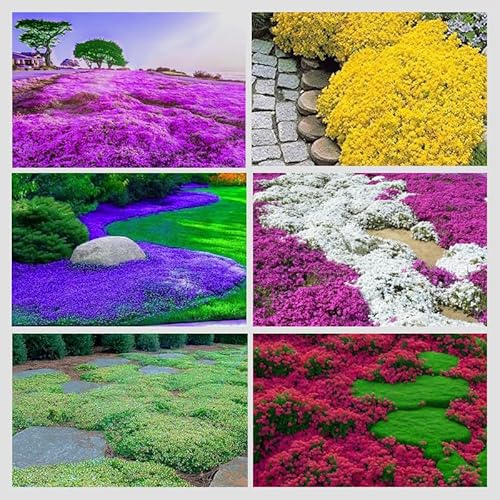
Best for large areas or color variety, this mix includes blue, purple, red, and yellow creeping thyme seeds. It is described as drought-tolerant and suitable for low-water gardens. The mix can create a colorful ground cover that also attracts beneficial insects. Caution: with a mixed bag, germination timing and bloom colors may vary across plants, so expect a mosaic rather than uniform color in early seasons.
Who it’s for: landscape planners aiming for a bold, multicolor ground cover with pollinator benefits. Why selected: large seed quantity and color diversity help cover expansive spaces efficiently.
BuggyBeds 20000+ Creeping Thyme Seeds

Best for extensive ground coverage and borders, this kit provides a large quantity of creeping thyme seeds for year-round perennial growth. It supports dense mats that suppress weeds and suit pathways or lawn alternatives. Caution: high seed quantity requires careful spacing and moisture management to achieve uniform germination across a large area.
Who it’s for: property owners or landscapers aiming for a quick, comprehensive ground-cover solution across big areas. Why selected: the sheer seed volume supports rapid establishment and uniform coverage on larger landscapes.
Buying Guide: Key Considerations For Creeping Thyme Seed Purchases
- Soil and sun: Most creeping thyme varieties prefer well-drained soil and full sun to partial shade. Plan your bed design around available light and soil type.
- Establishment and maintenance: Germination can take weeks; keep soil moist but not waterlogged. Once established, thyme is drought-tolerant and low-maintenance.
- Spacing and coverage: Seed counts and spread rates vary. For stepping-stone borders, space seeds 6-12 inches apart; for larger ground covers, aim for wider spacing to accelerate mat formation.
- Color and bloom: Mixed seed packs offer varied colors, while single-variety packs provide uniform color. Consider pollinator attraction when selecting colors.
- Environmental considerations: Creeping thyme is generally drought-tolerant and drought-resilient, which is advantageous for water-wise landscapes.
Frequently Asked Questions
- What is creeping thyme best used for in a garden? Best uses are borders, between stepping stones, rock gardens, and as a low-maintenance ground cover that suppresses weeds.
- How long does it take creeping thyme to establish? Germination often occurs over about a month, with full mat formation taking additional growing seasons.
- Is creeping thyme drought-tolerant? Yes, once established, most creeping thyme varieties are drought-tolerant and require minimal watering.
- Can creeping thyme attract pollinators? Yes, blooming thyme flowers attract bees and butterflies, benefiting the broader garden ecosystem.
- Should seeds be mixed with sand for sowing? For very small seeds, mixing with fine sand or using the shaker method can help even distribution.
- Are there color-variety options available? Yes, some packs offer mixed colors, while others target specific hues like red, purple, or blue.