Best Double Flowering Crape Jasmine Plants and Similar Alternatives
For a double-flowering crape jasmine, the closest match in this selection is Florida Gardenia, a tree-like Tabernaemontana with lightly fragrant semi-double white flowers. The Double Bloom Jasmine listing also describes white flowers but provides limited growing details. The remaining options are crape myrtles, which are different plants—not crape jasmine—but may suit shoppers who meant a flowering crape myrtle. Check the botanical identity and flower form before ordering.
| Product | Best suited for | Important distinction |
|---|---|---|
| Florida Gardenia/Crape Jasmine | Lightly shaded gardens seeking white, semi-double flowers | Tabernaemontana; listed flowers are semi-double |
| Double Bloom Jasmine | Warm-climate gardeners seeking a small jasmine plant | Plant size and botanical species are not specified |
| Twilight Crape Myrtle | Large sunny landscapes seeking purple-pink blooms | Lagerstroemia, not crape jasmine |
| Red Flowering Crape Myrtle, 6-Pack | Southern gardens seeking several red-flowering trees | Lagerstroemia, not crape jasmine |
| Acoma Crape Myrtle | Sunny gardens in zones 7–10 | Lagerstroemia, not crape jasmine |
Florida Gardenia/Crape Jasmine

This is the closest listed option for shoppers searching for crape jasmine. Its botanical background identifies it with the Tabernaemontana genus, and the description says it develops into a tree-like shrub about 5 to 7 feet tall. It produces pure-white, lightly fragrant semi-double flowers from summer into mid-fall.
Best for: Gardeners who want a white-flowering, tree-form shrub for a lightly shaded spot. It was selected because it is the listing most directly associated with Florida Gardenia/Crape Jasmine and gives specific growing guidance.
Plant it in fertile, well-draining, slightly acidic soil and keep soil adequately moist. The listing recommends spring feeding and pruning after flowering. Limitation: The flowers are described as semi-double, not fully double, and the plant is a shrub-sized specimen rather than a large tree.
Double Bloom Jasmine Live Plant

This listing describes a fragrant white-flowering jasmine plant, shipped at 4 to 6 inches tall. It gives USDA zones 9 to 11, a spring-to-fall blooming season, and a preference for well-draining soil with regular watering.
Best for: Buyers in a warm climate who prioritize a small jasmine plant and a stated double-bloom description. It was selected as the other listing that directly mentions double jasmine flowers.
Choose this if a starter-sized plant is suitable and you can provide regular watering. Limitation: The listing does not identify the botanical species or describe mature size, so confirm plant identity if you specifically need Tabernaemontana crape jasmine or a tree-form plant.
Twilight Crape Myrtle Tree

This crape myrtle is a separate plant from crape jasmine. It is described as a fast-growing tree with sunset purple-pink flowers from early summer through fall. The stated mature size is more than 20 feet tall and about 15 feet wide. It ships as a 2-to-4-foot plant in a pot with soil, and the listing gives zones 6–10.
Best for: Buyers who meant a large crape myrtle for shade or a driveway planting, rather than a jasmine. Its mature dimensions and extended bloom season make it the large-landscape alternative in this selection.
Limitation: Its size requires substantial space, and its flowers are purple-pink rather than white. It is not a substitute when crape jasmine is the required plant.
Red Flowering Crape Myrtle, Six-Pack
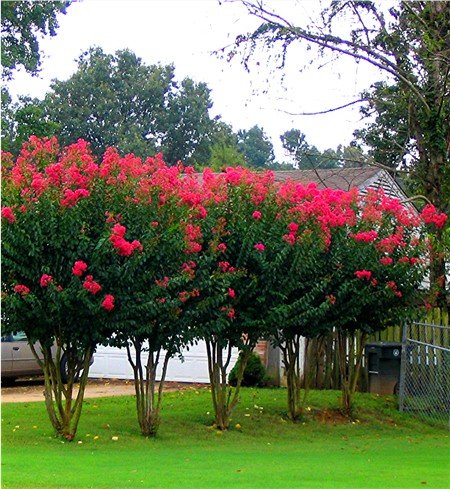
This pack contains six young Lagerstroemia plants in quart containers, listed at 6 to 12 inches tall. The seller describes red summer blooms, suitability for Southern states, mature height above 20 feet, and exfoliating bark for year-round visual interest.
Best for: Southern gardeners who want multiple red-flowering crape myrtles and room for large mature plants. It was selected as a multi-plant option for shoppers whose search actually meant crape myrtle.
Limitation: These are crape myrtles, not crape jasmine, and the listed mature height makes them unsuitable for tight spaces. The provided features do not specify a USDA hardiness-zone range.
Acoma Crape Myrtle

Acoma is another crape myrtle, not a crape jasmine. The listing says it ships about one foot tall, is ready for transplanting, and grows in zones 7–10 with full sun. It also notes that deciduous plants lose their leaves in winter.
Best for: Buyers seeking a young crape myrtle for a sunny location in zones 7–10. It offers a more compact shipped size than the larger Twilight tree, although the provided features do not state its mature dimensions or flower color.
Limitation: The available information is limited, and it is not the correct plant for someone specifically seeking double white crape jasmine flowers.
Buying Guide: How To Choose The Right Plant
Is crape jasmine the same as crape myrtle?
No. Crape jasmine refers to a Tabernaemontana plant, while crape myrtle is Lagerstroemia. The names sound similar, but the listed products differ in flower color, growth habit, and growing details. Check the product’s botanical identity rather than relying on a common-name match.
Do you need double flowers or a tree-sized plant?
Prioritize the flower description if double blooms are essential. The Florida Gardenia listing specifies semi-double flowers, while the Double Bloom Jasmine listing uses “double” but does not state its species or mature size. For a large shade tree, the crape myrtles may be more relevant only if you intended Lagerstroemia.
What growing conditions should you compare?
Match the stated conditions to your garden. Florida Gardenia is listed for light shade and fertile, well-draining, slightly acidic soil. The Double Bloom Jasmine listing specifies zones 9–11 and regular watering. The Acoma crape myrtle listing specifies full sun and zones 7–10; Twilight lists zones 6–10.
How much space can you provide?
Compare mature dimensions, not just the plant’s shipping size. Florida Gardenia is described as a 5-to-7-foot shrub. Twilight and the red-flowering crape myrtle are described as exceeding 20 feet, so they need more space. The Acoma listing does not provide mature dimensions in the supplied details.
Frequently Asked Questions
Which listed plant is closest to double-flowering crape jasmine?
Florida Gardenia/Crape Jasmine is the closest botanical match, but its flowers are described as semi-double. The Double Bloom Jasmine listing mentions double blooms but does not identify the species.
Are the crape myrtle products crape jasmine?
No. The Twilight, red-flowering, and Acoma products are crape myrtles. They are different from Tabernaemontana crape jasmine.
Which option is described as fragrant?
Florida Gardenia is described as lightly fragrant, and the Double Bloom Jasmine listing describes fragrant white flowers.
Which product is listed for zones 9–11?
The Double Bloom Jasmine Live Plant listing specifies USDA zones 9 to 11.
Which option is suited to a lightly shaded location?
Florida Gardenia is described as a choice for lightly shaded areas. The Acoma crape myrtle listing, by contrast, specifies full sun.