Best Douglas Fir Fence Posts for Sturdy, Long-Lasting Fences
Looking for durable, reliable fence posts built to withstand outdoor elements? The top picks here use Douglas Fir, a strong, dimensionally stable wood ideal for long-lasting fences. This guide explains who each product is best for, with practical pros and a clear buying reference. Whether you’re a DIY homeowner, a contractor, or a farm owner, these options cover cultivation, maintenance, and temporary fencing needs. Each section explains who benefits most, plus a concise buying table summarizing key attributes.
| Product | Best For | Notes |
|---|---|---|
| Sandbaggy 48″ Wooden Grading Stakes (50) | Construction and gardening projects needing thick, stable stakes | 2″ thick Douglas Fir; USA-made |
| Sandbaggy 48″ Wooden Grading Stakes (100) | Large outdoor projects with bulk needs | 100 stakes; durable, decay-resistant |
| Sandbaggy 48″ Wooden Grading Stakes (50) | Budget-conscious, reliable outdoor stakes | 50 stakes; same Douglas Fir benefits |
| Thealyn Metal 10Pack 7FT Fence Posts | No-dig, rustproof steel posts for longer life | Powder-coated steel; no-dig design |
| Fiberglass Step In Posts (20) | Temporary fencing that’s portable and easy to install | Fiberglass; steel spike option; portable |
Sandbaggy Douglas Fir Stakes, 50 Stakes, 2″ Thick

This set is best for professionals and serious DIYers who demand high strength from every stake. The 2″ thickness helps prevent bending when hammered into tough ground or rocky soil, reducing the need for re-driving stakes. Douglas Fir is chosen for its durability and relatively straight grain, which minimizes warping over time. The bundle is made in the USA, aligning with buyers seeking local manufacturing reliability.
Who it’s best for: contractors on large projects, landscape installers, or fence installers who require dependable, rigid stakes. Why selected: the thicker profile enhances durability and reduces failure in demanding environments. Caution: heavier stakes can be more challenging to transport and place in hard soil without proper tools.
Key features to note:
- 2″ thick Douglas Fir posts
- Made in the USA
- Packed in bundles of 25 stakes (50 total)
Best use scenarios: persistent borders, garden borders in rocky soil, or any long-term fence alignment where straightness and strength are critical. This option favors durability and consistency over sheer lightness.
Sandbaggy Douglas Fir Stakes, 100 Stakes, 48″ Chisel Point
This larger quantity option is ideal for projects that span wide areas or multiple fence lines. The chisel point design makes insertion easier in compact or tough soils, while the Douglas Fir wood emphasizes durability and stabilization over time. The set’s decayed and insect resistance characteristics extend post life in outdoor conditions, a practical advantage for farm boundaries, rental properties, or public fence lines.
Who it’s best for: larger landscaping jobs, farm perimeters, or contractors who prefer bulk purchases. Why selected: the 100-stake bundle reduces reordering frequency and supports consistent layout across larger sites. Caution: bulk storage requires proper humidity control to prevent wood exposure-related changes before use.
Key features to compare:
- Made from Douglas Fir
- 100 stakes total, 48″ long
- Chisel point design for easier ground entry
Best use scenarios: long, straight runs where uniform stake behavior matters, or when you need plenty of backup stakes on hand for a large installation.
Sandbaggy Douglas Fir Stakes, 50 Stakes, 48″
Designed for steady outdoor use, this 50-stake option emphasizes durability with Douglas Fir wood that resists warping over time. The bundles of 25 stakes ensure practical handling during transport and donation to multiple fence lines on a single job. The wood’s natural properties help it withstand exposure to moisture and temperature fluctuations better than softer woods.
Who it’s best for: smaller fence projects or project planners who want a balance of quantity and quality. Why selected: reliable strength in a compact bundle, enabling straightforward fence alignment. Caution: if soil is exceptionally dense or rocky, you may need to pre-drill or pre-score to reduce insertion effort.
Key considerations:
- Douglas Fir wood
- 50 stakes total
- 48″ length for standard fence alignment
Thealyn Heavy-Duty No-Dig Fence Posts

This steel option provides a different approach to fence construction, offering rustproof powder-coated protection and a no-dig installation. It’s best for those who want quick installation with reduced ground disturbance. Choose this if you’re aiming for a long-lasting, low-maintenance fence that doesn’t require frequent wood treatment or replacement. The assembly requirement suggests careful planning and basic tools are needed to set up correctly.
Who it’s best for: professional installers and property owners seeking longer post life and easier installation. Why selected: steel posts resist rot and insects far better than wood in wet climates. Limitation: heavier to handle compared to wood stakes and requires assembly before use.
Key features:
- No-dig, rustproof powder-coated steel
- 7 ft length; 10-pack
- Suitable for wire fencing and temporary fences
Fiberglass Step In Fence Posts
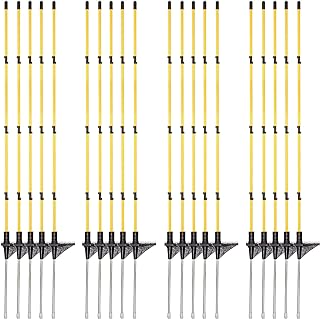
Fiberglass posts offer a lightweight, corrosion-resistant alternative for temporary fencing. They’re easy to transport and install, and ideal for short-term or seasonal boundaries. They excel in environments where metal or wood may corrode or rot. A caution is that fiberglass may flex slightly under heavy load, so consider this when planning for strong wind areas or high-tension fencing.
Who it’s best for: temporary fencing on farms, event spaces, or property lines that require quick setup and easy removal. Why selected: portability and weather resistance without wood maintenance. Limitation: not ideal for long-term, heavy-duty structural fencing in extreme conditions.
Key details:
- Fiberglass construction
- Portable, step-in design
- 20 stakes per pack
Buying Guide: Douglas Fir Fence Posts
What to consider when choosing Douglas Fir fence posts:
- Project scale: For small fences, 4–6 post lengths may suffice; larger jobs benefit from bulk bundles.
- Soil type: Hard or rocky soil benefits from thicker, chisel-point posts to ease installation.
- Environmental exposure: Douglas Fir offers good decay resistance but is still wood and may need treatment in prolonged wet climates.
- In-ground depth: Plan for sufficient depth to resist uplift in windy areas; follow local guidelines for minimum depths.
- Finish and edges: Smooth, straight posts prevent snagging and ensure cleaner alignment for fence framing.
Comparison tips:
- Best for: wood posts with strong structural integrity and ease of driving into soil.
- Better for: bulk orders when project scale grows; ensure consistent length and thickness.
- Choose this if: you prioritize local manufacturing and a known material profile (Douglas Fir).
- Avoid this if: soil conditions demand lighter weight or softer wood, where mid-range options may suffice.
Frequently Asked Questions
- What is the main advantage of Douglas Fir for fence posts? Douglas Fir offers strong structural integrity, dimensional stability, and good durability in outdoor conditions, helping fence lines stay straight longer.
- Are 2″ thick posts worth it for fencing? Yes, thicker posts resist bending and cracking in harder soils or under load, reducing the need for replacement.
- Should I treat Douglas Fir fence posts? In wet or humid climates, treating or sealing can extend life, though some users rely on the wood’s natural durability in moderate conditions.
- Is bulk buying better for large projects? Bulk bundles reduce reordering time and help maintain consistent fence alignment across large sites.
- When should I consider metal or fiberglass posts? For no-dig installation, long-term corrosion resistance, or temporary fencing, metal or fiberglass can be advantageous.
- What installation tips help prevent post damage? Use proper driving tools, start with a pilot hole in rocky soil, and ensure posts are vertically aligned during set.