Best Drip Irrigation Hose With Emitters for Even Watering and Easy Garden Coverage
Yes — when you need targeted, low-waste watering, a drip irrigation hose with built-in emitters is the best choice for consistent root-zone moisture. This guide helps buyers pick five reliable options suited for raised beds, pots, greenhouses, and garden rows. The selections emphasize pressure-compensating emitters, durable tubing, and spacing that promotes even distribution from start to finish of the line. Ideal buyers include home gardeners, small-scale landscape growers, and greenhouse operators who want simple setup and dependable performance.
Summary of selected products:
| Product | Best For | Key Benefit |
|---|---|---|
| General gardens | Even watering with 6″ spacing | |
| Raised beds and beds with row crops | All-in-one tubing with built-in emitters | |
| Water-saving layouts | Up to 80% water savings with built-in emitters | |
| Quick setup for planters and windows | 0.5 GPH emitters every 6 inches | |
| Longer runs in gardens or greenhouses | Even watering with 11.8–12 inch spacing |
Rain Bird ET256-50S Drip Irrigation Hose

The Rain Bird ET256-50S uses pressure-compensating emitters to deliver water evenly from start to end. The tubing is designed to function like a soaker hose but with reduced clogging and maintenance needs. Emitters are placed 180 degrees apart on either side of the tubing for consistent coverage across the planting area. This option is best for gardeners seeking reliable, low-maintenance drip lines for medium to large garden beds, borders, and container setups.
Who it’s best for: medium to large home gardens, raised beds, and landscapes that require uniform moisture along the entire line. Why selected: its pressure-compensating design helps maintain even flow even with slight elevation changes or pressure fluctuations. Caution: long runs may require stabilizing support to prevent sagging in exposed outdoor conditions.
Habitech 100 Ft Dripline Tubing

This tubing comes with built-in 0.5 GPH emitters at 6-inch intervals, eliminating the need for separate drippers. It’s designed for easy expansion and flexible layouts, suitable for row crops, pots, greenhouses, and planter boxes. The system is durable and versatile, with options to bury the line for subsurface use. Choose this if you want a straightforward, all-in-one solution that reduces setup time and provides predictable watering along the entire run.
Who it’s best for: gardeners who want a simple single-tabrication dripline for mixed-use spaces. Why selected: built-in emitters streamlines installation and ensures consistent coverage. Caution: the 6-inch spacing may not perfectly match very dense plantings; in such cases, plan a supplemental emitter placement.
MIXC 100 Ft Dripline Tubing
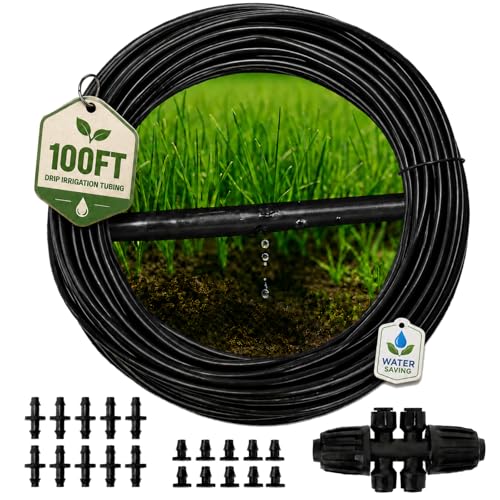
The MIXC dripline features built-in 0.5 GPH emitters every 6 inches, making installation quick: cut, lay, and connect. It claims up to 80% water savings by delivering water directly to the root zone, reducing runoff and evaporation. The tubing is durable for outdoor use and suitable for buried or surface installations. Best for compact spaces, container gardens, and greenhouse rows where precise, efficient watering matters.
Who it’s best for: budget-conscious gardeners who want a ready-to-deploy line with reliable emitter spacing. Why selected: strong emphasis on water savings and ease of use. Caution: ensure compatible fittings if extending beyond 100 feet or integrating with a main supply line.
Vikua 100 Ft Drip Line with 6″ Spacing

This line uses built-in 1/2 GPH emitters at 6-inch intervals. It’s designed for quick, flexible setup and can be buried for repeated outdoor use. The tubing is described as durable with good aging resistance, offering a balance of flexibility and long life. For large container setups or row plantings, it provides steady moisture with minimal effort. Best for: quick installations in pots, window boxes, and garden beds where fast setup matters.
Caution: some users may want slightly higher emitter flow for high-demand plants; consider a larger emitter if needed for dense plantings.
Innconee 150 Ft Dripline Tubing

Innconee’s 150-foot line features 12-inch emitter spacing and is designed for gardens and greenhouses requiring longer runs. The tubing claims to maintain even water distribution with an anti-clog design and a 0.4 GPH emitter performance. It’s suitable for root-zone irrigation in outdoor beds and raised planters where avoiding clogs is a priority. Best for: longer runs in larger gardens or greenhouse rows. Caution: ensure the spacing aligns with plant needs; very sparse plantings may waste water if spacing is too wide for the crop.
Buying Guide: Key Considerations for Drip Irrigation Hoses With Emitters
- Emitter flow rate and spacing: Match 0.4–0.5 GPH emitters with 6–12 inch spacing to cover root zones evenly without overwatering.
- Pressure compatibility: Look for pressure-compensating emitters to maintain consistent flow on slopes or fluctuating water pressure.
- Tubing durability: Choose UV-resistant, flexible LLDPE or similar materials for outdoor longevity and ease of burying or routing.
- Installation complexity: Built-in emitters simplify setup, but consider main line connections and fittings for expansion.
- Expansion options: If you plan to grow, pick tubing that supports adding branches or subsurface lines without major redesigns.
- Maintenance expectations: Anti-clog designs help reduce maintenance; check if line ends or fittings require periodic cleaning.
- Application scope: Raised beds, containers, greenhouse rows, and landscape borders each benefit from emitter spacing and run length tuned to plant density.
Frequently Asked Questions
- Q: What is the main advantage of pressure-compensating emitters? A: They deliver water evenly across the entire tubing length, even with changes in pressure or elevation.
- Q: How long should emitter spacing be for a flower bed? A: 6–8 inches works well for evenly moist root zones in most flowers; adjust if plants are very dense.
- Q: Can these hoses run underground? A: Yes, many are designed for burying or subsurface installation for low-visibility irrigation.
- Q: Are built-in emitters compatible with all irrigation setups? A: They’re most compatible with 1/4″ tubing mainlines and standard fittings; verify connector sizes before purchase.
- Q: When should I replace a dripline? A: Replace if tubing becomes cracked, brittle, or emitters clog consistently despite cleaning and maintenance.
- Q: Is 150 feet a good length for a single run? A: It depends on water pressure and spacing; longer runs require tighter emitter spacing and careful pressure management.