Best Drip Irrigation Sand Filter Solutions for Clean Water Flow
When your drip irrigation system slows or clogs, a sand filter can restore efficient, consistent watering. This guide highlights five reliable options that remove sediment before it reaches emitters, valves, and pressure regulators. Best for gardeners, greenhouse operators, and anyone maintaining extended drip setups, these filters help protect components and extend service life. Below, compare what each product does, who it’s best for, and practical buying considerations.
| Product | Best For | Key Benefit |
|---|---|---|
| Rain Bird RBY075S Drip Filter, 3/4″ | Residential drip systems | Pre-installed 200 mesh stainless steel screen for debris removal |
| Sooprinse 3/4″ Garden Hose Inlet Filter | High-pressure outdoor setups | Extra replacement screens for long life |
| 200 Mesh Garden Hose Filter with Quick Connect | General outdoor filtration | Hose-ready filtration with quick disconnect |
| US Standard 3/4 Drip Irrigation Y Filter (120 Mesh) | Drip irrigation networks with clog-prone emitters | Large filter area and US-standard threads |
| Spin Down Sand Separator, 100 Mesh | Well water and sediment-heavy supplies | Visible sediment bowl and high-flow performance |
Rain Bird RBY075S Drip Filter, 3/4″

The Rain Bird RBY075S is a 3/4″ inline drip filter pre-installed with a 200-mesh (75 micron) stainless-steel screen. It prevents downstream clogging by catching debris before it reaches valves, regulators, and emitters. The 3/4″ male pipe thread inlet and outlet simplifies connections in typical drip installations. Best for homeowners with compact drip networks and local irrigation controllers that benefit from upfront filtration. A limitation is that 200-mesh filtration may still require periodic cleaning in heavily sedimented water supplies.
Sooprinse Garden Hose Inlet Filter
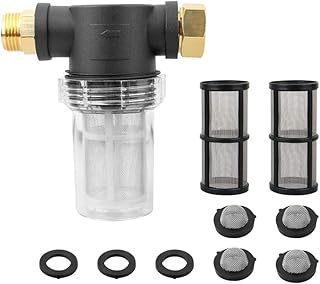
This filter kit targets high-pressure outdoor setups, featuring a 3/4″ male inlet and 3/4″ female outlet with a 40-mesh screen. The package includes two 100-mesh screens, O-rings, and filter washers for durability and easy maintenance. Choose this if you expect frequent sediment exposure and want quick replacement parts on hand. Caution: the 40-mesh screen may clog faster than finer screens in very dirty water, requiring more frequent cleaning or screen swapping.
200 Mesh Garden Hose Filter with Quick Connect

Designed for outdoor filtration, this inline filter uses a 200-mesh (75 micron) screening to trap sand and debris before reaching pressure washers or pumps. It features a quick-disconnect union for fast installation and removal, which is convenient in tight spaces or seasonal setups. Best for users needing a simple, universal filter connection ranges. Note that it’s tailored to garden hoses, so verify compatibility with drip-system fittings before purchasing.
US Standard 3/4 Drip Irrigation Y Filter
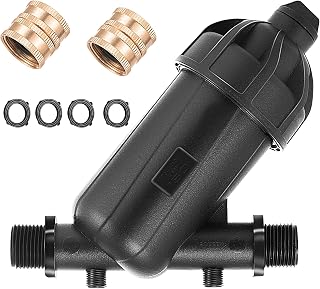
The inline Y-filter uses a 120-mesh screen and 3/4″ GHT threads, designed to trap larger particles before they reach emitters or regulators. It includes two brass female connectors for easy integration with existing drip lines. Best for systems that require durable, high-compatibility filtration with a straightforward installation. A possible limitation is that 120-mesh filtration may not capture the smallest particulates present in highly turbid water.
Spin Down Sand Separator, 100 Mesh

This spin-down separator uses a 100-mesh screen to remove sand, silt, rust, and other fine particles from water lines. It supports up to 50 GPM with stable pressure for larger drip networks, making it a strong choice for well water or systems prone to sediment. The transparent, heavy-duty PVC housing enables real-time sediment monitoring. Best for larger installations where visible sediment management and high flow are priorities. Limitation: clear bowls require periodic inspection and flushing to prevent clogging.
Buying Guide
Key considerations to help you choose the right filter for drip irrigation:
- Filtration mesh size: Finer meshes (e.g., 75 micron) capture smaller particles but may clog faster; coarser meshes reduce maintenance but let more sediment through.
- Inlet/outlet compatibility: Ensure thread sizes match your hoses and valves (3/4″ GHT, NPT, or other standards).
- Flow rate: Match the device to your system’s GPM to avoid pressure drops or insufficient filtration during peak watering times.
- Maintenance: Consider filters with easily accessible screens and visible sediment bowls for proactive cleaning.
- Installation space: Slim inline models save space in compact setups; spin-down separators are heavier but provide ongoing visibility and larger filtration areas.
- Environment: Outdoor exposure, UV resistance, and material durability matter for longevity in sun-exposed locations.
FAQ
- What is the difference between mesh and spin-down filters?
- How often should I clean a drip irrigation filter?
- Can these filters be used with a pressure regulator?
- Is finer filtration always better?
- Do I need different filters for well water vs. city water?
- How do I choose between 120-mesh and 200-mesh screens?
Mesh filters rely on screen screens to trap debris, while spin-down separators use a screen and a flushing mechanism to collect sediment in a bowl for easy removal.
Cleaning frequency depends on water clarity. In turbid water, inspect and clean weekly during peak irrigation periods; in clean water, every few months may suffice.
Yes, most inline drip filters are designed to connect upstream or downstream of pressure regulators, but verify threading and flow specifications for your setup.
Finer filtration reduces clogging risk but increases maintenance due to more frequent cleaning in sediment-rich water.
Well water often contains more sediment; spinning-down or finer mesh filters can help, but ensure the unit can handle potential iron or rust content to avoid rapid clogging.
Choose 120-mesh for larger debris and ease of maintenance; choose 200-mesh for finer filtration when emitters are highly sensitive to clogging.