Best Edging for the Yard: Durable, Flexible Landscaping Borders for Your Lawn
Edging that stands up to the elements and fits your landscaping plan can transform a yard. This guide highlights five top edging options suited for common American landscapes, from flower beds to lawns and pathways. Choose edging that matches your soil, climate, and maintenance preferences. Best for low-maintenance borders are the no-dig, flexible coils; best for heavy-duty borders are galvanized steel options; and best for quick, tool-free installs are no-dig or snap-in systems.
Buyer-friendly comparison at a glance:
| Product | Best For | Material | Key Benefit |
|---|---|---|---|
| MIXC 100ft Landscape Edging Kit | Curved layouts, multiple beds | HDPE | Flexible, easy setup with spikes |
| FunFanso 2-Inch x 100 FT | Border walls, durable long runs | PE | Flexible, easy to trim |
| LAVEVE Corrugated Metal Edging | Heavy-duty borders | Galvanized Steel | All-weather, high strength |
| STIRLINGEAR 33ft (10-Pack) | Professional-looking edges | Steel | Strong, low-profile |
| Amazon Basics Flexible Landscape Edging Coil | Budget-friendly, quick setups | Recycled Plastic | Recyclable, natural look |
MIXC 100ft Landscape Edging Kit

Best for curved layouts and DIY, this kit includes three rolls of edging (33 ft each) plus 150 spikes, offering flexible layout options for lawns, flower beds, and paths. The edging is made from high-density polyethylene (HDPE) and is designed to resist UV damage and extreme temperatures for several seasons. It installs directly with pre-drilled holes and spikes, without ground excavation.
Who it’s best for: homeowners wanting a multi-pack set for large, irregular beds and curves, with solo-friendly installation. Why selected: the 3-roll design reduces seams and supports varied designs. Limitation: HDPE can be less rigid for very sharp corners without extra support.
FunFanso 2-Inch x 100 FT Landscape Edging Border

Best for flexible, long runs that require curve-friendly installation, this edging is made from polyethylene (PE) and is designed to bend into curves without breaking. It’s easy to hammer in spikes, and each bundle can be trimmed to fit specific bed shapes. It’s a strong, lightweight option that resists warping over time.
Who it’s best for: DIYers who want a balance of flexibility and portability. Why selected: easy installation with minimal tools; better for soft soils. Limitation: may require more frequent staking in loose soil to prevent warping in heavy loads.
LAVEVE Corrugated Metal Garden Edging 6″ x 40 Ft

Best for heavy-duty borders that require a robust, weather-resistant structure, this 6″ tall corrugated metal edging features a thick galvanized steel core with a protective coating. The 3D corrugated design boosts strength and helps prevent sagging, making it suitable for long borders around lawns, flower beds, and paver edges.
Who it’s best for: borders subject to lawn equipment, soil pressure, and year-round weather. Why selected: superior durability and weather resistance; better for high-traffic borders. Limitation: heavier and requires more effort to install than plastic options.
STIRLINGEAR 33ft. Galvanized Steel Landscape Edging (10-Pack)

Best for a professional, clean edge with stability, this 10-pack uses 40″ panels each and is designed for hammer-in installation with included 11 stakes. The galvanized steel construction provides rust resistance and long-term support for lawn borders, flower beds, and pathways.
Who it’s best for: those aiming for a strong, anchor-backed border with a low-profile appearance. Why selected: durable steel with secure staking; better for straight runs and defined edges. Limitation: installation is more labor-intensive and may require more tools or effort than plastic edging.
Amazon Basics Flexible Landscape Edging Coil
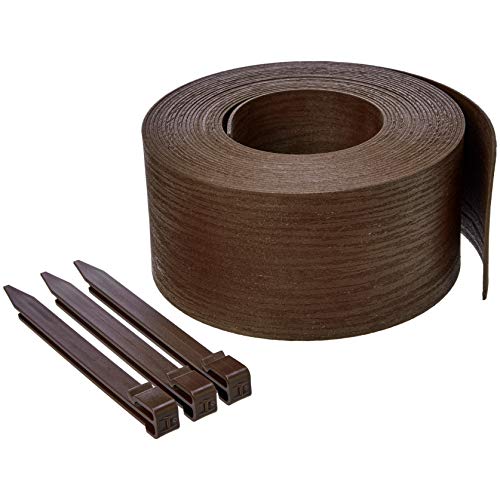
Best for budget-conscious projects, this 5-inch by 40-foot brown edging coil comes with 10 stakes. It’s made from recycled plastic and features a faux woodgrain texture for a natural look that blends into most garden borders. It’s suitable for lawns, flower beds, and pathways where a discrete appearance is desired.
Who it’s best for: small-to-medium projects with cost sensitivity. Why selected: value option with natural aesthetic; better for light to moderate border duties. Limitation: plastic edging may not hold up as well under heavy equipment or extreme moisture long-term.
EasyFlex No-Dig Landscape Edging with Anchoring Spikes

Best for easy DIY installations without digging, this 2.7-inch-tall decorative option uses matching anchoring spikes and a no-dig design. It’s suitable for defining borders around raised beds, trees, and lawns with a clean, modern look. The color may vary due to manufacturing processes, which can affect uniformity in a large project.
Who it’s best for: homeowners seeking simple, trench-free installation with a decorative touch. Why selected: quick installation and secure edging; better for small to medium borders. Limitation: width is best for moderate borders, not wide, long runs.
Landscape Edging 4 Inch Tall 20FT

Best for tall edging needs in flower beds or yard borders, this 4-inch-tall kit comes with 30 metal spikes for added stability. The galvanized steel construction provides solid anchoring, and the 20-foot section is suitable for shorter borders or accent edges in uneven terrain. It’s designed to keep borders sharp and defined, even on slopes.
Who it’s best for: smaller installations needing higher borders and stronger stakes. Why selected: tall profile creates a bold edge; better for accent borders. Limitation: shorter length per piece may require more cuts or joints for larger projects.
Buying Guide: Key Considerations for Edging Projects
- Material durability: Choose HDPE for flexible, low-maintenance borders; galvanized steel for heavy-duty, year-round borders; recycled plastic for budget-friendly installs.
- Installation effort: No-dig options save time but may offer less stability in very soft soil; hammer-in or stake-supported edging is more secure in demanding landscapes.
- Height and profile: Taller edging (around 4–6 inches) works well for raised beds or heavy foot traffic; low-profile borders (2–3 inches) blend into lawns and paths.
- Curveability: Flexible edgings are ideal for curves and irregular beds; rigid panels are better for straight runs and crisp lines.
- Length per unit: For large yards, kits offering long rolls reduce joints; for smaller spaces, individual panels can simplify design choices.
- Soil and climate compatibility: In freeze-thaw regions, galvanized steel provides robust resistance; plastic edging can become brittle in extreme cold if exposed to sun for long periods.
- Maintenance: Metal edging may require occasional re-sealing or rust prevention; plastic edging generally requires periodic checking of stakes to prevent shifting.
Frequently Asked Questions
- What edging is easiest to install for beginners? No-dig and coil-edge options typically require minimal tools and ground preparation, making them beginner-friendly.
- Which edging lasts the longest in freezing climates? Galvanized steel edging tends to offer the best long-term performance in freeze-thaw conditions, followed by heavy-duty HDPE with proper anchoring.
- Can edging be used around trees? Yes, select edging with flexibility and appropriate height to accommodate roots and trunk growth; some products are designed specifically for tree rings and curved borders.
- How high should edging be for a lawn border? For lawn edges that face mowing, 2–4 inches above ground is common; taller borders are suited for flower beds and heavy traffic zones.
- Is it better to dig a trench before installing edging? No-dig options avoid trenching, while traditional borders may require shallow trenches for stability and a clean look.
- Do I need to seal or treat metal edging? Some metal edging may benefit from protective coatings to extend rust resistance, especially in coastal or highly humid climates.