Best Electric Fence for Garden: Safe Predator Protection for Your Garden and Animals
Protecting a garden from wildlife and securing free-range poultry requires reliable fencing solutions. Electric fence energizers offer a humane, effective deterrent with minimal maintenance. This guide highlights five top options that balance power, portability, and durability for American gardens, homesteads, and small farms.
The following summary table showcases the chosen products and their core strengths, helping you compare at a glance.
| Product | Brand | Key Strength |
|---|---|---|
| Happy Henhouse Electric Fence Charger | Happy Henhouse | Powerful 110V plug-in with 2 miles of fence coverage |
| 0.12 Joule Electric Fence Charger | ANDMON | AC-powered, wide coverage with low maintenance |
| Gallagher S6 Solar Electric Fence Charger | Gallagher | Solar-powered with lithium battery and grounding rod mounting |
| Briidea 2-Mile Electric Fence Energizer | briidea | Two terminals, suitable for up to 8 acres |
| Ortis LCD Display 12,000V Charger | Ortis | High voltage with clear LCD status and pulse safety |
Modern garden security hinges on choosing an energizer matched to fence length, power source, and local wildlife. The selections below span plug-in, solar, and compact models to meet varied setups—whether you maintain a small garden or a larger poultry area.
Happy Henhouse 110V Plug-In Fence Energizer

Features a robust 110V AC plug-in design, delivering a steady deterrent without batteries or sun exposure. It supports up to 2 miles of fence with a compact, quick-install layout suited for gardens and small farms. The unit’s pulsed 0.25J output aims to deter predators while avoiding harm to curious pets, making it a balanced option for preserving garden crops and free-ranging birds.
Ideal for users who prefer a reliable, hard-wired power source. It reduces maintenance and eliminates battery or solar concerns, providing predictable performance in day and night operations. Setup involves mounting on fence posts or walls, then running standard fence wire or netting.
ANDMON 0.12 Joule AC-Powered Fence Energizer

This AC-powered energizer secures up to 2 miles (8 acres) with consistent pulses, suitable for gardens and small livestock. It features IP54-rated housing for weather resistance, lightning protection, and a broad output voltage up to 5kV. The low-maintenance design helps keep operating costs down while delivering dependable deterrence year-round.
Gallagher S6 Solar Electric Fence Charger
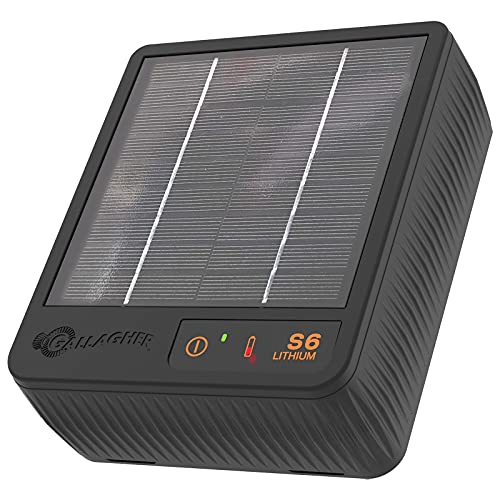
Compact solar-powered energizer designed for gardens, coops, and small pens. It mounts directly to a grounding rod and uses a lithium battery to provide weeks of operation between sunny periods. This option is particularly suited for off-grid locations and seasonal fencing where reliability in sunlight is essential.
Briidea 2-Mile Electric Fence Energizer

Compact energizer capable of covering up to 8 acres with 5,000 volts and 0.1 joule output. It includes two terminals—one for ground connection and one for the fence—supporting diverse setups. UL-listed components emphasize electrical safety and reliable operation for garden perimeters and small animal enclosures.
Ortis LCD Display 12,000V Electric Fence Charger

High-output model delivering up to 12,000V and 3 joules for fences up to 6.2 miles. An upgraded LCD display shows real-time voltage with a red pulse indicator, enabling quick fault detection. The unit emphasizes safe, effective animal management for gardens, coops, and small farms with dependable performance across soil types.
Buying Guide: Key Purchase Considerations
When choosing an electric fence energizer for a garden, consider these factors to optimize safety, effectiveness, and cost-efficiency:
- Distance and coverage: Estimate the total fence length plus any future expansion. Choose a unit rated for at least that distance, with some headroom for peak loads and weather conditions.
- Power source compatibility: Decide between plug-in, solar, or portable options. Plug-in units offer steady power but depend on a reliable outlet; solar units excel off-grid and in sunny locations but may require optimal sun exposure and seasonality planning.
- Output strength and pulse energy: Higher joules and voltage improve deterrence but should be balanced with fence wire type and animal targets. A safe, humane deterrent protects crops while avoiding unnecessary harm.
- Durability and weather resistance: Look for IP ratings, rugged housings, and lightning protection for outdoor use. Coastal or storm-prone areas may demand extra protection.
- Grounding and installation: Proper grounding improves performance. Follow manufacturer guidance on rod placement, soil conditions, and mounting height to maximize effectiveness.
- Maintenance and reliability: Consider units with clear status indicators, low maintenance needs, and readily available replacement parts or batteries.
- Safety and wildlife considerations: Ensure the system complies with local regulations and uses humane pulse technology. Plan for pets and non-target animals to minimize accidental shocks.
For gardens with mixed needs—vegetable plots, poultry, and small livestock—a combination of a reliable AC-powered unit for daily use and a solar option for off-grid sections often offers the best balance of uptime and flexibility. Evaluate your fencing type (high-tensile wire, livestock netting, or standard poultry netting) and the environmental conditions to select the most appropriate energizer. This approach helps protect crops while supporting humane animal management across seasons.