Best Metal Electric Fence Posts for Quick, Durable Fence Lines
If you need sturdy metal fence posts for quick, reliable electric fencing, these top picks are designed for ease of installation, long-term outdoor use, and clear visibility. They’re ideal for livestock control, garden fencing, boundary marking, and temporary setups. The buyer who wants sturdy, reusable posts for rugged outdoor conditions will find these options particularly suitable.
| Product | Best For | Key Benefit |
|---|---|---|
| ARIFARO 41″ Step in Fence Post White | Temporary fencing and livestock control | Heavy-duty galvanized steel with pig tail tops for fast setup |
| Gallagher 3/8″ x 48″ Fiberglass Step-in Post | Rotational grazing and garden fences | Non-conductive fiberglass; durable and lightweight |
| LARNORJE 41inch Pig Tail Step-in Fence Posts | Outdoor livestock enclosures | Galvanized steel, anti-rotation design |
| Gallagher Heavy Duty Multi-Wire Ring Top Posts | Multi-wire electric fencing | Strong steel construction with notches for wire layouts |
| 41 Inches Pig Tail No Dig Fence Posts (Metal) | Temporary fencing with tall visibility | Double-spike design and insulated protection |
ARIFARO 41″ Step in Fence Post White

Best for fast, temporary setups where quick installation matters. These posts stand 41 inches tall with pig tail tops to help secure wire or rope and keep lines in place. They use galvanized spring steel for strength and rust resistance, which suits outdoor use in grazing areas, livestock enclosures, or boundary marking. A potential limitation is that they are designed for temporary fencing; long-term fixed installations may require replacing or supplementing with more permanent options.
Gallagher 3/8″ x 48″ Fiberglass Step-in Post
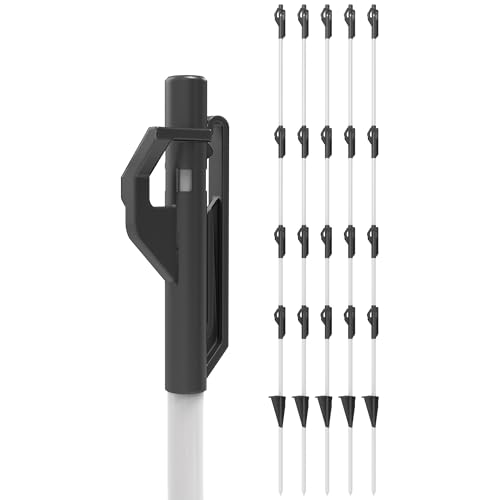
Best for where electrical insulation is desired. The 48-inch fiberglass posts are weatherproof, lightweight, and resist corrosion, making them ideal for gardens and rotational grazing where metal conductors aren’t necessary. They feature four integrated clips to secure wire, polywire, polytape, or polyrope. Choose this if you want a non-conductive option that’s easy to transport, but note that fiberglass posts are not as rigid as steel in very rocky soil or high-wind environments.
LARNORJE 41inch Pig Tail Step-in Fence Posts

Best for durable outdoor use with strong ground grip. These 41-inch posts have a sharp step-in design and an anti-rotation spike to keep the stake from turning. Made from galvanized steel, they resist harsh weather and are suitable for holding electric wire or tape in place. A potential limitation is that heavy soils or very dense ground may require more effort during installation, but the anti-rotation feature helps maintain stability.
Gallagher Heavy Duty Multi-Wire Ring Top Electric Fence Posts

Best for multi-wire configurations and robust containment. These steel step-in posts are designed for livestock containment and wildlife control, with a foot plate capable of handling substantial pressure and pre-made notches to tailor wire heights and spacing. They’re ideal when you need a reliable, high-capacity electric fence, but they may be heavier to transport than lighter composite options.
41 Inches Pig Tail No Dig Fence Posts (Metal)

Best for tall, visible fencing that requires quick deployment. These metal posts feature a double-spike design and insulated plastic protection for grounding issues, making them suitable for temporary electric fencing or stringing lights. They are a strong choice for high visibility and ease of use, but the insulation adds bulk and may require careful wire routing to prevent shorts.
Buying Guide: Key Considerations For Metal Fence Posts
- Material and Durability: Steel and galvanized steel posts offer high strength and long-term durability for rugged outdoor use. Fiberglass or plastic posts are lighter and non-conductive, which can be an advantage in certain installations but may lack rigidity in hard soils.
- Installation Type: Step-in posts with sharp spikes or no-dig designs speed up setup but may struggle in very hard ground or rocky soils. Consider anti-rotation designs for windy locations.
- Height and Visibility: Taller posts improve visibility and wire height control, which matters for livestock and gardeners alike. Measure the desired wire height before purchase.
- Wire Compatibility: Check if posts have integrated clips or notches for the intended wire, polywire, polytape, or polyrope configurations. Multi-wire posts offer flexibility for complex fencing layouts.
- Ground Conditions: Ground conditions influence installation effort. In dense or rocky soil, steel posts with sturdy footplates or reinforced spikes perform better than lightweight options.
- Insulation and Grounding: If using electrical fencing, consider whether you need insulated plastic protections or non-conductive posts to avoid grounding issues.
Frequently Asked Questions
- What type of metal fence post is best for livestock fencing?
– Steel or galvanized steel posts are typically best for durability and long-term use in grazing areas; they resist bending and wear from animals. - Are fiberglass posts good for electric fencing?
– Fiberglass posts are non-conductive and corrosion-resistant, making them suitable where electrical insulation is important, but they may be less rigid than metal in certain soils. - How do I choose between step-in and no-dig posts?
– Step-in posts install quickly in softer ground; no-dig posts offer similar convenience but may require extra effort in very hard soil. Consider ground conditions and installation frequency. - Can these posts support multiple wires or tapes?
– Yes, many models include multiple clips or notches designed for polywire, polytape, or polyrope, enabling multi-wire configurations for stronger fencing. - Are there safety concerns with metal posts?
– Ensure proper placement and avoid contact with electrical conductors or water sources to prevent shorts or shock risks. Follow local guidelines for fencing installations.