Best Erosion Mats for Slopes: Effective Solutions for Slope Stabilization
Erosion on slopes and banks poses ongoing challenges for landscaping, road projects, and construction sites. This guide highlights top erosion mats and blankets designed to stabilize soil, promote vegetation, and reduce runoff. Each product is evaluated for durability, environmental impact, and suitability for various slope conditions, from residential yards to DOT projects.
| Product | Material Type | Typical Use | Coverage |
|---|---|---|---|
| Farm Plastic Supply American Excelsior QuickGrass Pro | Excelsior netting with biodegradable top | Slope stabilization, erosion control blankets | 4′ x 112.5′ |
| Sandbaggy Jute Netting Roll (4 ft x 30 ft) | Natural jute netting | Slopes, hills, drainage areas | 4′ x 30′ |
| Sandbaggy Coir Mat (3.75 ft x 120 ft) | Coconut coir fibers | Soil retention, slope stabilization | 3.75′ x 120′ |
| Sandbaggy Coconut Erosion Control Blanket (3.75 ft x 120 ft) – 900 sq ft | Coir fiber blanket | Slope stabilization, vegetation support | 3.75′ x 120′ |
| Sandbaggy Jute Netting Roll (4 ft x 225 ft) | Natural jute netting | Long slopes, hillside stabilization | 4′ x 225′ |
The selections above prioritize visible performance factors such as erosion reduction, moisture retention, and seed germination support. They also consider environmental impact, with many options being biodegradable or natural fiber-based. The list blends products suitable for residential slopes and professional projects, helping readers compare long-term durability and maintenance needs.
Farm Plastic Supply American Excelsior QuickGrass Pro

Overview: This erosion control blanket uses excelsior fibers with a biodegradable top netting, designed to safeguard topsoil while promoting grass seed growth. The blanket measures 4 feet by 112.5 feet, offering substantial coverage for mid-sized slopes. The combination of wet curled excelsior fibers creates a robust matrix that resists washout as vegetation becomes established. It’s marketed as versatile across landscaping, road construction, and drainage improvement projects, making it suitable for residential drives, commercial sites, and DOT-related slopes.
Key features include biodegradability, seed-free composition, and absence of chemical additives. The product’s network of fibers forms a swellable, interlocking matrix that helps seed germination and root development. This makes it a practical choice where temporary stabilization is needed before mature vegetation takes hold. Consider this option for longer-term slope restoration where environmental stewardship is a priority.
Performance considerations: QuickGrass Pro is designed for soil protection during the early vegetative period, with emphasis on topsoil preservation. Its biodegradable top netting reduces raveling and helps seed placement. For best results, pair with appropriate seed mixes and consider irrigation during establishment, especially in hotter regions or windy sites.
Sandbaggy Jute Netting Roll, 4 ft x 30 ft
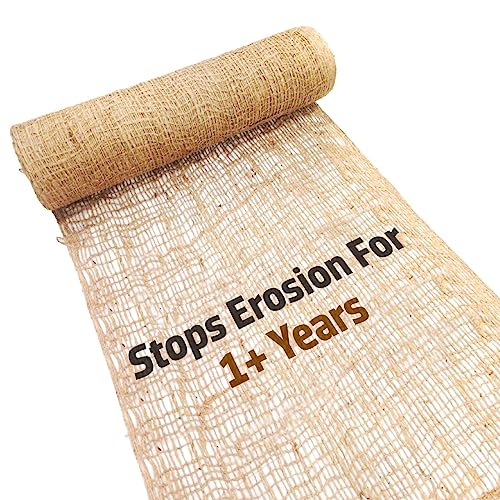
Overview: This heavy-duty jute netting serves as an erosion control blanket for slopes, hills, and drainage areas. It’s made from 100% natural jute fiber and is designed to decompose over time, enriching the soil without introducing synthetic materials. The mat’s durability supports stabilization during the initial growth phase of vegetation, helping to combat runoff and soil loss on disturbed slopes.
Key features include biodegradability, 6–24 month lifespan, and strong resistance to heavy rainfall and wind-driven erosion. The product is well-suited for residential landscaping, commercial sites, and construction projects where long-term plastic use is undesirable. As a natural option, it’s particularly attractive for environmentally sensitive areas or restoration projects seeking minimal synthetic impact.
Performance considerations: Jute netting provides rapid surface stabilization and seed-friendly conditions. It’s important to manage moisture and consider re-seeding or mulching if extended dry spells occur. In areas with persistent erosion pressure, combining jute netting with a soil blanket or mat could extend effectiveness until vegetation becomes established.
Sandbaggy Coconut Erosion Control Blanket – 3.75 ft x 120 ft (900 sq ft)

Overview: This coconut fiber blanket provides long-lasting erosion control for slopes, riverbanks, and coastal areas. With a 3.75-foot width and 120-foot length, it covers a substantial area in a single roll. Coconut coir fibers offer durable soil retention with a natural appearance and favorable moisture retention for seed germination. The blanket is designed for 1:1 slope stabilization, making it suitable for hillside protection and DOT-related projects.
Key features include 2–5 year longevity, high durability compared with straw blankets, and a moisture-retentive matrix that supports seed establishment. Its coastal and riverbank applications benefit from resistance to saltwater exposure and robust erosion resistance under variable weather. Contractors often choose it for projects requiring extended protection before native vegetation becomes self-sustaining.
Performance considerations: Coir blankets require proper anchoring to prevent wind lift on exposed slopes. In windy climates, secure with stakes or pins, and plan for periodic inspections after storms. Pairing with native seed mixes and surface mulches can improve establishment rates and visual integration with surrounding terrain.
Sandbaggy Coconut Erosion Control Blanket – 3.75 ft x 120 ft (450 sq ft) Rolls
Overview: This is another coconut fiber option from Sandbaggy, designed for erosion control on slopes with compact roll sizes. The 3.75 by 120-foot blanket provides substantial coverage and is particularly suitable for 1:1 slope stabilization projects or sites requiring a longer-term stabilizing layer with robust root support. The product emphasizes environmental compatibility and long-term soil retention.
Key features include 100% coconut fiber content, 1:1 slope stabilization suitability, and moisture retention benefits to support seed germination. The blanket’s durability supports extended erosion control periods while allowing vegetation to establish without frequent material replacement. It’s a practical choice for government projects, roadwork, and large landscaping installations where eco-friendly materials are preferred.
Performance considerations: Ensure proper anchoring for complex terrain and consider supplemental irrigation during establishment. In high-velocity runoff zones, combine with surface covers or seed mats to encourage rapid plant cover and root formation, improving long-term slope stability.
Sandbaggy Jute Netting Roll, 4 ft x 225 ft
Overview: This long-format jute netting roll is designed for extended slope applications, making it suitable for large hillside stabilization or drainage improvement projects. Like other jute netting products, it provides surface stabilization while enabling natural vegetation to establish. The roll’s length supports covering considerable slope areas without frequent reapplication.
Key features include a 4×225-foot footprint, biodegradability, and a 6–24 month lifespan, depending on environmental conditions. It’s well-suited for landscaping, residential projects, and construction sites requiring a natural material with minimal environmental impact. The product’s extended run makes it a practical option for larger sites or retrofits where slope stabilization is ongoing.
Performance considerations: For best results, secure with stakes at regular intervals and consider combining with seed mats or compost blankets to boost germination rates. In areas with intense runoff or heavy rainfall, monitor for fiber stretch and re-anchor as needed to maintain coverage until vegetation is established.
Buying Guide: Key Purchase Considerations And Comparisons
When choosing erosion mats for slopes, consider material type, lifespan, and environmental impact. Natural fibers like jute and coir decompose over time, which is ideal for restoration projects and environmentally sensitive sites, but may require more frequent inspection and replacement on highly erodible slopes. Excelsior-based blankets provide a robust soil matrix and can be effective for early stabilization, while biodegradable tops help seed germination without leaving persistent synthetic residues.
- Durability and lifespan: For long-term stabilization, select mats rated to last multiple growing seasons (6–24 months or longer). Coastal and high-precipitation sites may demand more durable options like coir blankets or heavy-duty nets.
- Slope angle and cover: Steeper slopes require sturdier anchoring and wider blankets to cover more area with fewer seams. Consider rolls with longer lengths to minimize gaps that can become erosion channels.
- Moisture management: Erosion mats that enhance moisture retention support seed germination. In dry climates, mulching or irrigation plans can improve establishment rates.
- Environmental impact: Biodegradable and natural-fiber options reduce long-term environmental footprint. For sensitive habitats or restoration efforts, prioritize options labeled as seed-friendly and chemical-free.
- Installation considerations: Proper anchoring, staking frequency, and geotechnical guidance matter. In windy or high-energy zones, additional anchoring may be required to prevent wind uplift.
- Vegetation compatibility: Some mats are designed to work with specific seed mixes. Confirm compatibility with local native species and regulatory requirements for DOT or municipal projects.
Comparison highlights: Coir-based blankets offer longer-term stabilization and strong moisture retention, making them suitable for riverbanks and oceanfronts, while jute netting provides fast surface stabilization with easy biodegradation. Excelsior blankets balance seed support with a fiber matrix that resists erosion during establishment. For large-scale slopes, long-run jute netting and larger blanket rolls reduce the number of seams and installation time, delivering practical coverage for both commercial and government applications.
In summary, the best erosion mats for slopes depend on project goals, environmental considerations, and site conditions. For temporary stabilization with seed support, biodegradable nets and excelsior blankets are effective. For longer-term stability, especially on coastal or hillside sites, coconut coir blankets and extended jute nets offer durable performance and vegetation-friendly outcomes. Always consult site-specific guidelines to determine the most suitable product family and installation approach.