Best Fast Acting Lime for Vegetable Garden: Quick-Acting pH Solutions for Healthier Plants
When your soil is too acidic, vegetables struggle to absorb essential nutrients. Fast acting lime raises soil pH quickly, helping roots take up calcium, magnesium, and other elements for better growth and yields. This guide targets gardeners who want immediate pH adjustment, organic enthusiasts seeking OMRI-listed options, and container gardeners needing reliable lime amendments. Below are five top picks that balance speed, safety, and practical use in vegetable plots and small lawns alike. A quick buyer’s table follows to aid side-by-side comparisons.
| Product | Best For | Notes |
|---|---|---|
| Earth Science Fast Acting Lime Granules (5 lb) | Small lawns and veggie beds needing instant pH lift | Calcium-rich, fast-acting, reduces nutrient runoff |
| Jobe’s Organics Garden Lime (6 lbs) | Organic gardeners seeking OMRI-listed amendment | No synthetic chemicals, minimal runoff |
| Organic Dolomite Lime 5 lb (USA) | Container gardens and EarthBox setups | Calcium & magnesium, OMRI listed |
| ENCAP 25 lb Fast Acting Lime | Larger beds and seasonal soil correction | All-season soil pH raise |
| Earth Science Fast Acting Lime (2.5 lb) | Mid-size plots needing a quick pH fix | Same active effect in a smaller bag |
Earth Science Fast Acting Lime Granules — 5 lb

Product highlights: Raises soil pH quickly to improve nutrient uptake; added calcium supports healthier root growth and greener color. The 5 lb bag is sized for small lawns and garden beds, providing fast action without oversaturation.
- Best for: Home gardeners with small to medium plots needing rapid pH adjustment.
- Why chosen: Immediate pH lift helps nutrient absorption and color improvement in vegetables and turf.
- Caution: Use according to soil test results to avoid over-liming in already neutral soils.
Jobe’s Organics Garden Lime, 6 lbs

Product highlights: Organic granules designed to increase soil alkalinity and enable nutrient uptake without synthetic additives. OMRI-listed for organic gardening. Helps greens, blooms, and overall plant vigor.
- Best for: Organic vegetable gardeners seeking an OMRI-listed lime option with minimal runoff.
- Why chosen: OMRI listing and organic formulation align with certified organic beds and containers.
- Caution: May require slower initial action compared to synthetic lime; monitor soil pH after application.
Organic Dolomite Lime 5 lb — Made in USA

Product highlights: OMRI-listed dolomitic lime provides calcium and magnesium, while raising and stabilizing pH. Particularly suitable for EarthBox-style containers and raised beds.
- Best for: Containers and raised beds that benefit from added magnesium as well as calcium.
- Why chosen: Dual-nutrient profile helps prevent magnesium deficiency in leafy greens and fruiting plants.
- Caution: Dolomitic lime can raise pH more slowly than pure calcitic lime; apply with soil tests in mind.
ENCAP Fast Acting Lime, 25 lb

Product highlights: Larger bag designed for bigger beds and seasonal soil treatment. Naturally raises pH and supports nutrient absorption across the growing season.
- Best for: Garden plots with multiple vegetable rows or larger containers needing sustained pH adjustment.
- Why chosen: Higher volume provides a practical option for recurring lime applications through the growing season.
- Caution: Handle and distribute evenly to avoid localized pH spikes in dense beds.
Earth Science Fast Acting Lime — 2.5 lb
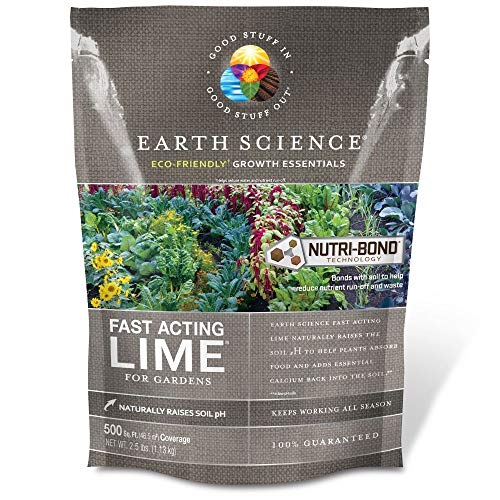
Product highlights: A smaller-pack variant of the fast acting lime line, designed for mid-size plots or patch treatments. Provides rapid pH lift and calcium replenishment.
- Best for: Medium-sized gardens or targeted patches needing quick lime refresh.
- Why chosen: Convenience of a smaller bag for precise applications without waste.
- Caution: May require more frequent applications if soil remains highly acidic or is used in continuous cropping.
Buying Guide
What should I consider when buying lime for a vegetable garden?
Soil pH affects nutrient availability. Start with a soil test to know your baseline and target pH before choosing lime. Lime type (calcitic vs dolomitic) influences calcium and magnesium delivery, as well as the time to act. Organic options are best for certified organic beds, while faster synthetic formulations can be useful for temporary corrections in fast-growing beds.
What lime form works best for containers versus in-ground beds?
Container gardens often benefit from finely ground or pulverized lime for uniform distribution and quicker action. In-ground beds may tolerate granules that spread evenly across larger areas. For raised beds with restricted drainage, dolomitic lime can supply magnesium in addition to calcium.
How do I apply lime safely and effectively?
Apply lime according to package directions and your soil test results. Water the area lightly after application to start the dissolution process. Recheck pH after a few weeks to determine if another treatment is needed. Avoid over-liming, which can lock out micronutrients like iron and manganese.
Which lime is best for organic gardens?
Look for OMRI-listed products such as Jobe’s Organics Garden Lime and Organic Dolomite Lime. These options align with organic gardening standards and reduce synthetic inputs while still raising pH.
How do pH changes affect tomato and pepper health?
Calcium availability and nutrient uptake improve as pH approaches the optimal range for most vegetables. Lime additions can reduce blossom-end rot risk in tomatoes and peppers by stabilizing calcium transport within tissues.
How to choose between fast-acting versus slower-acting lime?
Choose fast-acting lime when a quick pH lift is needed, such as after planting or when a bed tests strongly acidic. Slower-acting lime is suitable for long-term maintenance, especially in soil that tends to drift acidic over seasons.
FAQ
- Q: Will lime fix all nutrient deficiencies? A: Lime raises pH and improves nutrient availability, but specific deficiencies may require targeted amendments or fertilizers.
- Q: Can I apply lime to dry soil? A: It’s easier to distribute evenly when slightly moistened; avoid applying to very wet or waterlogged soil.
- Q: How often should I lime a vegetable garden? A: Frequency depends on soil pH trends; many gardens lime once or twice per season based on soil tests.
- Q: Is pulverized lime better for containers? A: Yes, pulverized forms distribute quickly in root zones and adjust pH faster in small volumes.
- Q: Can lime harm my plants? A: Excess lime can raise pH too high, limiting nutrient uptake; use measured applications based on tests.
- Q: Do all limes work the same in every soil type? A: No. Soil texture and organic matter influence lime effectiveness; test and tailor applications.