Best Fertilizer With Trace Elements for Healthier Plants
Answering your question about the best fertilizer with trace elements, these products provide essential micronutrients that support stronger roots, improved vigor, and better yields. They’re suitable for home gardens, potted plants, and small farms alike, depending on your application needs. Whether you’re correcting a mineral deficiency or aiming for steady growth, trace-element-enriched formulas help deliver micronutrients your plants often miss in typical soil mixes. Below, five well-rounded options are highlighted, each with clear uses, best-for notes, and practical cautions.
| Product | Best For | Key Benefit |
|---|---|---|
| Southern Ag Essential Minor Element Granular Formulation, 5 LB | Soil amendments and granular application fans | 7 minor elements; high magnesium and iron |
| GS Plant Foods Cal-Mag Extreme Liquid | Quick correction of secondary nutrients and trace elements | Liquid delivery for fast uptake |
| Azomite Raw Supply Organic Trace Mineral Powder | Soil remineralization and organic production | 67 minerals; OMRI listed |
| Down To Earth Azomite Minerals Powder | Soil, compost, and garden uses | Volcanic trace minerals; versatile |
| Organic Bloom Booster, Incredible Bulk | Plant growth boost for organic gardens | Organic 0-10-25 formula; trace elements included |
Southern Ag Essential Minor Element Granular Formulation

Brand: 98 Warehouse
Size: 5 LB. Contains 7 minor elements with high magnesium and iron. No mixing required and no spraying needed, making it convenient for granular applications in beds or around established plants.
Best for: Gardeners who prefer a ready-to-apply granular option to address micronutrient gaps in soils or existing compost mixes. It’s especially suitable for those who want simplicity and reliable micronutrient delivery without liquid handling.
Why selected: Its granular format and robust mineral mix support soil health and plant vigor in a straightforward, low-effort manner. The inclusion of magnesium and iron can help with chlorophyll production and overall growth in deficient soils.
Caution: As with all granular amendments, avoid applying directly on foliage to prevent leaf burn and ensure even distribution to prevent hotspots in small patches.
GS Plant Foods Cal-Mag Extreme Liquid

Brand: GS Plant Foods Store
Contents: Liquid fertilizer with calcium, magnesium, iron, and sulfur; formulated to address secondary and trace-element deficiencies. N-P-K listed as 2-0-0, focusing on micronutrient support rather than primary nutrients.
Best for: Gardeners needing a quick, in-season correction for trace elements and secondary nutrients in established containers or garden beds. The liquid form enables faster uptake and precise feeding schedules.
Why selected: This product emphasizes the importance of balanced secondary nutrients alongside trace elements, which can limit growth and yield if neglected even with adequate N-P-K. It’s a practical choice when you want rapid results and adjustable application rates.
Caution: Liquid fertilizers can cause leaf burn if over-applied or used at too high concentrations; follow label directions for dilution and frequency to avoid stress on plants.
Azomite Raw Supply Organic Trace Mineral Powder
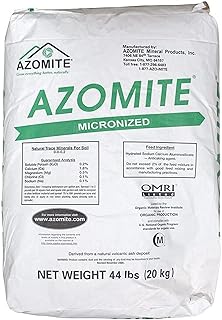
Brand: Azomite Store
Features: 44LB; 100% naturally derived, OMRI-listed for organic production; micronized powder with 67 essential minerals. Designed to remineralize nutrient-depleted soils and improve root systems, yields, and general vigor.
Best for: Organic growers seeking a comprehensive mineral boost and long-term soil health improvement. Suitable for soil blends, potting mixes, and hydroponics with agitation.
Why selected: Its broad mineral spectrum supports multiple plant needs, especially in low-mineral soils or when transitioning to organic cultivation. The micronized powder can blend into various media easily.
Caution: Powder forms can be messy to mix; ensure even distribution to avoid localized concentration that could affect uptake in some plants.
Down To Earth Organic Azomite Minerals Powder

Brand: Down To Earth
Features: 1 lb; volcanic trace minerals, 0-0-0.2 for soils and composts; suitable for gardens, containers, and soils requiring mineral amendments.
Best for: Soil enthusiasts seeking a simple, organic mineral boost added to soils and composts. Good for ongoing soil remodeling and nutrient balance.
Why selected: Its versatile mineral profile supports long-term soil health and plant performance across multiple growing systems.
Caution: Contains no primary nutrients; use with primary nutrient programs to avoid deficiencies in N-P-K if relied on alone.
Organic Bloom Booster, Incredible Bulk

Brand: Incredible Bulk
Features: 1 lb; organic vegan plant food with 0-1-10-25 ratio and trace elements; designed to support robust flowering and fruiting while remaining true to organic practices.
Best for: Growers seeking an organic-leaning boost to bloom and fruit development with micronutrient support baked into a ready-to-use blend.
Why selected: The blend targets early-stage nutrient balance and late-season yield quality through a concentrated, plant-friendly formula.
Caution: This product has a higher phosphorus content relative to nitrogen and potassium; plan feeding so primary nutrients aren’t neglected in overall fertilization strategy.
Buying Guide: What to Consider When Choosing a Fertilizer With Trace Elements
- : Choose granular for slow-release, or liquid for fast uptake depending on plant timing and soil condition.
- trace element mix: Look for a product that covers essential micronutrients like iron, manganese, zinc, copper, boron, molybdenum, magnesium, and calcium as needed by your plants.
- soil or substrate type: Organic amendments are often best for organic gardens, while hydroponics may benefit from precise mineral blends in water-soluble forms.
- application method: Consider ease of use, whether granular spreaders or hose-end applicators suit your setup.
- target plants: Some plants struggle with specific micronutrient deficiencies; match product composition to your crops (vegetables, ornamentals, or lawn care).
- organic vs. synthetic: OMRI-listed products suit organic production; synthetic blends may offer quicker correction in established systems.
Frequently Asked Questions
- What are trace elements in fertilizers? Trace elements are micronutrients required in smaller amounts by plants, including iron, manganese, zinc, copper, boron, molybdenum, and magnesium, which support vital physiological processes.
- When should I use a trace-element fertilizer? Use when soil tests indicate micronutrient deficiencies or when crops show yellowing, poor growth, or reduced yields despite adequate primary nutrients.
- Can I mix trace-element fertilizers with my regular N-P-K feed? Yes, many products are designed to complement primary nutrients, but follow label directions to avoid nutrient imbalances or salt buildup in the soil.
- Is organic always better for trace elements? Organic products can improve long-term soil health, but synthetic blends may offer faster correction; choose based on your farming goals and regulatory needs.
- How do I apply trace elements to potted plants? Liquid formulations are often easiest for containers, while granular forms can be adapted with careful dosage and thorough watering to prevent concentrated burn.
- How often should I reapply trace-element fertilizers? Frequency depends on soil type, crop needs, and product instructions. Base plans on soil tests and plant response to feeding.