Best Fig Tree Plant Food for Indoor Ficus and Fruit-Bearing Trees
The best fig tree plant food depends on the tree: indoor fiddle-leaf figs benefit from formulas made for ficus foliage, while fruit-bearing fig trees need food described for fruit trees. The five options below include liquid and pellet formats. The 3-1-2 liquid is best for shoppers seeking a stated nutrient ratio, the fruit-tree formula is aimed at garden and container figs, and the pellets may suit buyers looking for a slow-release format.
| Product | Format | Best suited for |
|---|---|---|
| Fiddle Leaf Fig Plant Food | Liquid | Ficus owners seeking a stated 3-1-2 ratio |
| TPS Fiddle Leaf Fig Fertilizer | Liquid | Indoor foliage and root support |
| TPS Fig Tree Fertilizer | Liquid | Fruit-bearing garden or container figs |
| GrowThrive Fiddle Leaf Fig Fertilizer | Liquid | Buyers seeking an organic probiotic formula |
| Fiddle Leaf Fig Tree Plant Food | Pellets | Buyers considering a slow-release format |
Fiddle Leaf Fig Plant Food, 3-1-2
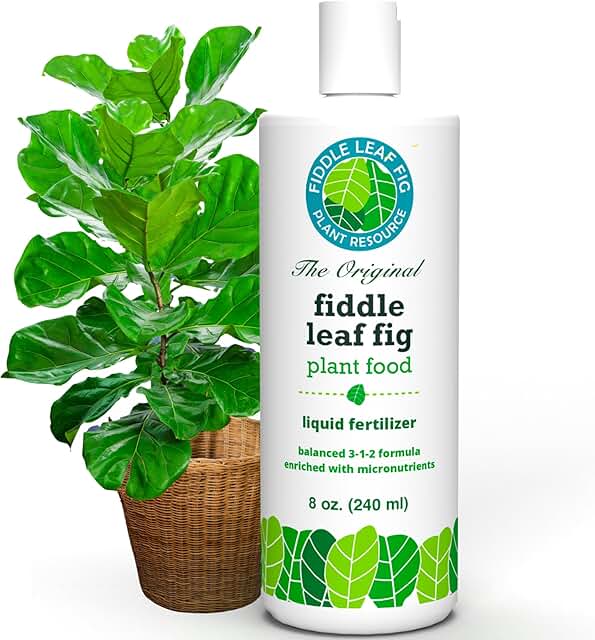
This liquid fertilizer is formulated for fiddle-leaf figs and lists a 3-1-2 NPK ratio. Its description says it contains three forms of nitrogen for extended, consistent nutrition and is intended for year-round use. The listing also includes a fiddle-leaf fig care webinar and e-book.
Best for: Ficus owners who want a plant-specific liquid food with a clearly stated NPK ratio. It was selected for its specific formulation and the extra care resources. Limitation: The listing does not provide a dilution rate in the supplied product details, so check the label for application instructions before use.
TPS Fiddle Leaf Fig Fertilizer

This liquid plant food is described as specially formulated for fiddle-leaf figs, ficus trees, and indoor plant care. Its stated benefits include supporting foliage growth, larger leaves, root strength, and overall plant structure. The product details do not specify an NPK ratio.
Best for: Indoor ficus owners prioritizing a fertilizer marketed for foliage and root support. It was selected as a direct comparison to the 3-1-2 option, with a focus on the manufacturer’s stated growth goals. Limitation: Buyers who need to compare nutrient ratios should check the product label, since a ratio is not included in the supplied details.
TPS Fig Tree Fertilizer for Fruit Trees

Unlike the fiddle-leaf products, this liquid fertilizer is described for fruit-bearing fig trees. The listing says it supports vigorous branches, healthy foliage, and fig production, and is intended for backyard trees, patio containers, and home orchards. It also describes its nutrition as balanced for fruit trees.
Best for: Gardeners growing edible figs in the ground or containers. It was selected because its stated use matches fruit production rather than indoor decorative foliage. Limitation: The supplied details do not give an NPK ratio or application schedule; use the label to determine how and when to apply it.
GrowThrive Organic Fiddle Leaf Fig Food

GrowThrive describes this 10-ounce liquid as an organic probiotic formula made through microbial fermentation, without harsh chemical additives. It is marketed for fiddle-leaf fig varieties and other houseplants, with stated goals that include greener foliage and a fuller canopy.
Best for: Buyers looking for a liquid formula described as organic and suitable for multiple plants. It was selected for its distinct formulation claims and broader stated use. Limitation: No nutrient ratio or exact feeding directions appear in the supplied details, so review the container instructions and do not assume it is suitable for every plant.
Fiddle Leaf Fig Slow-Release Pellets

The product title identifies this as a five-ounce slow-release pellet fertilizer for potted figs, with stated use for indoor and outdoor ficus plants. The supplied details do not include an ingredient list, nutrient ratio, or application directions.
Best for: Ficus owners who prefer to consider a pellet format rather than a liquid plant food. It was selected to add a different fertilizer form to the comparison. Limitation: Product-specific feeding frequency and dosage are not provided here. Confirm the label instructions before choosing it, especially if you need a fertilizer for fruit-bearing fig trees.
Buying Guide: How to Choose Fig Tree Plant Food
Is your fig tree grown for foliage or fruit?
Start with the kind of fig you are feeding. Fiddle-leaf figs are ficus houseplants grown for their foliage, while edible fig trees are grown for fruit. A product specifically described for fruit trees is the more directly relevant option for an edible fig. A fiddle-leaf formula is aimed at ficus foliage and should not be treated as a fruit-tree fertilizer unless its label says it is suitable.
Should you choose liquid food or pellets?
Liquid products are one option in this list, while the pellet product is identified as slow-release. Compare the label’s directions, nutrient information, and intended plant use before deciding. Do not infer dosage or feeding frequency from format alone: follow the instructions on the specific product.
Why check the NPK ratio and directions?
The NPK ratio identifies the listed amounts of nitrogen, phosphorus, and potassium. Only one product in this selection states a 3-1-2 ratio in its name and details. For other options, consult the packaging for nutrient analysis and application instructions. Avoid applying more than directed, and consider the plant’s growing conditions before fertilizing.
Frequently Asked Questions
Can I use fiddle-leaf fig food on an edible fig tree?
Check the product label. A formula marketed for fiddle-leaf figs is not automatically intended for fruit-bearing trees. Choose a product whose directions include your type of fig.
What is the difference between fig tree food and fiddle-leaf fig food?
Fig tree food may be marketed for fruit development, while fiddle-leaf fig food is generally described for ficus foliage and indoor growth. Confirm the intended use on the label.
How often should I fertilize a fig tree?
Follow the schedule printed on the fertilizer. The products listed here do not all provide application intervals in the supplied details, so a single schedule cannot be given for every formula.
Is slow-release fertilizer better for fiddle-leaf figs?
Not necessarily. Pellets offer a different format, but suitability depends on the product instructions and your plant’s needs. Compare the label with liquid options before choosing.