Best Frost-Tolerant Fruit Trees for Cold-Climate Gardens
For gardeners seeking fruit trees that can handle colder conditions, the Contender peach and Chicago Hardy fig are the strongest matches among these listings. A live pomegranate is another option, especially for container growing, but the listing does not provide a specific cold-hardiness zone. The products below include two Contender peach listings with different quantities and pot sizes, plus a decorative artificial pomegranate that does not produce fruit.
| Product | Best suited for | Key detail |
|---|---|---|
| Contender Peach, 7 Gallon | Gardeners seeking one established peach tree | Cold-tolerant; freestone fruit |
| Contender Peach, Two Trees | Buyers wanting two young peach trees | Listed for USDA Zones 4–8 |
| Chicago Hardy Fig | Fig growers with a sunny spot or patio container | Self-pollinating; full sun preferred |
| Wonderful Pomegranate | Small-space or container gardeners | Compact live plant; hardiness zone not stated |
Contender Peach Tree, 7-Gallon

Best for: Gardeners who want one Contender peach tree in a larger listed container size. The product is described as cold tolerant and freestone, with sweet, juicy peaches suited to fresh eating, canning, and baking.
Plant it in full sun and well-drained soil, water regularly during dry periods and fruit development, and prune in late winter to remove dead or crowded branches. The listing also recommends balanced fertilizer in spring. These care details make it a useful choice for buyers prepared to maintain a fruiting tree.
Limitation: The seller does not ship this listing to California, Arizona, Alaska, or Hawaii. Check the product listing and local growing conditions before ordering.
Contender Peach Trees, Two-Pack

Best for: Buyers who want two young Contender peach trees rather than one larger-container tree. The listing identifies the trees as self-pollinating, cold tolerant, and suitable for USDA Growing Zones 4–8. It describes them as one to two feet tall in one-gallon nursery pots.
Choose this option if the stated zone range matches your location and you have room for two trees. The Contender variety is also described as freestone, a practical feature for separating the peach flesh from the pit when preparing fruit.
Limitation: This listing cannot be shipped to California, Arizona, Alaska, or Hawaii. It does not specify mature tree dimensions, so check spacing needs before planting.
Chicago Hardy Fig Tree

Best for: Fig growers who want a self-pollinating live plant and can provide full sun. The one-gallon Chicago Hardy fig listing says it produces figs each year and includes fig food. It can be planted in the landscape or grown in a patio container, according to the product details.
The self-pollinating feature may suit gardeners who prefer not to rely on a second fig plant for pollination. Its container-growing option also gives patio gardeners a way to grow figs where in-ground planting is not practical.
Limitation: The listing does not state a USDA hardiness-zone range. Do not assume a particular level of winter survival from the name alone; compare your local winter conditions with reliable regional growing guidance.
Wonderful Pomegranate Live Plant
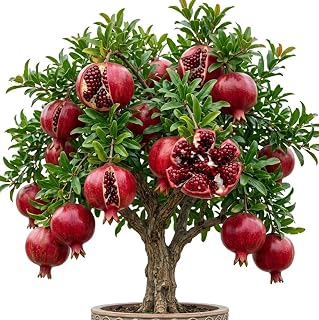
Best for: Gardeners with limited space who want a compact live pomegranate plant for a container, patio, or small garden. The listing describes a red pomegranate plant about 10–14 inches tall that can serve as both a fruit plant and decorative shrub.
Its small listed size makes it easier to consider for container growing than a full-sized tree. It may suit buyers who want to start with a young plant and have a plan for its care as it grows.
Limitation: Although the product title calls it cold hardy, the provided details do not give a USDA zone range or specific frost threshold. Confirm suitability for your climate before buying.
Artificial Pomegranate Tree For Decoration Only

Best for: Shoppers seeking seasonal fruit-tree décor, not a frost-tolerant plant. This 47-inch artificial pomegranate tree has adjustable branches and is described as suitable for indoor or covered outdoor spaces. It requires no watering, pruning, or sunlight.
Important distinction: This is a faux tree. It will not grow, flower, or produce edible fruit, so it is not an alternative to any live tree in this guide.
Buying Guide: Choosing A Fruit Tree For Frost-Prone Areas
Which listing gives a clear hardiness range?
The two-tree Contender peach listing specifies USDA Zones 4–8. The other live listings do not provide a zone range in the supplied details. Use a stated range as a starting point, then consider local microclimates, late spring freezes, and the protection available at your planting site.
Should you choose a peach or a fig?
Choose the Contender peach if its stated growing conditions fit your location and you want freestone peaches for fresh eating or cooking. The Chicago Hardy fig may be a better fit for someone seeking a self-pollinating fig that can be grown in a container, but the listing does not state its hardiness zones.
What should you check before ordering?
- Confirm the seller ships to your state. Both Contender listings exclude California, Arizona, Alaska, and Hawaii.
- Compare plant size and quantity: one 7-gallon peach tree versus two one-gallon young trees.
- Check the site’s sun exposure, drainage, available space, and watering needs.
- For products without a zone range, verify suitability with a local extension service or nursery.
- Distinguish live plants from artificial décor; only live plants can produce fruit.
Frequently Asked Questions
Which listed fruit tree has a stated USDA zone range?
The two-tree Contender peach listing states USDA Growing Zones 4–8.
Are the Contender peaches self-pollinating?
The two-tree listing describes its Contender peach trees as self-pollinating. The supplied details for the 7-gallon listing do not mention pollination.
Can the Chicago Hardy fig grow in a container?
Yes. The listing says it can be grown in a patio potting container and prefers full sun.
Is the pomegranate listing confirmed for a specific frost zone?
No. Its title describes it as cold hardy, but the supplied product details do not state a USDA zone range.
Does the artificial pomegranate tree produce fruit?
No. It is decorative faux foliage and fruit, not a live plant.