Best Full Spectrum Grow Lights for Tomatoes
Tomato cultivation indoors benefits from full spectrum grow lights that mimic natural sunlight. The following five products deliver full spectrum output, adjustable timers, and spectrum options designed to support tomato germination, vegetative growth, flowering, and fruiting stages. Each option is evaluated for PPFD, energy efficiency, ease of use, and heat management to help you achieve consistent yields.
style=”font-weight:bold;”>Summary of Selected Products
| Product | Brand | Key Feature | Power | Adjustability |
|---|---|---|---|---|
| LBW Latest Grow Light | LBW | Full spectrum with 214 LEDs per panel, dual-head with tripod | LED array with timer | 3/6/12H timer; 6 brightness levels; 3 switch modes |
| Briignite A19 Full Spectrum Grow Light Bulb | Briignite | Full spectrum, 4000K white with red/blue accents | 11W per bulb (100W equivalent) | Simple on/off with spectrum balance |
| LEOTER Upgraded Grow Light | LEOTER | 80 LEDs with red/blue/full spectrum blends | Low wattage but versatile spectrum | 3/9/12H timer; 10 dimmable modes |
| GooingTop Full Spectrum Clip Light | GooingTop | 6000K white plus red LEDs; high CRI | USB or AC powered | 4/8/12H timer; 5-level dimming |
| VIPARSPECTRA P700 Grow Light | VIPARSPECTRA | Full spectrum with 660nm/red plus white spectrum | 70W LED (11000 lumens) | Independent control for spectrum needs |
Note: All products are designed to support indoor tomato growth by delivering the essential light spectrum and timing features. Consider your space, power setup, and whether you need stand or clip-style solutions to determine the best fit for growing tomatoes indoors.
LBW Latest Grow Light For Indoor Plants

The LBW Latest Grow Light features a dual-head design with a 75″ adjustable tripod stand, enabling broad coverage for tomato seedling beds or container rows. Each panel includes 214 LEDs (124 cold white, 58 warm white, 24 red, 8 natural light) to closely resemble natural sunlight. A built-in 24-hour timer supports 3/6/12-hour schedules, and six brightness levels let growers tailor intensity to seedling and vegetative stages. The design emphasizes heat dissipation with a back plate pattern that aids longevity, while the three switch modes allow independent light control for energy efficiency.
For tomato setups, this model can cover a mid-size grow area, helping seedlings establish a strong vegetative stage before transplanting. The adjustable height and head direction accommodate varying tomato varieties and row layouts. Its timer and dimming options reduce manual fuss and support consistent day-night cycles essential for fruit set.
Briignite Full Spectrum A19 Grow Light Bulbs

Briignite A19 bulbs provide a full spectrum mix with 4000K white light complemented by red and blue components. Each bulb delivers a bright 180-degree beam with 1000 lumens while consuming about 11 watts, offering substantial energy savings compared to traditional bulbs. The light spectrum is designed to support all stages of tomato growth—from germination through fruiting—by balancing spectrum to improve photosynthesis without excessive heat. The 2-pack format suits small to medium indoor gardens or supplemental lighting for windowsill setups.
These bulbs are easy to install into standard E26 fixtures and do not require specialized equipment. For tomato growers, the color balance supports root development and vegetative growth while enabling better fruit set through targeted red-blue wavelengths. While not a high-PPFD fixture, they pair well as supplementary lighting for compact tomato operations or in replicate lighting strategies for shelf-grown transplants.
LEOTER Grow Light For Indoor Plants
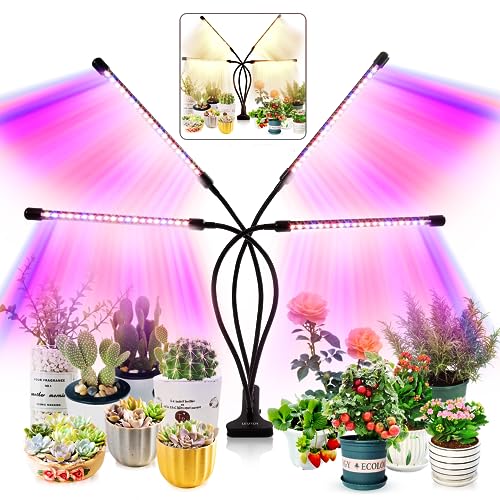
LEOTER’s upgraded model uses 80 efficient LEDs, including 32 red, 12 blue, and 36 full-spectrum diodes, covering a broad spectrum (380nm-800nm). It combines full spectrum, red, blue, and warm-white options to support root development, vegetative growth, and flowering. The circular memory timer automatically turns lights on/off daily, with 3H (blue), 9H (green), and 12H (red) presets. A notable feature is the 10 dimmable modes and three spectral modes, enabling end-to-end customization for different tomato life stages, from seedlings to fruit production. The gooseneck and clamp provide flexible installation in compact spaces.
This model is versatile for windowsill setups or small shelves where precise spectrum control and timer automation help maintain consistent growth cycles. Tomato growers can use it to supplement a main light or to extend daily light hours during short winter days, supporting steady growth and better fruit yield potential.
GooingTop 6000K Full Spectrum Clip Light

GooingTop offers a clip-on grow light with a 6000K white output and 10 red plus 74 white LEDs to approximate full-spectrum daylight. It boasts a high color rendering index of 95, producing a bright, evenly distributed light that is gentle on tomato leaves while improving photosynthesis. The timer function supports 4/8/12-hour cycles in a 24-hour loop, and the device can be powered by USB or an AC adaptor, increasing compatibility with typical home setups. The flexible gooseneck and clamp allow easy angle and height adjustments to optimize light delivery to tomato stems and developing fruits.
For tomato enthusiasts, this fixture is ideal as a supplementary source or as a primary light for compact grow spaces. The high CRI helps maintain leaf color and health, while the adjustable power options help match light intensity to the plant’s stage. USB power enables portable or desktop arrangements without dedicated outlets, making it suitable for hobbyist tomato projects or educational setups.
VIPARSPECTRA P700 Grow Light

The VIPARSPECTRA P700 delivers a balanced full spectrum that includes 660nm red and white/blue components to mimic natural sunlight. With 70W of LED power (11000 lumens), it provides strong PAR for a 2×2 ft vegetative area, offering high efficiency without excessive energy use. The light’s design minimizes heat output while maximizing spectrum fidelity, which is important for steady tomato growth from seed to transplant to fruiting. The unit’s compact form makes it suitable for tent setups or small indoor gardens where space is at a premium.
Tomato growers can rely on this fixture for consistent light delivery across a modest footprint. The blend of red and white spectra supports flowering and fruit set, while the energy efficiency helps to reduce running costs. Its durability and heat management are important for longer grow cycles, especially in spaces with limited airflow.
Buying Guide
- Light spectrum and PPFD: Look for full-spectrum output including red (600–660 nm) and blue (450–470 nm) wavelengths to support germination, vegetative growth, flowering, and fruiting in tomatoes. PPFD is a key metric if you have a larger tent or dense plantings.
- Coverage area and height: Choose a light with adequate coverage for your tray or plant bed, and ensure the mounting method (tripod, adjustable stand, or clip) fits your space. Higher ceilings may benefit larger, dual-head units.
- Photoperiod control: Timers (3/6/12H options) help create stable day-night cycles, essential for consistent tomato growth. Auto-on/off reduces maintenance and helps seedlings and fruiting cycles align with schedules.
- Dimmability and modes: Multiple brightness levels and switch modes enable customization for different growth stages and plant densities. This helps optimize energy use and light exposure for tomatoes.
- Energy efficiency and heat management: LED fixtures with good heat dissipation extend lifespan and reduce the risk of leaf burn. Consider units with heat-dissipating back plates or large heatsinks for longer runs.
- Install flexibility: Stand-alone tripods, adjustable goosenecks, or clamps allow targeting light precisely at tomato clusters or seedling trays. USB-powered options add versatility for flexible setups.
- Durability and build quality: Look for sturdy housings, reliable drivers, and long-lasting LEDs. A design that minimizes heat buildup helps ensure consistent performance over months of use.
When selecting a full spectrum grow light for tomatoes, balance coverage with energy use, enjoy flexible timing, and ensure spectrum options align with the plant’s growth stages. If you have a larger indoor area, consider a dual-head or higher-PPFD option; for compact spaces, clip-on or small-footprint lamps with strong spectrum control may be more practical. Combining a primary light with supplemental lighting can optimize growth and yield across seasonal changes.