Best Fungicide Sprays for Indoor Plants to Keep Leaves Healthy
Short answer: choose an indoor-friendly fungicide spray that is safe for houseplants, effective against common culprits like powdery mildew and leaf spots, and gentle on pollinators and pets when used as directed. This guide highlights five ready-to-use options suited for indoor use and explains who benefits most from each product.
The top picks are best for different indoor growers: hobbyists maintaining a few houseplants, apartment gardeners managing powdery mildew, and small-scale indoor gardeners seeking safe, OMRI-listed or plant-friendly formulas. Use the quick-reference table below to compare at a glance.
| Product | |||
|---|---|---|---|
| Bonide Captain Jack’s Neem Oil | Multifunction fungicide | Organic-grade pest control for multiple issues | Kills eggs to adults; ready-to-use spray |
| Garden Safe Fungicide 3 | Organic garden use | Prevention of fungal diseases on houseplants | Three-in-one formula: fungicide, insecticide, miticide |
| Grower’s Ally Fungicide | Citric-acid based fungicide | Copper-free, plant-safe control | OMRI-listed; safe for edible crops |
| FortaGrow Plant Disease Control Spray | Thyme-oil based | Natural, botanically derived protection | Safe for indoor use; no synthetic chemicals |
| Miracle-Gro Plant Care Leaf Protect & Shine | Multi-action spray | Indoor plant protection with leaf shine | Prevents pests and diseases; enhances leaves |
Bonide Captain Jack’s Neem Oil Ready-to-Use Spray

Best for: Indoor gardeners seeking a versatile, organic-compatible spray that targets both pests and fungal issues. Neem oil acts as a 3-in-1 solution: fungicide, miticide, and insecticide, suitable for organic setups.
Why chosen: This ready-to-use formula simplifies application around houseplants. It works against eggs, larvae, and adults, helping reduce pest pressure while protecting plant tissue from fungal attack. The spray is usable up to harvest in many garden contexts, offering convenience for routine maintenance.
Caution: Neem oil can cause minor foliar damage on sensitive varieties if applied in direct sun or high heat; test on a single leaf first and follow label directions.
Bonide Captain Jack’s Copper Fungicide

Best for: Gardeners seeking a copper-based option for broad disease control in organic setups. Suitable for use up to harvest in many edible and decorative plant contexts.
Why chosen: Copper fungicide provides broad disease prevention against common diseases like blight and powdery mildew. It is a straightforward option for preventive care on indoor or sheltered outdoor plants, especially when organic labeling matters.
Caution: Copper fungicides can accumulate in soil and may cause phytotoxicity on sensitive young growth; apply as directed and avoid excessive buildup on delicate houseplants.
Garden Safe Fungicide 3 32 Oz. Ready-to-Use

Best for: Homeowners and apartment gardeners who want an all-in-one solution for organic pest and disease control around the home and garden area.
Why chosen: This product combines fungicide, insecticide, and miticide capabilities in one spray, making it convenient for indoor plants with multiple threat types. It covers a range of fungal diseases including black spot and powdery mildew.
Caution: Ensure good ventilation during indoor use and follow label directions to minimize any impact on beneficial insects in shared spaces.
Grower’s Ally Fungicide For Plants

Best for: Indoor gardeners seeking a copper-free, plant-friendly fungicide alternative with OMRI listing for organic use.
Why chosen: The active ingredient is food-grade citric acid, offering effective fungal control without copper or heavy metals. It is gentle on new growth and suitable for edible crops, reducing residue concerns in homes with kitchen herbs or vegetables near houseplants.
Caution: Citric acid-based sprays can cause leaf sensitivity on certain varieties if misapplied; apply as directed and avoid excessive foliar wetting on delicate plants.
FortaGrow Plant Disease Control Spray

Best for: Indoor plant owners preferring a thyme-oil-based, natural option with botanical origins.
Why chosen: The thyme oil provides antifungal action without synthetic chemicals or copper. It is gentle enough for indoor environments and can be used around children and pets when used as directed.
Caution: Natural essential-oil products can cause fragrance sensitivity in some people or pets; use in well-ventilated areas and follow label directions.
Miracle-Gro Plant Care Leaf Protect & Shine
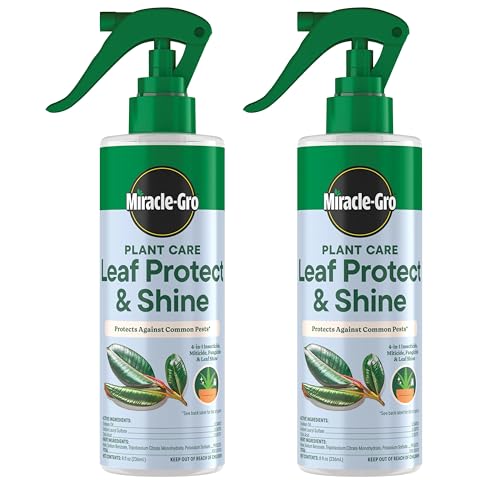
Best for: Indoor plant owners who want a combined pest, disease, and mite control with an added leaf shine for aesthetics.
Why chosen: This 4-in-1 spray defends against mites, thrips, aphids, whiteflies, and powdery mildew while also delivering a leaf-polishing effect, reducing the need for multiple products.
Caution: The leaf shine component may alter surface texture; use as directed and test on a small area if you plan to closely inspect or handle leaves soon after use.
Buying Guide
Key purchase considerations for indoor fungicide sprays:
- Active ingredient and mode of action: Choose a product that targets your specific problem (powdery mildew, leaf spots, mites) and prefer OMRI-listed or botanically derived options for indoor use.
- Plant safety: Test a small area first on sensitive houseplants and follow label directions to avoid phytotoxicity.
- Residue and odor: For indoor use, prefer formulations with low odor and minimal residue on leaves that could transfer to hands or pets.
- Coverage and application: Look for ready-to-use sprays for convenient dosing and uniform coverage on leaf surfaces.
- Re-entry and pollinators: If you have flowering houseplants, select products with low risk to pollinators and ensure proper re-entry intervals if specified.
FAQ
- Q: Can I use these sprays on edible indoor herbs? A: Yes, if labeled for edible crops or OMRI-listed products. Always read the label for restrictions.
- Q: How often should I spray indoors? A: Follow the label; many products are suitable for preventive use or as needed when symptoms appear.
- Q: Are natural sprays as effective as synthetic options? A: Effectiveness depends on the disease or pest; botanical and mineral-based formulas can be effective, especially for prevention and gentler care.
- Q: Will these sprays harm beneficial insects indoors? A: Some products are formulated to minimize impact on beneficial insects when used as directed; avoid spraying blooming plants if pollinators are present nearby.
- Q: Do I need to quarantine a plant after spraying? A: Some products require a waiting period before new growth or harvest; check label specifics for each product.
- Q: Can I mix products to broaden coverage? A: Do not mix products unless the label explicitly allows it. Mixing can cause adverse reactions or plant damage.