Best Garden Forks and Spades for Easy Soil Work and Mulch Tasks
Find the right garden fork for digging, turning, and aerating without straining your back. This guide highlights five top options that balance durability, comfort, and ease of use for different yard tasks. Best for avid gardeners handling mixed soils, compost, or raised beds, these picks offer strong tines, ergonomic handles, and weather-resistant construction. See a quick comparison below to help you choose the right fork for your needs.
Summary of selected products
| Product | Best For | Key Benefit | Material |
|---|---|---|---|
| COSITA Pitch Fork | General garden work | Heavy-duty 4-tine steel at 44 inches | Steel & Fiberglass |
| Spear & Jackson Neverbend | Tough soil and professional use | Forged carbon steel tines | Carbon Steel & Hardwood |
| VNIMTI Garden Fork | Lightweight versatility | 4-tine with Y-Grip | Steel & Wood |
| REILEIHODE Pitch Fork | Rocky or compacted soil | 45-inch with 4 tines | Steel |
| WIKER Pitchfork | Easy handling for all | Fiberglass handle with 4 tines | Fiberglass & Steel |
COSITA Pitch Fork For Garden

The COSITA pitch fork features a heavy-duty 4-tine steel head paired with a fiberglass handle. The design promotes piercing power for lifting hay, straw, and compost while resisting bending and corrosion. It is best for gardeners or small-scale farmers who need a robust tool for looser, non-compacted soils. Note: not recommended for compacted soil or heavy clay conditions.
- Best for: Gardeners who handle loose to moderately compacted soil and organic matter.
- Why selected: Combines durability with a lightweight, shock-absorbing handle for longer use.
- Limitation: Not ideal for hard, compacted clay soils.
Spear & Jackson Neverbend Professional Digging Fork

This digging fork is built for tough soil with forged carbon steel tines that resist heavy-duty wear. It excels at digging, turning, and aerating soil and suits both serious home gardeners and landscaping professionals. The hardwood shaft is weatherproof, helping the tool endure outdoor use. Best for: Tasks that demand strength in hard or rocky soil, and for users who prefer a traditional wood handle.
- Best for: Tough soil tasks and professional-grade use.
- Why selected: High-strength carbon steel tines deliver reliable penetration and longevity.
- Limitation: Heavier than some plastic or fiberglass alternatives.
VNIMTI Garden Fork, 4-Tine Spading Fork

The VNIMTI fork uses a steel 4-tine head with a 45-inch overall length and a steel Y-Grip. The shorter handle design aids control and reduces effort in the soil, making it suitable for quick transplants, bed prep, and compost flipping. Best for: Gardeners seeking a versatile, lighter-duty option with a comfortable Y-Grip.
- Best for: Light to moderate soil work and transplanting tasks.
- Why selected: Durable construction with a user-friendly Y-Grip handle.
- Limitation: Shorter handle may not suit users who prefer longer reach for deep digging.
REILEIHODE Pitch Fork, 46 Inch

This 46-inch garden fork uses a heavy-duty steel head with anti-rust coating, designed to penetrate rocky or hard soil while lifting hay or mulch efficiently. The ABS plastic D-handle provides a comfortable grip, and a 45° elevation angle reduces back strain. Best for: Users working in outdoor environments with hard, uneven ground and a need for ergonomic use.
- Best for: Digging in rocky or hard soils with ergonomic leverage.
- Why selected: Anti-rust coating and angle design promote durability and easier lifting.
- Limitation: Heavy-duty build may be less comfortable for very long sessions for some users.
WIKER Pitchfork With Fiberglass Handle

The WIKER pitchfork combines a forged fork head with a high-strength fiberglass handle and a 45-degree rubber Y-Grip. With a total length of 43 inches and a weight around 4.5 pounds, it is suitable for adults and seniors who need manageable heft without sacrificing leverage. Best for: General garden tasks, compost turning, and bed prep where a balance of control and strength matters.
- Best for: All-around garden use with user-friendly ergonomics.
- Why selected: Rugged construction and comfortable grip reduce fatigue during longer tasks.
- Limitation: Some users may prefer a wooden shaft for traditional preference.
Pitch Fork ForCOLID, 4-Tine Garden Fork
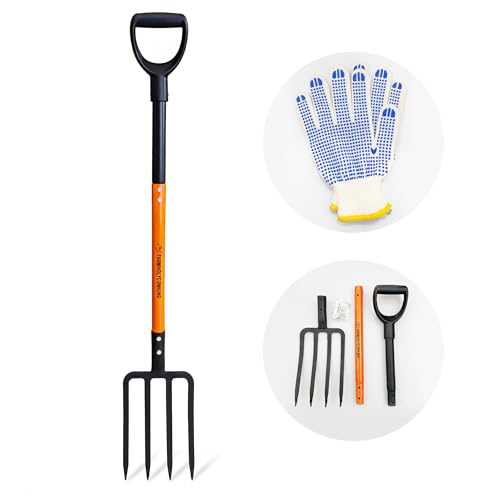
The FORCOLID 45-inch fork features a forged steel Y-Grip and a wooden handle, designed for a solid, comfortable two-handed hold. It weighs about 4.5 pounds, making it approachable for many users, including the elderly and women. Best for: Everyday garden tasks like loosening soil, turning mulch, and preparing beds with a reliable, one-piece feel.
- Best for: Two-handed control and durability in moderate-to-hard soils.
- Why selected: One-piece forged design reduces risk of joint loosening at the head.
- Limitation: Trimmed to 45 inches; taller users might prefer extended reach models.
Buying Guide: How To Choose The Right Garden Fork
- Soil Type and Usage: Choose heavier steel for compacted or rocky ground; fiberglass or wood handles suit comfort and weather resistance.
- Handle Material: Fiberglass offers weather resistance and shock absorption; wood handles provide a traditional feel; steel or carbon tines demand strong leverage.
- 4-Tine Design: Good for lifting and turning loose materials; 4 tines can balance penetration with material lifting.
- Length And Weight: Longer forks provide reach and leverage but can be heavier; lighter forks are easier to handle for shorter tasks.
- Grip And Ergonomics: A rubberized or Y-Grip reduces fatigue and slip risk during wet conditions.
- Durability: Look for heat-treated steel heads and rust-resistant coatings for outdoor durability.
- Maintenance: Clean after use, dry thoroughly, and store in a dry place to extend life.
Frequently Asked Questions
What is the main difference between a spading fork and a pitchfork?
A spading fork (garden fork) has shorter, sturdier tines for turning soil and breaking up clumps, while a pitchfork has longer tines designed to lift and move lightweight materials like hay and mulch.
Which material handle is best for wet conditions?
Fiberglass handles perform well in wet conditions due to their non-porous and weather-resistant properties.
Are carbon steel tines better than stainless steel?
Carbon steel tines are typically tougher and sharper for soil penetration, but they require regular maintenance to prevent rust; stainless steel resists corrosion but can be softer.
How long should a garden fork last with proper care?
With proper care, including cleaning and drying after use, a high-quality fork can last many seasons or years depending on soil conditions and frequency of use.
Is a longer fork better for tall gardeners?
Yes, a longer fork provides better leverage and reduces bending, but it may be heavier. Choose based on comfort and reach.
What should I avoid using a garden fork on?
Avoid using on compacted clay or rock-hard ground where the tines may bend or break; use a tool better suited for heavy soils in such conditions.