Best Garden Hose Two-Way Splitter for Flexible Outdoor Watering
If you need to run two hoses from a single spigot, a garden hose two-way splitter is the right tool. This article highlights five solid options, explains who each is best for, and helps you compare features like durability, valve control, and installation. Ideal buyers include homeowners with multiple watering tasks, gardeners needing separate lines for sprinklers and hoses, and small-property owners seeking reliable all-metal builds.
| Product | Best For |
|---|---|
| Biswing Garden Hose Splitter | Heavy-duty, long service life; great for users needing individual shutoffs |
| Craft911 2 Way Splitter | All-metal build; reliable for year-round use |
| RAINPOINT 2 Way Splitter | Heavy-duty metal body; easy operation with long handle |
| SNUTUYA 304 Stainless Steel Splitter | High flow and durability; stainless steel option for longevity |
| 2WAYZ Hose Splitter | Ergonomic handles; robust for everyday yard tasks |
Biswing Garden Hose Splitter 2 Way

Best for heavy-duty use with independent on/off valves. The Biswing model converts a single outlet into two, allowing simultaneous control of two watering zones. Its all-brass construction promises corrosion resistance and a long service life. Each outlet has its own valve for precise flow management, and the two extra rubber washers help maintain a watertight seal. Choose this if you need strong construction and reliable valve isolation, especially on high-pressure setups.
Limitation: The unit relies on brass fittings which, while durable, can be heavier and may require more torque during initial setup for a leak-free seal.
Garden Hose Splitter 2 Way Heavy Duty – BILAL

Best for easy operation and reliability. This brass two-way splitter features longer handles for users with stiff hands, and its machined fittings help prevent leaks. It includes extra rubber washers to improve the seal. It’s well-suited for those who want straightforward use and solid leak protection, even under higher pressure. Consider this if you value smooth manual control and a durable brass body.
Limitation: Initial use may feel a bit tight until the threads loosen with use.
Craft911 2 Way Metal Hose Splitter
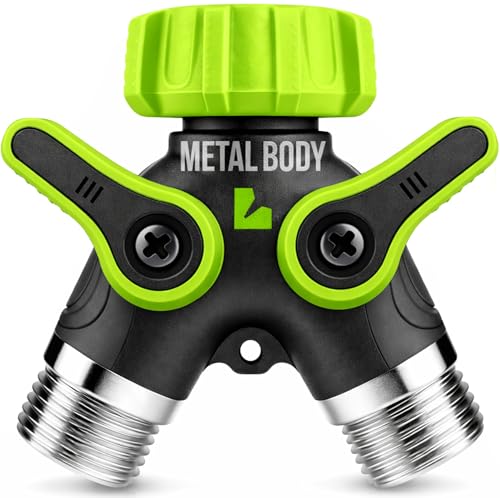
Best for all-metal construction with steady flow control. This Y-shaped splitter uses durable brass and metal parts to resist corrosion and leaks, with independent shutoff valves on each outlet. Its universal 3/4 inch GHT threading ensures compatibility with most outdoor faucets. It’s a strong pick when you need scalable water distribution across two hoses and reliable performance in varying weather. Choose this for consistent operation without frequent maintenance.
Limitation: It may be heavier than plastic alternatives, which can affect handling in tight spaces.
RAINPOINT Garden Hose Splitter, 2 Way Heavy Duty

Best for a metal-bodied, high-durability option with a long handle for easy operation. The 1.9″ extra-long handle enhances grip and leverage, even with gloves. The 0.75″ GHT threads and stainless components aid with durability, while a metal body handles higher pressures. Consider this if you need a robust tool for frequent, automated tasks or heavy-duty garden watering. Limitation: Hand effort is still needed to operate valves, though the extended handle reduces strain.
SNUTUYA 304 Stainless Steel Garden Hose Splitter

Best for rugged durability and high-flow performance. This 304 stainless steel model offers resistance to corrosion and leaks, with a full-flow design that minimizes resistance. The large handle facilitates easy operation and quick control of each outlet. It’s ideal for environments where metal performance and long service life are critical, such as harsh weather or frequent use. Limitation: Stainless steel can be heavier than brass or plastic options, affecting handling for some users.
Buying Guide
What should I look for in a garden hose two-way splitter?
- Material durability: Brass, all-metal, or stainless steel builds offer better longevity and leak resistance than plastic.
- Valve control: Independent shutoffs on each outlet let you direct flow precisely where needed.
- Thread compatibility: Most 3/4″ GHT fittings fit standard hoses and spigots; verify your spigot size before buying.
- Seal quality: Rubber washers and quality machined fittings reduce leaks and drips.
- Handling and grip: Longer or ergonomic handles make operation easier, especially for users with limited hand strength.
Which features matter most for different setups?
- High-pressure systems: Look for all-metal bodies and robust valves; metal handles help with control under pressure.
- Low-maintenance needs: Choose corrosion-resistant materials and leak-tested designs to limit upkeep.
- Zero-leak requirements: Prioritize models with multiple washers and proven watertight seals.
Maintenance tips
- Regularly tighten connections to prevent drips.
- Inspect washers and seals; replace worn washers to maintain a watertight seal.
- Flush the system occasionally to remove debris that could clog valves.
Quick comparison snapshot
- Best for overall rugged use: Biswing
- Best for easy hand operation: BILAL
- Best for all-metal reliability: Craft911
- Best for maximum flow: SNUTUYA
- Best grip and year-round use: RAINPOINT
Frequently asked questions
- Can I connect any hose to a two-way splitter? Yes, most use standard 3/4″ GHT fittings that fit common hoses and spigots.
- Do these splitters leak easily? Quality models with proper washers and tight seals minimize leaks; check connections during first use.
- Are metal splitters better than plastic? Generally yes for durability, corrosion resistance, and long-term performance.
- Is it safe to run two hoses at once? It depends on your water pressure; ensure your supply can handle two loads without drop in pressure.
- How do I prevent leaks at the connection point? Use thread seal tape or have a tight, clean connection with new washers.
- What if one valve is harder to turn? It may be initial stiff after purchase; operate to loosen, and ensure consistent maintenance.