Best Garden Rear Tine Tillers for Tough Soil and Easy Prep
Rear-tine tillers, equipped with counter-rotating tines and gear-driven power, are designed to break through hard soil and sod while delivering a smooth seedbed. This guide highlights five top options for American gardeners, focusing on soil prep for vegetable plots, flower beds, and farm beds. It helps you choose based on soil type, garden size, and maintenance needs. The best picks emphasize durability, ease of use, and accessible reversing and drive options for maneuvering around borders and paths. The table below summarizes the featured models to help you compare quickly.
| Product | Engine | Tilling Width | Best For |
|---|---|---|---|
| EARTHQUAKE Victory Rear Tine Tiller | 209cc Viper | Unknown | Heavy clay and compacted soil |
| NOVUS 18-Inch Dual Direction Tiller | 212cc | 18″ | Versatile, durable for varied soils |
| Pulsar 212cc Rear Tine Tiller | 212cc | 20″ | Balanced power and wide tilling |
| YARDMAX 18″ Rear Tine Tiller | 212cc | 18″ | Dependable daily garden prep |
| Poulan Pro Dual Direction Tiller | 212cc | 18″ | Controlled maneuvering and balance |
EARTHQUAKE Victory Rear Tine Tiller

The EARTHQUAKE Victory uses a 209cc Viper engine and a heavy-duty cast-iron transmission with engineered bronze gears. Its counter-rotating tines are designed to break through clay and compacted soil, making it well suited for tough ground. The Instant Reverse feature helps you pivot in tight spaces without stopping to shift gears. This tiller is best for gardeners dealing with dense soil or those who need nimble maneuvering around fences and beds. A potential limitation is the reliance on a single engine size, which may be less adaptable for very large, rocky plots.
Who it’s best for: Home gardeners with compact spaces and clay-heavy or dense soil who want strong breaking power and easy backward movement.
NOVUS 18-Inch Dual Direction Rear Tine Tiller
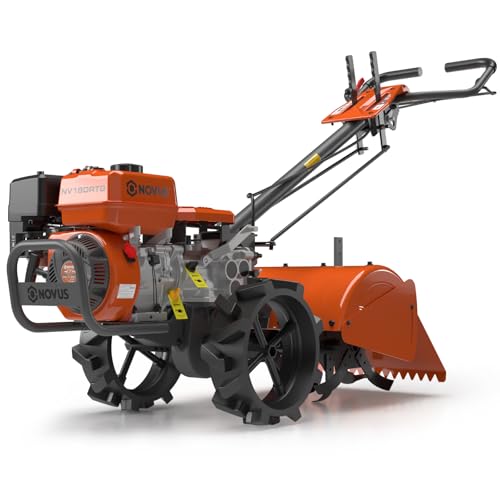
This model features a 212cc four-cycle engine and a full gear transmission with dual rotating tines. The 18-inch tilling width and up to 10-inch depth give flexibility for both small and larger beds. The full gear transmission reduces maintenance compared to belt-driven tillers and provides robust power delivery. A caveat is that some users may prefer a lighter model for very small plots or for users who require easier transport.
Who it’s best for: Gardeners seeking strong, versatile power with lower maintenance and a broad tilling reach.
Pulsar 212cc 20-Inch Rear Tine Tiller

With a 212cc OHV engine, this tiller provides a 20-inch tilling width thanks to four counter-rotating tines and 13.5-inch wheels. The design aims at delivering strong soil separation and stable operation, suitable for mid- to large-sized gardens. A potential limitation is that front and rear weight balance can vary with soil moisture and depth settings, so users should test in a small area first.
Who it’s best for: Gardeners needing a solid, wide pass and good overall power for average-to-heavy soils.
YARDMAX 18 in. 212 cc Rear Tine Tiller

YARDMAX offers a dependable 212cc OHV engine with an 18-inch tilling width. The model is often praised for durable construction and straightforward operation on a variety of soils. The engine displacement may vary depending on production timing, which can affect availability of exact performance specs. This tiler is best for gardeners who want a proven machine with consistent power and a balanced tilling profile.
Who it’s best for: Regular backyard gardeners who need reliable power and a balanced, mid-range tilling width.
Poulan Pro Dual Direction Rear Tine Tiller

Powered by a 212cc four-cycle engine, this Poulan Pro tiller uses a rugged full gear-driven transmission for consistent power and reduced maintenance. It features 16 steel tines, an 18-inch tilling width, and up to 10 inches of depth. The dual direction rotation and 2 forward + 1 reverse speeds enable smooth, controlled maneuvering. The balance and weight distribution can vary with soil type, so users should consider soil conditions before choosing.
Who it’s best for: Gardeners who want strong, balanced power with easy GPS-like direction control in medium-to-large beds.
Buying Guide: Key Purchase Considerations
- Soil type and density: Heavier clay or compacted soil benefits from counter-rotating tines and a powerful engine. If you frequently work in tight spaces, Instant Reverse and dual-direction capability help with maneuverability.
- Garden size and tilling width: For small plots, an 18-inch width is typically sufficient. For larger beds, a 20-inch option can reduce passes but requires more storage and weight handling.
- Engine size and maintenance: Engines range from 209cc to 212cc in these models. A full gear transmission reduces belt maintenance and often increases durability for regular use.
- Weight and maneuverability: Heavier tillers break tough soil but can be harder to steer. Look for models with Instant Reverse or dual-direction options if you plan to till near borders or fences.
- Durability and parts availability: Cast-iron transmissions and bronze gears tend to last longer, but ensure parts and service are accessible in your area.
- Maintenance needs: Belt-driven units may require more frequent belt checks. Full gear transmissions generally demand less frequent adjustment but can be heavier.
Frequently Asked Questions
- What tiller size do I need? Choose width and depth based on garden size. Smaller beds benefit from 16–18 inch widths; larger plots may be easier with 20 inch models.
- Are dual-direction tillers worth it? Yes for gardens with tight spaces, edges, and beds where frequent reversing is necessary. They reduce manual turning and back-and-forth maneuvers.
- Gas vs electric tillers? Gas engines offer more power for tough soil and larger areas. Electric tillers are quieter and lighter but may lack the same capacity for deeply compacted soil.
- How important is a gear transmission? Full gear transmission tends to be more durable and maintenance-friendly for ongoing use, particularly in tough soils, compared to belt-driven models.
- What should I consider for maintenance? Check gear lubrication, air filters, and fuel quality. Regular front-to-back balance checks help maintain even tilling and prevent strain on the transmission.
- Is Instant Reverse a real advantage? Yes. It allows quick reversal without stopping or shifting through gears, improving efficiency in narrow beds.