Best Garden Stuff for Kids: Safe, Fun Tools for Young Gardeners
Looking for kid-friendly garden gear that makes outdoor learning engaging and safe? This guide highlights five top picks designed for little hands, ages 2 to 8, with age-appropriate tools, sturdy construction, and kid-approved design. Each product is evaluated for who it’s best for, durability, and potential limitations. The selections aim to help budding gardeners build confidence while keeping playtime productive and mess-free.
The following table provides a quick snapshot of the five chosen products, including target age range, key strength, and a brief note on suitability.
| Product | Best For | Key Strength | Notes |
|---|---|---|---|
| Grenebo Kids Gardening Set | Toddlers to early elementary | Lightweight, ergonomic | Potential fit issue with gloves sizing |
| National Geographic Flower & Herb Kit | Creative beginners | Paintable pots, complete kit | Smaller pots may limit root depth |
| FHOZGECY Garden Kit With Wheelbarrow | Older kids, 6–8 | Realistic tools, durable wheelbarrow | Assembly required |
| Duckura 7-Piece Set | Active younger kids | Wooden handles, sturdy metal heads | Wood care needed over time |
| Dan&Darci Root Viewer Kit | STEM-focused learners | Transparent root-viewing design | Limited growing medium |
Grenebo Kids Gardening Set Toys

Best for younger children who want a complete, all-in-one starter kit. This 9-piece set includes a garden hat, apron, gloves, tool organizer bag, trowel, transplanter, cultivator, watering can, and a basic tool kit. The ergonomic, lightweight design supports easy grip and comfortable play, with durability to withstand rough daily use. Best for families seeking a single, kid-friendly setup that covers essential garden tasks. Caution: gloves sized for children aged 4–6 may fit unevenly due to hand size variation.
Who it’s for: Ideal for preschoolers and early elementary kids who are just starting to explore gardening and want a visually appealing, all-in-one solution. Why selected: It consolidates multiple tools into one accessible kit, reducing the need to buy several separate items. Limitation: While durable, frequent rough play can loosen parts; parental supervision is recommended during initial use.
National Geographic Flower & Herb Gardening Kit for Kids
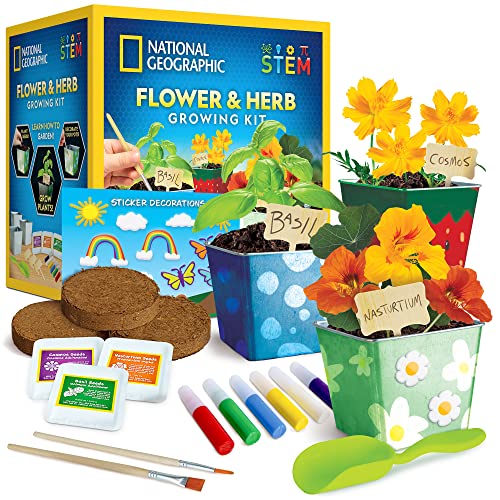
Best for creative beginners who enjoy decorating pots before planting. This kit includes three stainless steel pots, cosmos, nasturtium, and basil seeds, plus paint, stickers, wooden labels, a garden shovel, and a learning guide. The included materials simplify hands-on learning and make a small-scale garden accessible indoors or outdoors. Choose this if your child loves decorating as part of gardening. Caution: The pots are lightweight stainless steel, which may dent with heavy handling.
Who it’s for: Great for kids who love art and science combined. Why selected: The paintable pots and included learning guide support a playful, educational experience that blends creativity with growth concepts. Limitation: Pots are stainless steel—care is needed to prevent scratches and to avoid sharp edges during setup.
FHOZGECY Kids Gardening Set With Wheelbarrow

Best for families wanting a realistic gardening experience with a wheelbarrow and multiple tool sizes. This kit covers the full planting process: dig, plant, label, and water, with long- and short-handled tools, three plant pots, labels, a waterproof mat, apron, gloves, and a watering can. The four-wheel wheelbarrow design reduces tipping on uneven surfaces, supporting safe exploration. Caution: Assembly is required, which can be a learning activity in itself but adds setup time before use.
Who it’s for: Suitable for children aged roughly 3–8 as a more advanced kit that supports real-style gardening. Why selected: It mirrors adult tools to foster independence and spatial awareness. Limitation: Weight and size of the wheelbarrow may be challenging for younger kids without adult help.
Duckura Kids Gardening Tools Set

Best for active younger kids who love wheelbarrows and hands-on digging. This 7-piece set includes a shovel, rake, hoe, leaf rake, wheelbarrow, gloves, and a spray bottle. The wooden handles and iron tool heads provide real-feel durability for outdoor play. The length around 27.5 inches suits many children, and detachable connectors help with storage. Caution: Wood care is required to prevent cracking over time with outdoor use.
Who it’s for: Ideal for kids who want a mix of basic tools and a mobile wheelbarrow for outdoor play. Why selected: The set emphasizes durability and functional design, offering a realistic gardening experience.Limitation: Wood components require care and occasional maintenance to remain in good condition.
Dan&Darci Root Viewer Kit for Kids

Best for STEM-focused learners who want to see root growth in action. This kit centers on a transparent root viewer box with soil, seeds (spring onion and cilantro), and an easy-to-follow guide. It provides a visual, educational experience about plant anatomy and growth. Caution: The kit relies on a limited amount of soil and space; larger plants may not fit in small viewing areas.
Who it’s for: Fits children curious about botany and science. Why selected: The see-through design makes root growth tangible, aligning with inquiry-based learning. Limitation: Not a full outdoor gardening set; best used as a supplement to larger planting activities.
Buying Guide: Key Considerations For Choosing Kids’ Garden Gear
- Age and skill level: Start with lighter tools for toddlers and progressively add realistic features as kids mature. Look for ergonomic handles and balanced weight.
- Durability and materials: Metal tool heads with wooden handles often offer sturdiness, but ensure parts are well-sealed and safe for outdoor play. Avoid sharp edges and small detachable pieces for younger children.
- Safety and comfort: Check for non-slip grips, soft gloves, and protective hats. Ensure there are no choking hazards and that parts are rated for outdoor exposure.
- Storage and organization: A tool bag or apron helps keep items within reach and teaches tidying up after play. Consider whether components are easy to store in a small space.
- Educational value: Kits that pair gardening with science, art, or problem-solving (like root viewing or paintable pots) can enhance learning outcomes beyond play.
- Outdoor suitability: For younger kids, lighter-weight kits are best for indoor or yard play. For older children, more advanced tools and wheelbarrows can support real tasks outside.
- Maintenance requirements: Wood components may require occasional oiling or bleaching, while metal parts may need rust protection. Plan for simple care routines to prolong life.
Frequently Asked Questions
- What age is best for starting garden tools?
– Start with toddler-friendly sets around 2–3 years with lightweight tools and protective gear, then introduce more realistic tools around ages 5–8 as coordination improves. - Are metal tools safe for kids?
– Yes, metal tools with rounded edges and smooth finishes are safe when used under supervision and with proper protective gear. - Can these kits teach responsibility?
– Yes. Many kits include labeling, watering schedules, and storage solutions that help kids learn routine care and organization. - Should I buy a wheelbarrow?
– A four-wheel design offers better stability on uneven ground, which is helpful for younger children learning to transport soil or plants. - Is a see-through root viewer better than traditional kits?
– It’s ideal for STEM-focused learning and curiosity about root systems but should be supplemented with outdoor planting for a complete experience. - What maintenance should I expect?
– Wipe down tools after use, store in a dry place, and check for loose parts. Wooden handles may benefit from light oiling to prevent cracking.