Best Grass for Poor Soil: Top Solutions for Healthier Lawns
For lawns battling compacted, poorly drained soil, selecting the right amendments can unlock healthier grass and stronger roots. This guide highlights five effective products designed to improve soil structure, moisture movement, and nutrient uptake. From liquid conditioners to wetting agents and organic feeds, these options let you tailor a plan to your climate and grass type. Each section explains how the product works, the soil problems it targets, and practical application tips. A quick buying table below helps you compare core benefits at a glance.
| Product | Brand | Key Benefit | Coverage |
|---|---|---|---|
| Liquid Soil Loosener | Simple Lawn Solutions | Improves drainage and soil structure | Up to 32,000 sq ft |
| Soft Soil Liquid Aerator | GS Plant Foods | Loosens compacted soil to improve moisture and air movement | Not specified |
| Turf Titan Hydro Holder | Turf Titan | Enhances water absorption and nutrient uptake | Not specified |
| Thick’R Lawn | Scotts | 3-in-1 solution for thicker, greener turf | Not specified |
| Organic Liquid Lawn & Turf Food | FOOP | Microbial-rich, soil-enriching nutrients | Treats up to 5,000 sq ft |
Liquid Soil Loosener For Compact Soils
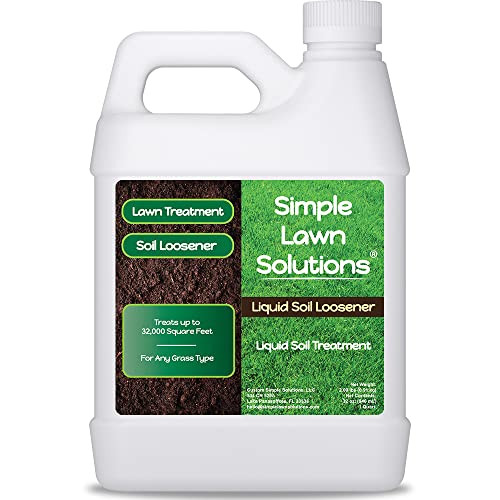
Liquid Soil Loosener by Simple Lawn Solutions is a versatile conditioner for lawns with compacted or poorly draining soil. It can be used alone or with aeration, and its concentrated formula helps soften dense soil, promote downward water movement, and increase infiltration so roots access moisture and nutrients more efficiently. Suitable for any grass type, it addresses standing water and poor drainage that limit root growth. A 32-ounce bottle covers up to 32,000 square feet, making it economical for medium to large lawns.
- Can be used alone or with aeration tools
- Conditions compact soil and improves drainage
- Increases downward water movement and infiltration
- Concentrated formula; 32 oz covers up to 32,000 sq ft
- Safe for any grass type; works with any fertilizer program
Soft Soil Liquid Aerator

Soft Soil Liquid Aerator by GS Plant Foods targets compacted soils without the need for mechanical equipment. This liquid concentrate acts as a non-mechanical soil conditioner that loosens hardened soil, allowing air and water to reach the root zone, promoting a greener, healthier lawn. It is designed for use on all grass types and works year-round. By breaking apart compacted soil, it improves water flow and nutrient uptake, enabling robust root systems and better resilience in challenging soil conditions.
- Breaks apart compacted soil to improve air, water, and root penetration
- Non-mechanical, easy-to-use concentrate
- Safe for all lawn grass types
- Improves moisture uptake and nutrient delivery
- Supports better drainage in tough soils
Turf Titan Hydro Holder Wetting Agent

Turf Titan Hydro Holder is a hose-end wetting agent designed to improve water distribution and moisture retention in the topsoil. By optimizing water absorption, the product helps keep the root zone evenly moist, supporting nutrient uptake and healthier turf, especially in poor-drainage soils. The included hose-end sprayer makes application quick and uniform, reducing water waste. The non-ionic formula with neutral pH aims to be safe for households with children and pets, making it a practical companion to fertilizer programs and soil conditioners when moisture consistency is a challenge.
- Surfactant-based wetting agent to improve moisture retention
- Hose-end sprayer enables easy, even application
- Aids nutrient uptake and healthier roots
- Non-ionic, neutral pH; pet-safe formulation
- Covers up to 8,000 sq ft
Scotts Turf Builder Thick’R Lawn
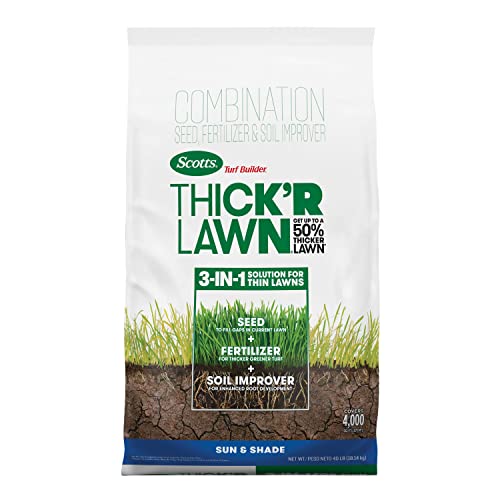
Scotts Turf Builder Thick’R Lawn Sun & Shade offers a 3-in-1 approach to thicker, greener turf. The product combines seed, fertilizer, and soil improver to help fill thin areas and increase density. It is formulated to support lawns under a range of light conditions, making it versatile for many American climates. Applied properly, Thick’R Lawn can improve root development and overall vigor, contributing to a more resilient lawn that better withstands drought stress and foot traffic. It is a practical option for patchy lawns where soil imperfections limit growth, though it complements soil management rather than replacing it.
- Three-in-one formula: seed, fertilizer, soil improver
- Helps thicken and improve density of thin lawns
- Suitable for sun and shade conditions
- Designed to work with routine lawn care programs
Organic Liquid Lawn & Turf Food

Organic Liquid Lawn & Turf Food by FOOP provides a microbial-rich approach to reviving depleted lawns. It quickly rejuvenates lawn health and restores rich green color through soil-enriching microbes. The formula relies on organic ingredients such as fish manure, fish emulsion, sea kelp, volcanic ash, and mycorrhizal fungi to feed beneficial soil organisms and support robust root growth. Suitable for active growing seasons, this product aims to enhance soil biology and long-term resilience while delivering noticeable color and vitality to stressed turf.
- Microbial-enriched formula for soil health
- Contains organic ingredients: fish manure, emulsion, kelp, volcanic ash, mycorrhizal fungi
- Treats up to 5,000 sq ft
- Promotes rapid green-up and sustained soil biology
Buying Guide
Key factors when choosing for poor soil
Assess your lawn’s main problem: drainage, compaction, or nutrient deficiency. Soil tests can reveal pH, texture, and nutrient gaps that drive product choice. For drainage or aeration challenges, liquid soil conditioners and aerators often yield faster results than granular products. If moisture evaporation or uneven wetting is a problem, a wetting agent can improve uniform water penetration. For ongoing health and resilience, organic feeds with microbial life can rebuild soil biology over time. Consider your climate, grass type, and lawn size to select appropriate coverage and frequency of applications.
Understanding product types
Soil conditioners and liquid aerators directly influence soil structure and water movement. Wetting agents improve moisture distribution in the surface layer. Fertilizers and soil improvers boost nutrient availability and root growth. Organic options emphasize soil biology and environmental safety, while mixes that include seed or soil amendments address both fill-in areas and root establishment. A mixed approach—conditioning, wetting, and feeding—often yields the best long-term improvement for poor soil.
Coverage, timing, and safety
Match product coverage to lawn size and apply in appropriate seasons to maximize uptake. Liquid products typically offer rapid responses, but follow label directions for reapplication intervals. Pay attention to pet safety and environmental precautions, especially with certain microbial or chemical formulations. When applying, water after treatment if the label instructs; avoid mowing immediately after application unless explicitly advised. Always store products out of reach of children and pets and keep records of when and where they were applied for ongoing lawn management.
Comparing options for different scenarios
- If your lawn has standing water and poor drainage: start with a soil loosener or liquid aerator to improve infiltration, then consider a wetting agent to sustain moisture distribution.
- If you’re dealing with patchy growth and density issues: a thickening product with seed and soil improver (like Scotts) can help fill gaps while enhancing root structure.
- For long-term soil health and organic preferences: FOOP’s microbial-rich formula can support ongoing soil biology and green growth.
- Always tailor choices to your grass type and sun exposure to ensure compatibility and maximum effectiveness.
Practical tips for getting the best results
Prepare the soil where possible—a quick dethatching or light aeration can improve product contact with the root zone. Apply during appropriate weather windows to avoid wash-off or run-off and to facilitate absorption. Combine approaches carefully; for example, use a soil conditioner before applying a wetting agent or fertilizer to maximize efficacy. Track lawn responses after each treatment to determine if adjustments are needed in timing or product selection.