Best Grass Seed for Drought: Top Drought Tolerant Lawn Mixes for Homes
A drought-ready lawn requires seed blends that establish quickly, resist heat, and minimize water loss. This guide highlights five drought-tolerant grass seed options suitable for American climates, from heat-tolerant tall fescues to drought-resisting bermudagrass blends. Each pick offers distinct advantages for sun, shade, and established turf, helping you conserve water without sacrificing appearance.
Overview At A Glance:
| Product | Key Benefit |
|---|---|
| Jonathan Green Black Beauty Heat-Tolerant Seed | Heat/drought resilience for sun and light shade |
| Scotts Drought Tolerant Mix | Deep roots; self-repairs; spring/fall planting |
| Scotts Bermudagrass Seed With Fertilizer | Drought-tolerant; soil improver; full sun |
| O.M. Scott Bermudagrass Seed | Dense growth; hot, dry climates; 3-in-1 formula |
| Lesco All-Pro Transition Tall Fescue | Transition-ready; drought-tolerant; insect resistance |
Jonathan Green Black Beauty Heat-Tolerant Seed

Jonathan Green 10514 Black Beauty Heat & Drought Resistant Grass Seed blends cool-season grasses selected for hot, dry conditions. The mix centers on tall fescue and Texas bluegrass, delivering a lawn that tolerates full sun and light shade while withstanding heat up to roughly 100°F. A waxy leaf coating helps reduce water loss by limiting evaporation, contributing to improved drought resistance. Deep root growth, often reaching several feet, enhances access to soil moisture and helps the stand stay green longer during dry spells. This seed is well-suited for sun-drenched yards and areas that occasionally receive shade, offering a robust foundation for dense, weed-resistant turf.
Germination benefits come from a balanced cool-season blend designed to establish quickly in moderate climates, with a focus on resilience rather than aggressive rapid growth alone. Homeowners using this seed should prepare well-drained soil, water consistently during germination, and monitor for heat stress in peak summer. The resulting lawn tends to deliver a durable texture with mid-to-dark green color, adapting to both sunny locations and marginal shade without sacrificing overall uniformity.
Scotts Grass Seed Drought Tolerant Mix

Scotts Grass Seed Drought Tolerant Mix blends tall fescue and Kentucky bluegrass to form a lawn capable of withstanding periods of limited irrigation. The mix emphasizes deep root development to reach moister soil layers, aiding drought resistance and reducing the impact of dry spells. A notable feature is its self-repair capability, helping fill bare spots and maintain an even appearance as the lawn matures. This makes it suitable for new lawns or overseeded existing lawns, especially where water restrictions or hot summers are common.
For best results, plant in spring or fall when daily temperatures are typically between 65°F and 85°F. The seed is designed to establish a resilient, weed‑resistant lawn with a steady germination rate, promoting even growth across both sunny and moderately shaded areas. While primarily a cool-season option, its drought-tolerant components make it a versatile choice for regions experiencing warm-season stress without sacrificing winter hardiness.
Scotts Bermudagrass Seed With Fertilizer
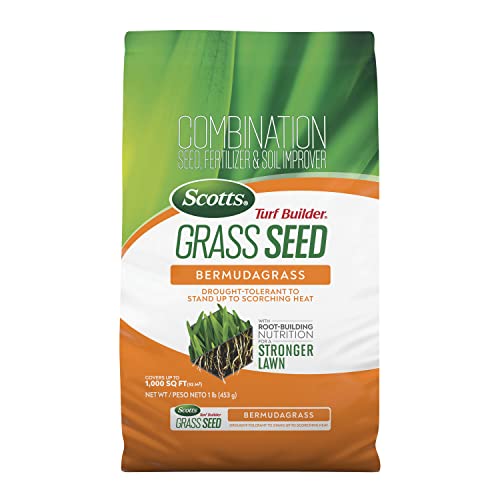
Scotts Turf Builder Bermudagrass with Fertilizer and Soil Improver is designed as a drought-tolerant option for full-sun lawns. This seed blend emphasizes Root-Building Nutrition to help establish a stronger root system, contributing to improved drought resistance and endurance under high heat. The product is marketed for hot, sunny conditions and high drought resistance, making it a practical choice for southern regions and areas that experience intense summer heat. It is intended for use when starting a new lawn or overseeding an existing one, with a focus on rapid establishment and robust early growth.
Owners should expect a turf that is well-suited to strong sun exposure and longer intervals between watering once established. As with any bermudagrass seed, correct soil preparation, consistent initial watering, and proper mowing height support the transition from seed to a dense, resilient lawn. Fertilizer and soil improver components are intended to support quick germination and deeper rooting, while avoiding excessive fertilization that could lead to excessive shoot growth in hot weather.
O.M. Scott Bermudagrass Seed

O.M. Scott and Sons Bermudagrass Seed offers a drought-tolerant option designed to perform well once established. It targets hot and dry Southern regions, delivering dense turf resistant to extreme heat and prolonged drought. This 3‑in‑1 blend combines seed with soil-improving clay and natural grass food, providing nutrition and soil structure from the outset. The formulation avoids added artificial or pest-control ingredients, and it’s marketed as safe for households with kids and pets when used as directed. Establishment typically requires warm soil temperatures and consistent moisture during germination and early growth.
Recommended use centers on late spring to early summer planting in sunny yards. Once established, the lawn tends to display strong heat tolerance and drought resilience. Homeowners should plan for steady moisture during the initial weeks and follow mowing guidelines appropriate for Bermudagrass to maintain a resilient, even turf across hot seasons.
Lesco All-Pro Transition Tall Fescue

Lesco All-Pro Transition Tall Fescue Grass Seed Blend focuses on a premium tall fescue mix that performs well in transitioning zones. It delivers a fine-textured, dense lawn with strong mowing quality and notable heat and drought tolerance. The blend is endophyte-enhanced, providing natural resistance to certain surface-feeding insects such as chinch bugs and sod webworms, contributing to a healthier stand under stressful conditions. This makes it a versatile choice for yards that experience both heat and varying amounts of sun throughout the day.
The transition-friendly nature of this seed makes it suitable for areas moving from cool-season to warm-season conditions or for yards with inconsistent sun exposure. Dense growth and durable texture support a lawn that holds up under dry periods, provided that soil preparation and proper watering practices are followed during establishment and the early phases of growth.
Buying Guide
Choosing the right drought-tolerant grass seed depends on climate, sun exposure, soil, and long-term maintenance goals. The following considerations help compare options and pick a match for your yard.
- Climate and region: Bermudagrass varieties generally perform best in hot southern climates with long dry summers, while tall fescues excel in cooler regions and transitional zones. Consider your area’s average high temperatures, winter lows, and rainfall patterns when selecting a seed blend.
- Grass type and growth habit: Tall fescue forms a dense, cool-season lawn with deep roots and good shade tolerance, while bermudagrass is very drought-tolerant but prefers full sun. Kentucky bluegrass offers moderate drought resistance but may require more water maintenance in extreme heat. Mixing types can broaden adaptability, but ensure planting windows align with the chosen species.
- Sun exposure and soil quality: For lawns with heavy sun, bermudagrass or warm-season blends can thrive. In partial shade, tall fescue or bluegrass components may perform better. Evaluate soil drainage, compaction, and organic matter; amend soil if needed to improve germination and root development.
- Establishment and maintenance: Seed germination rates, required watering during establishment, and recommended mowing heights influence success. Some blends include soil improver or nutrients to support root growth, which can shorten the establishment period and improve resilience to drought after establishment.
- Water efficiency and safety: Look for seeds with deep-root traits, waxy leaf coatings, or endophyte-enhanced insect resistance, as these features can reduce water needs and pest pressure. For households with pets or children, verify the product’s safety profile and usage instructions.
- Planting window and method: Spring or fall planting is common for cool-season blends, while warm-season bermudagrass is often planted in late spring to early summer. Follow seed rate recommendations and soil preparation steps to maximize germination and even coverage.
- Longevity and adaptability: Some mixes are designed to transition between climates or withstand extreme heat after establishment. If you expect variable weather or frequent droughts, choose a blend with robust drought tolerance and strong rooting, to maintain color and density with less irrigation.
In practice, a drought-ready lawn strategy combines selecting the right seed mix for your climate, preparing the soil, timing the planting to seasonal conditions, and implementing a smart watering plan. For many homeowners, pairing a drought-tolerant seed with a long-term lawn care routine—such as proper mowing height, gradual fertilizer applications, and deep, infrequent watering during dry spells—offers the best balance between low water use and high curb appeal. Always follow product-specific instructions for seed depth, planting rate, and establishment care to optimize germination and growth under heat and drought stress.